What It Takes to Build Systems That Work for Families
Families experience child care, health care, education, housing, and economic stability as a combination of events called daily life. But too often, the systems designed to support them operate in individual silos rather than one integrated system that fully meets their needs.
Across the country, as leaders advance solutions that are improving outcomes for children and families every day, their challenge is not a lack of ideas — it is how to create better alignment.
This reality shaped a powerful day of conversations, collaboration, and collective action in Washington, D.C. Often, this movement happens behind closed doors, with little fanfare or accolades. But on May 20, 2026, Ascend brought together Fellows, partners, practitioners, and funders from throughout the D.C. area to explore together what it looks like when leadership, alignment, and investment come together for families.
Ascend at the Aspen Institute
With multiple events throughout the day, one message emerged clearly: leadership matters, but leadership alone is not enough. Progress depends on alignment — across sectors, systems, and communities — and on creating the conditions for leaders to move their work forward together.
As Ascend Founder and Executive Director Anne Mosle told leaders gathered at Educare DC:
“The challenge is not a lack of ideas. The challenge is connecting those ideas — and the leaders advancing them — so they can actually deliver real, felt results for families.”
Leadership Already Exists. The Opportunity Is Connection.
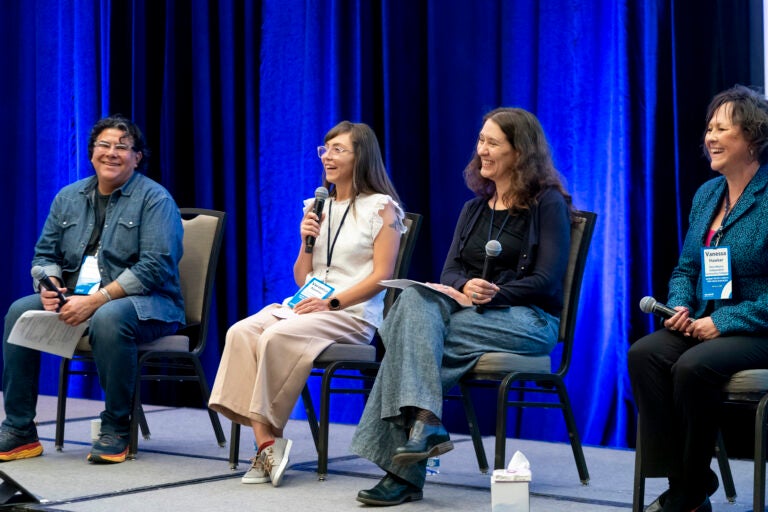
At Educare DC’s annual learning meeting, Mosle highlighted the importance of strengthening the systems families rely on every day — and the leaders working to make those systems more connected and effective.
Among them was Ascend Fellow Jamal Berry, President and CEO of Educare DC, whose work focuses on strengthening the early childhood delivery system in Washington, D.C. Through Educare DC and partnerships across the city, Jamal connects center-based care, home-based providers, and family, friend, and neighbor caregivers into a cohesive ecosystem that reflects how families actually access care.
His work responds directly to the realities many communities are facing: shortages of infant and toddler care, a workforce under strain, and systems struggling to meet family needs.
During the conversation, Jamal cited the Ascend Fellowship’s influence on his leadership today, noting, “This is the time for leaders to lead and for leaders be innovative.”
Educare DC’s innovative approach to early childhood shows what’s possible when leaders work across systems rather than in silos.
As Mosle stated in her remarks:
“Leaders working brilliantly in parallel is not enough. Families need unified action.”
Later that day, Ascend Fellow Dr. Nia Bodrick convened parents, caregivers, educators, healthcare providers, therapists, advocates, and agency leaders for a working session aimed at redesigning how families access early intervention and special education services for children birth to five.
Using a systems-thinking approach, participants explored what it would take to move from a fragmented, referral-based system to a coordinated, family-centered approach that better connects children and families to the services they need.
The convening surfaced both the urgency of the challenge and the power of cross-sector collaboration.
Ascend Fellow Dr. Wendy Ellis, founding director, Center for Community Resilience, and director, Institute for Socioeconomic Opportunity, at George Washington University’s Milken Institute School of Public Health, facilitated the conversation and encouraged participants to think about the present-day system as the tip of the iceberg. Through in-depth conversations about the historical underpinnings influencing the present reality, leaders in the room examined the importance of understanding how the iceberg was formed.
As one participant explained, “Thinking more place-based and with a wider view of history was a shift in my mindset.”
Jamal’s and Nia’s work address different parts of the system — one focused on strengthening the early childhood delivery system, the other on redesigning access and coordination for the families who need it most. But they are connected by a shared goal, and by Ascend’s deliberate effort to invest in and connect leaders who are building toward the same future from different directions. This is what alignment looks like in practice: not one leader doing everything, but many leaders, working in concert, each moving a different lever.
And that is precisely where alignment becomes essential.
Alignment Does Not Happen on Its Own
Throughout the day, leaders returned to a central challenge: strong solutions already exist, but they are often disconnected from one another.
Families experience systems as one combined reality. But institutions, funding streams, policies, and services are frequently fragmented — creating barriers for families and making it harder for solutions to scale.
As Mosle noted during the day’s conversations:
“Families don’t have time to wait. We must move with the speed of need.”
Building alignment requires more than good intentions. It requires leaders willing to work across sectors, organizations willing to collaborate differently, and spaces where people can identify shared priorities and opportunities for collective action.
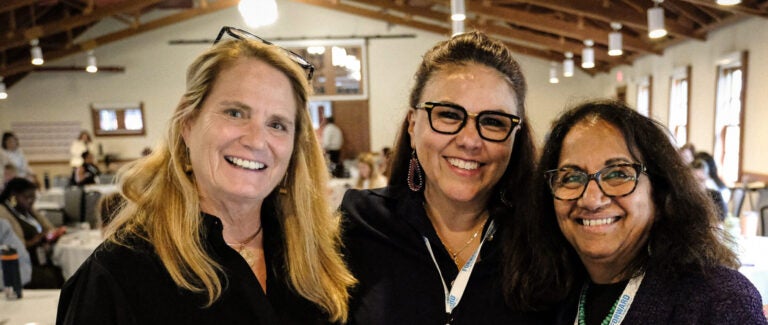
That spirit shaped the evening’s Forward With Families Pop-Up and Collaboration Reception, where leaders from nonprofit organizations, philanthropies, government agencies, and community groups came together not simply to network, but to engage directly with one another about what families need — and what it will take to move solutions forward together.
Participants shared the work they are advancing, the barriers they are encountering, and where stronger alignment could accelerate progress.
The goal was not to present finished solutions. It was to connect efforts already underway and begin identifying where greater coordination could help systems work better for families.
Building the Infrastructure for Alignment
This is the work Forward With Families was designed to accelerate.
Launched earlier this year, Forward With Families is Ascend’s effort to organize and advance solutions that make life more affordable, economically secure, and healthy for families. It builds on Ascend’s longstanding two-generation approach while recognizing a growing reality: families navigate multiple systems at once, and lasting progress depends on those systems working together.
As Mosle said during her Educare DC keynote:
“Forward With Families is our call to connect leaders, align systems, and accelerate what’s already working so more families benefit.”
Ascend’s role is not simply to elevate individual solutions. It is to invest in leadership through the Ascend Fellowship, connect those leaders across sectors and systems, create spaces for collaboration and alignment, and support the work required to move from isolated innovation to coordinated implementation. Across the country, Ascend Network Partners are demonstrating what this looks like in practice: leadership grounded in community experience, connected through relationships, and strengthened through alignment.
Moving Forward Together
The challenges families face are complex, interconnected, and urgent. But across communities, leaders are using civic imagination to advance solutions that create new opportunities.
The work ahead is not about inventing entirely new answers. It is about connecting and sustaining the work already underway — and building the relationships, infrastructure, and alignment needed to move it forward together.
As Mosle noted:
“Alignment doesn’t happen on its own. It must be built. Deliberately. Together.”
That is the work Ascend is committed to accelerating.
Learn more about Forward With Families and join the charge here.
Related Posts