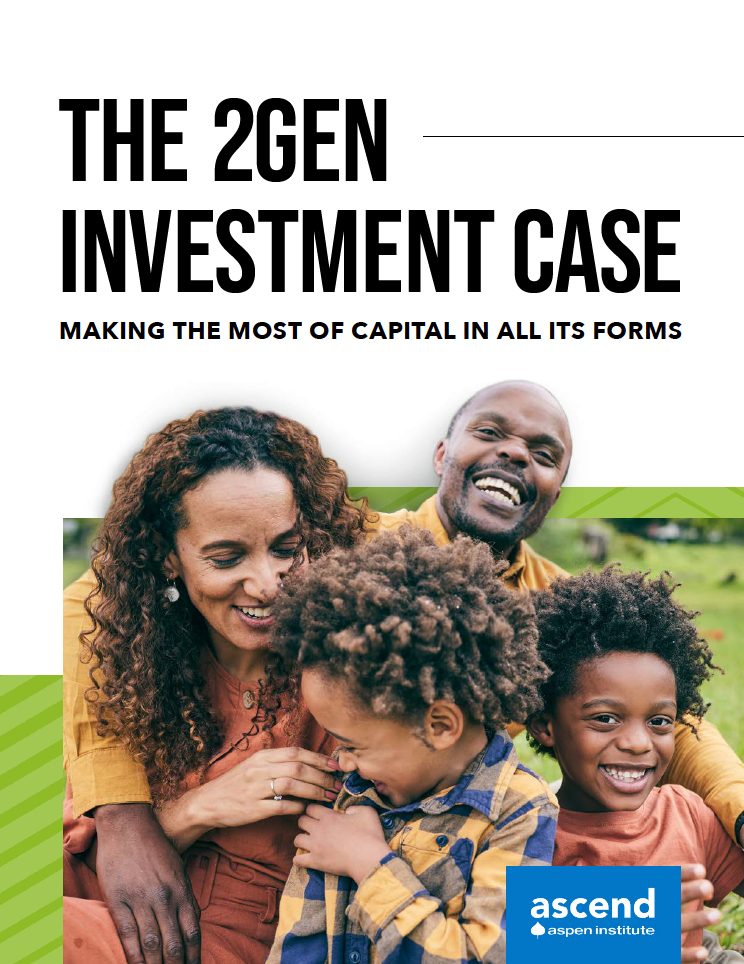
The 2Gen Investment Case: Making the Most of Capital in All its Forms
This report documents the more than $500 million public and private sectors have invested in two-generation (2Gen) approaches over the past decade and includes a comprehensive view of key pilots and initiatives with a 2Gen approach, outlining important themes, lessons, and considerations for funders new to 2Gen approaches.
Suggested Citation:
Mosle, A., Sims, M., and Murrell, K. (2025). The 2Gen Investment Case: Making the Most of Capital in all its Forms. Washington, DC.
Related Resources

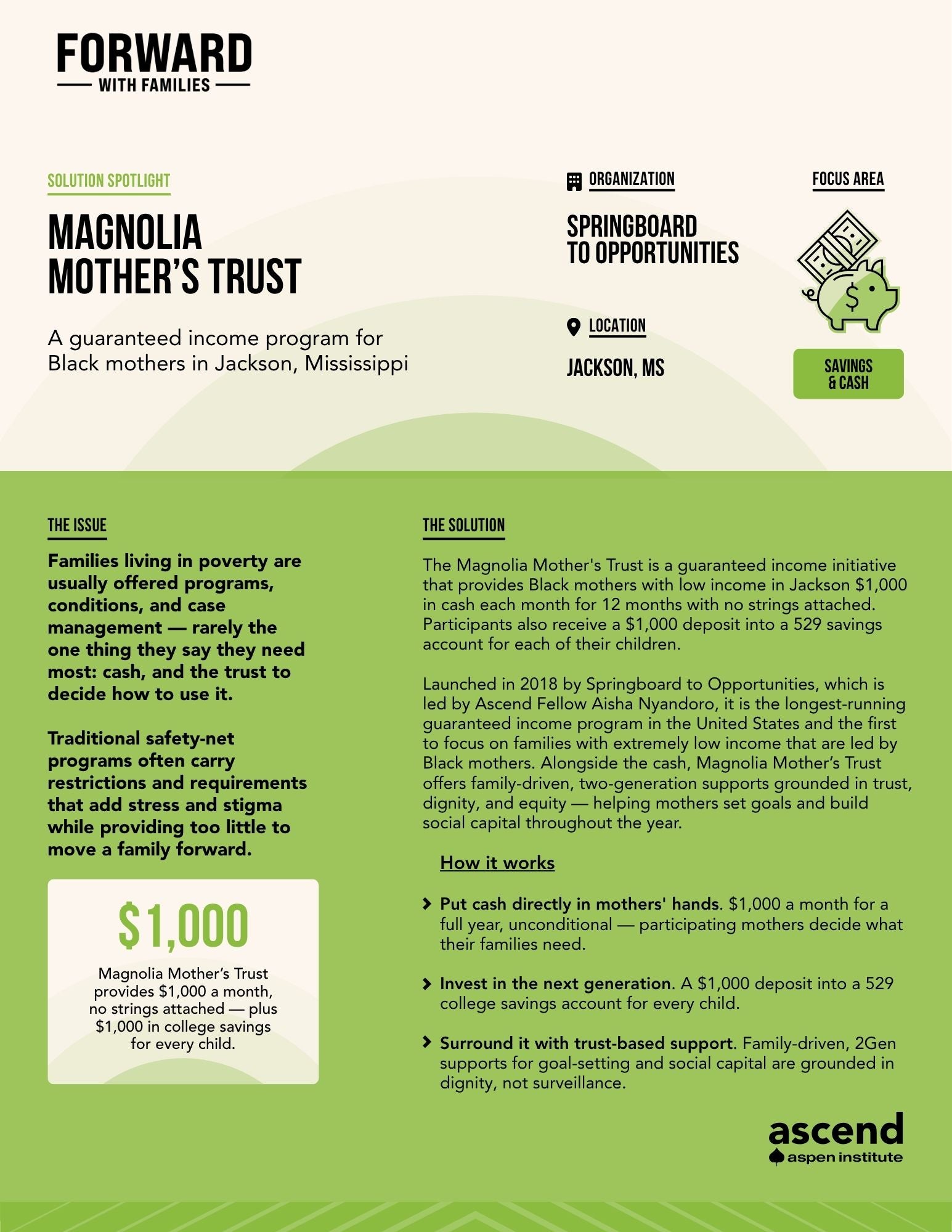


Executive Skills for Goal Achievement: Coaching Practitioner Workbook
Read More

Bright Path Impact Sheet
Read More

Harnessing Executive Skills for Goal Achievement: Bright Path Workshop
Read More
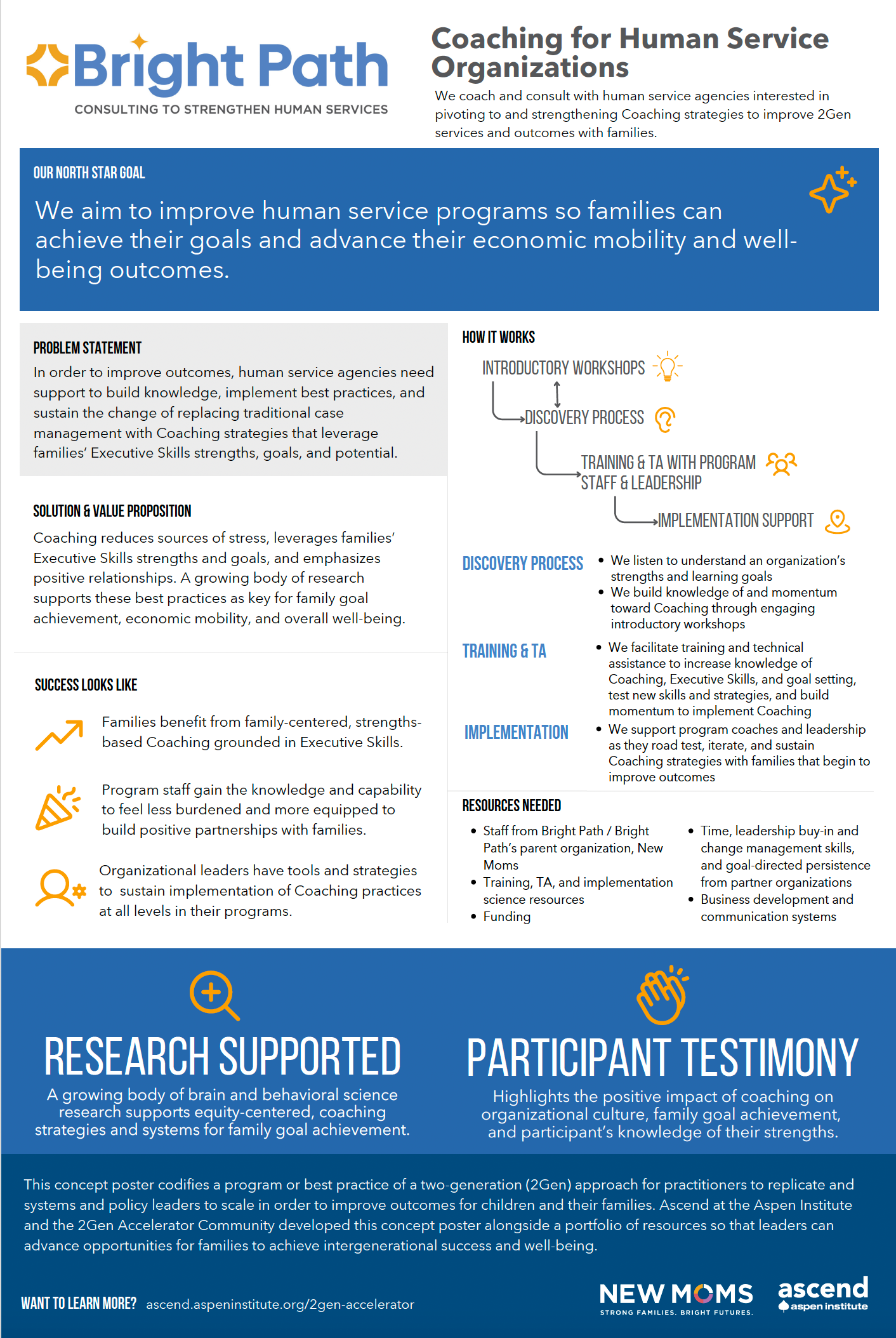
Bright Path: Coaching for Human Service Organizations (2Gen Concept Poster)
Read More
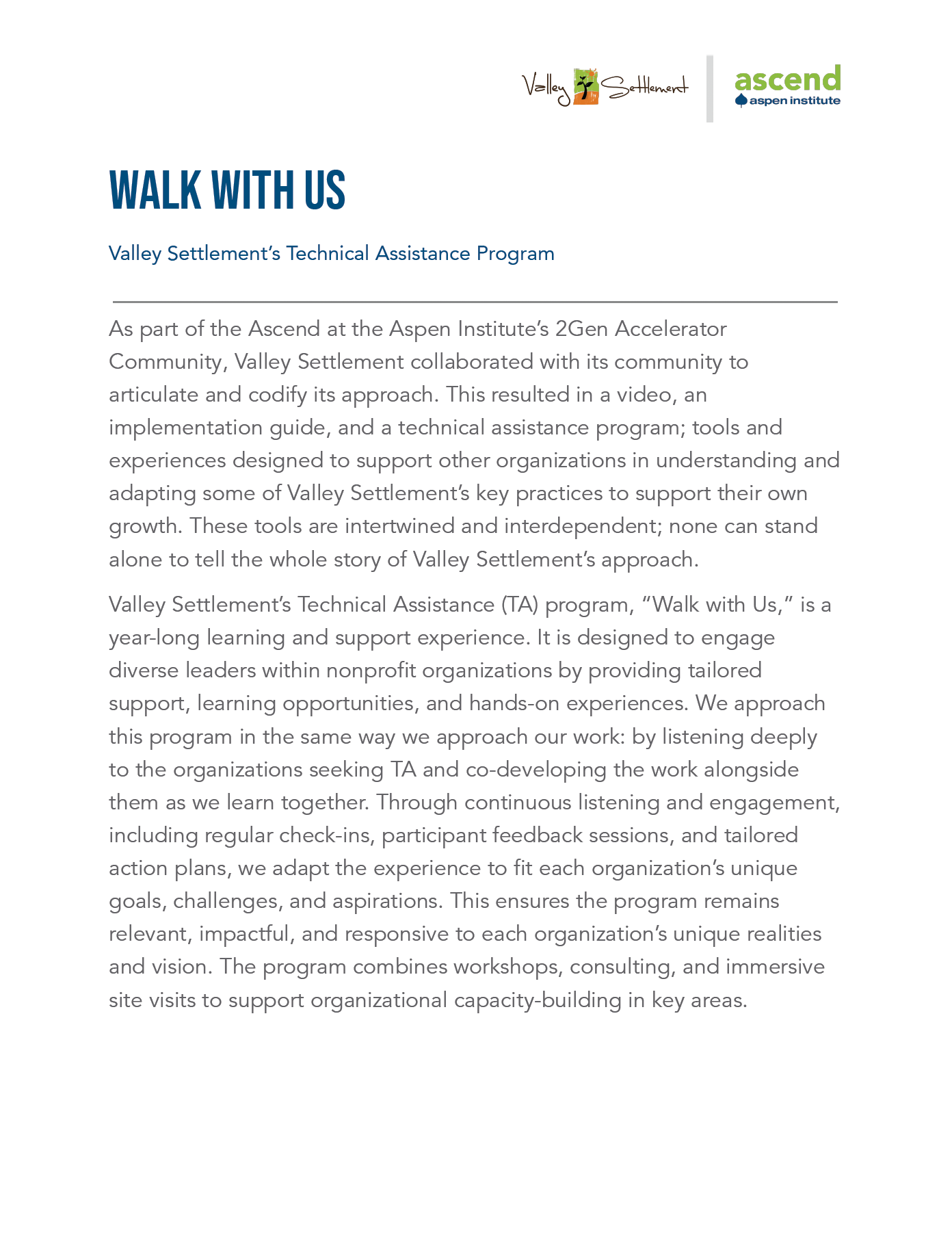
Walk With Us: Valley Settlement’s Technical Assistance Program
Read More
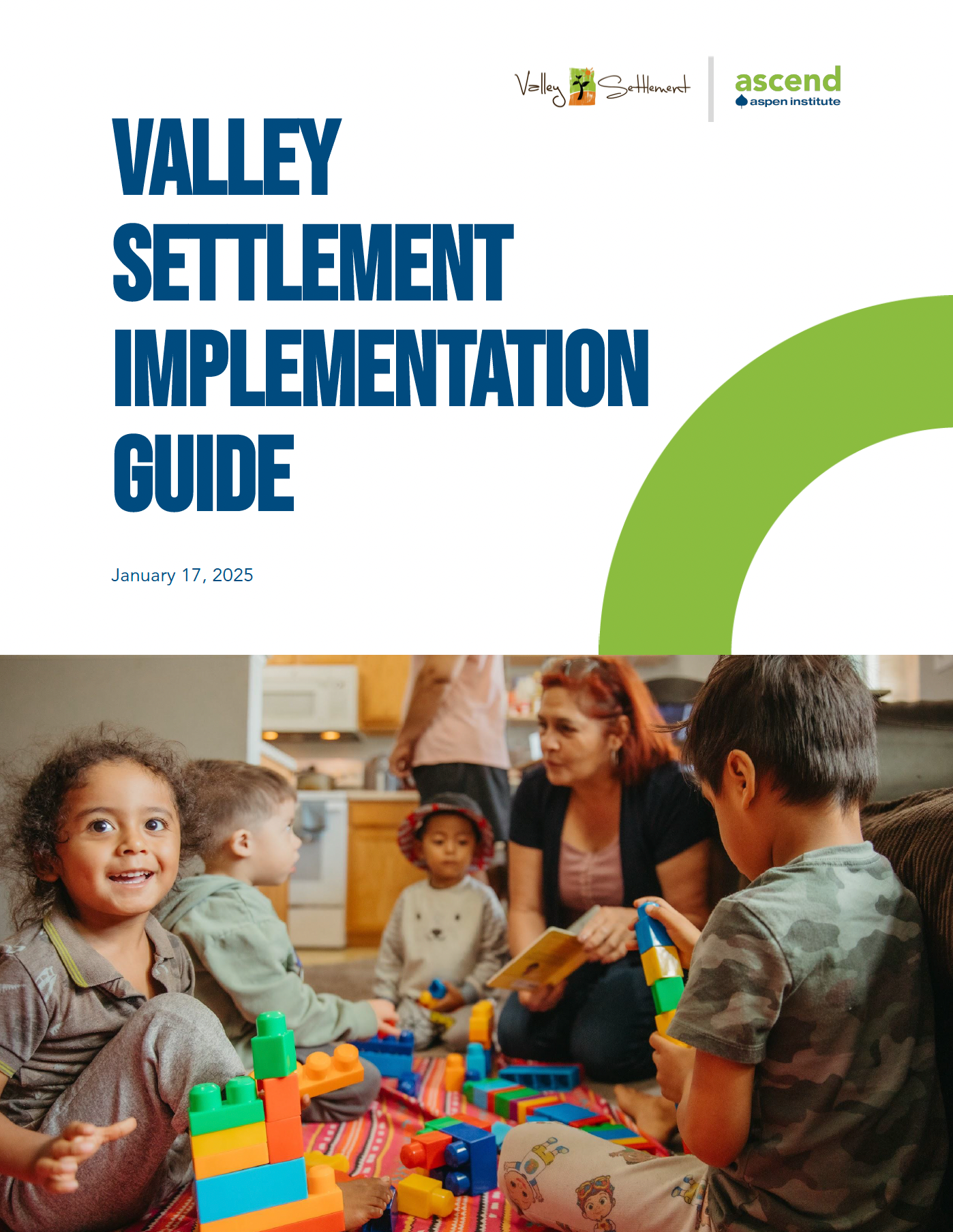
Valley Settlement Implementation Guide
Read More
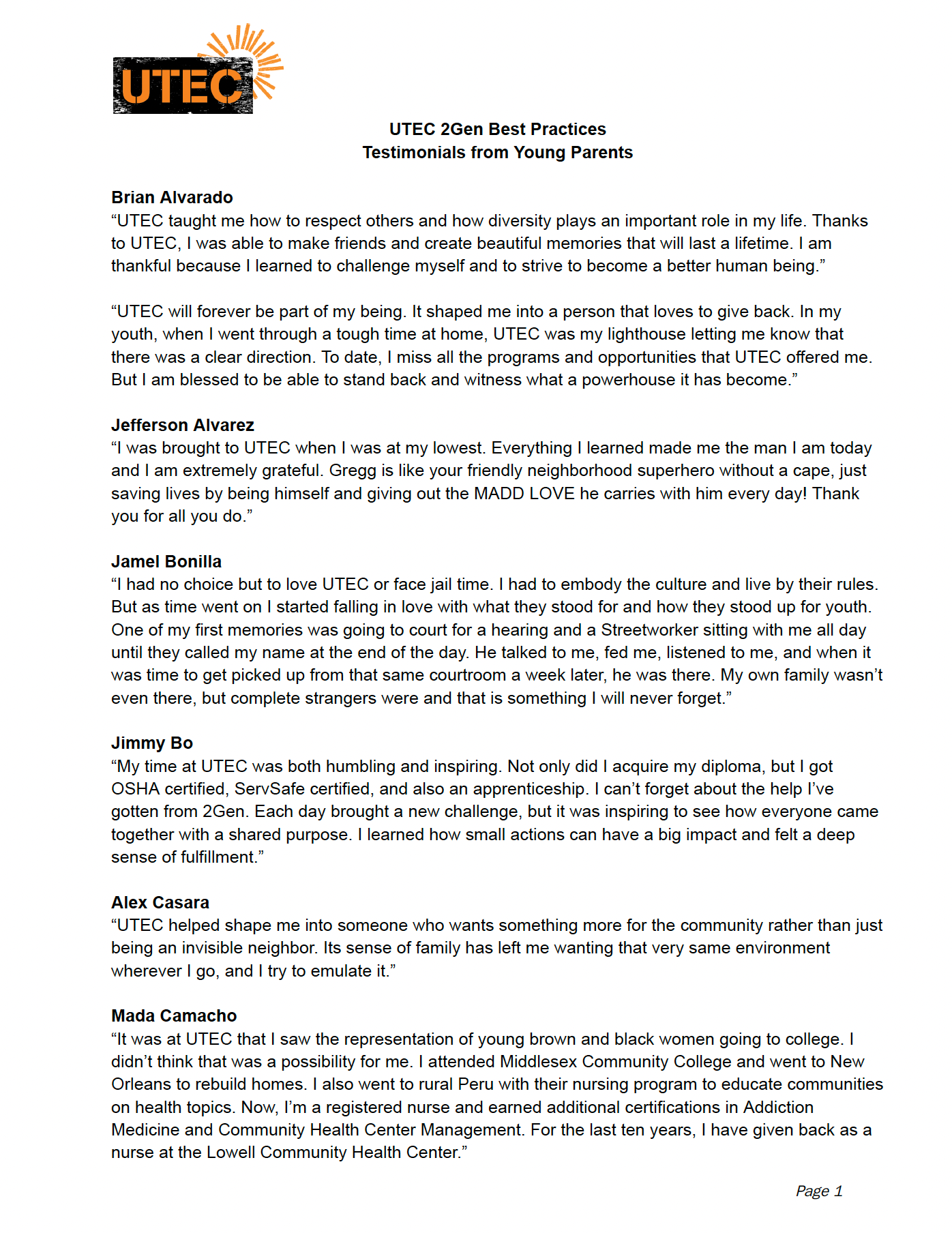
UTEC 2Gen Best Practices: Testimonials from Young Parents
Read More
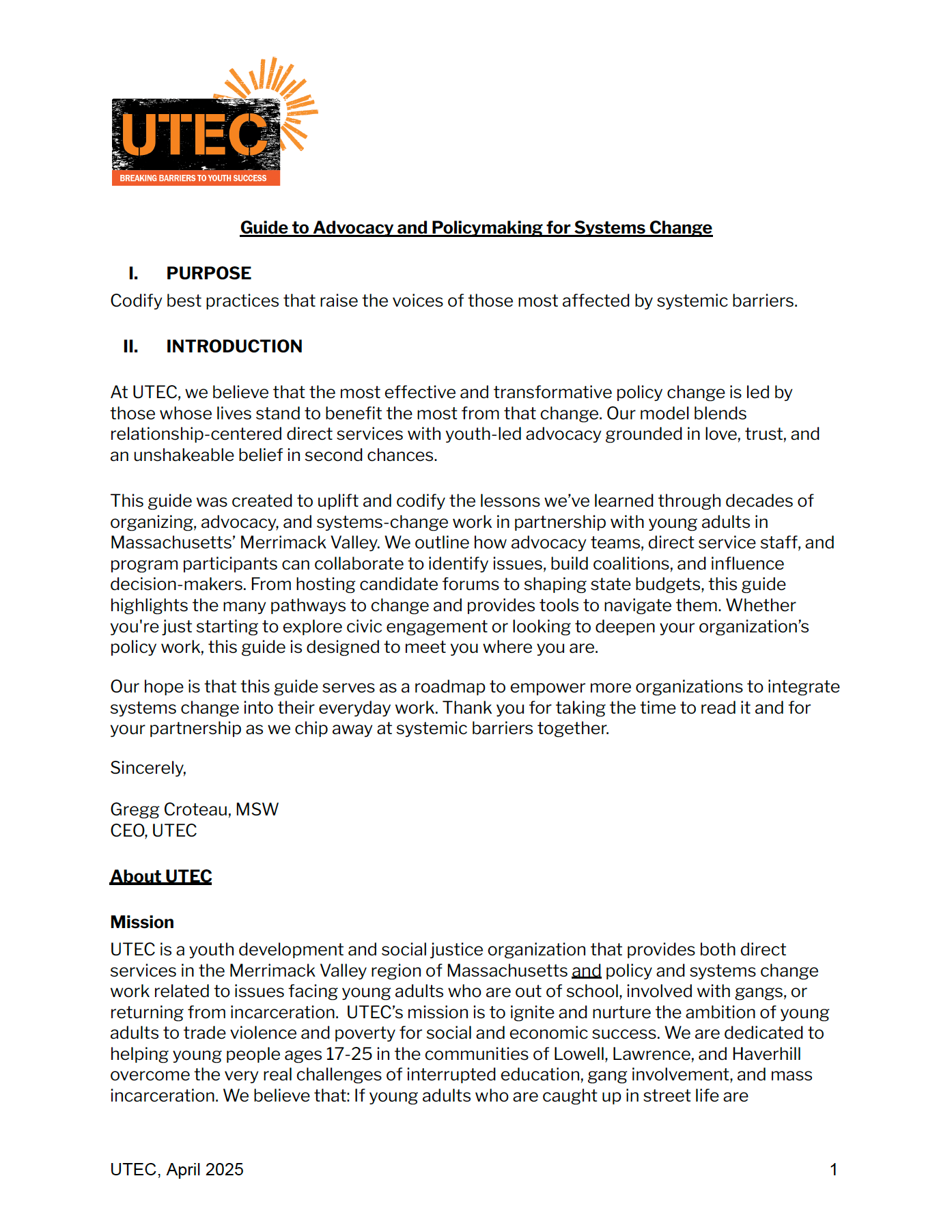
Guide to Advocacy and Policymaking for Systems Change
Read More
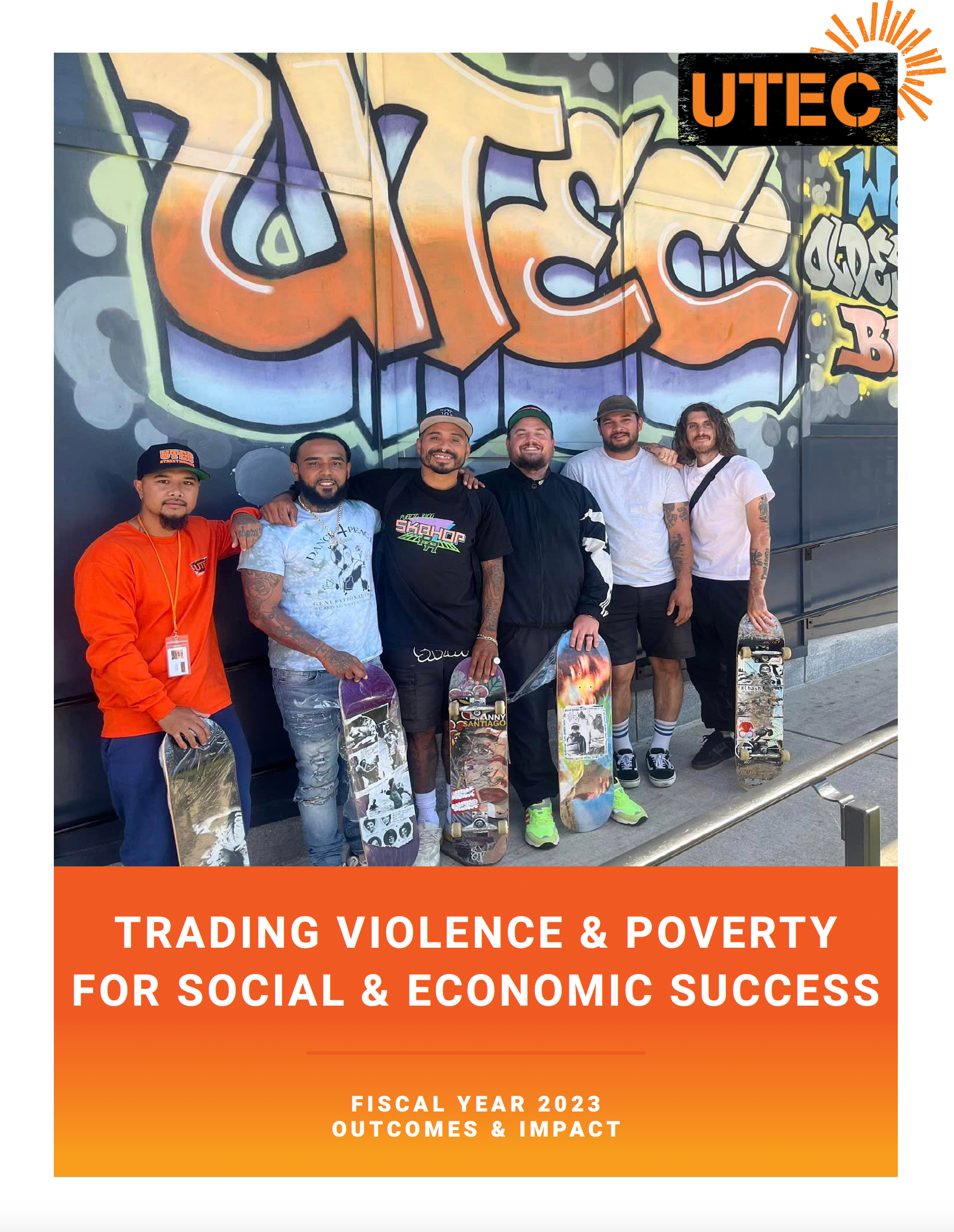
UTEC Fiscal Year 2023 Annual Report: Outcomes & Impact
Read More
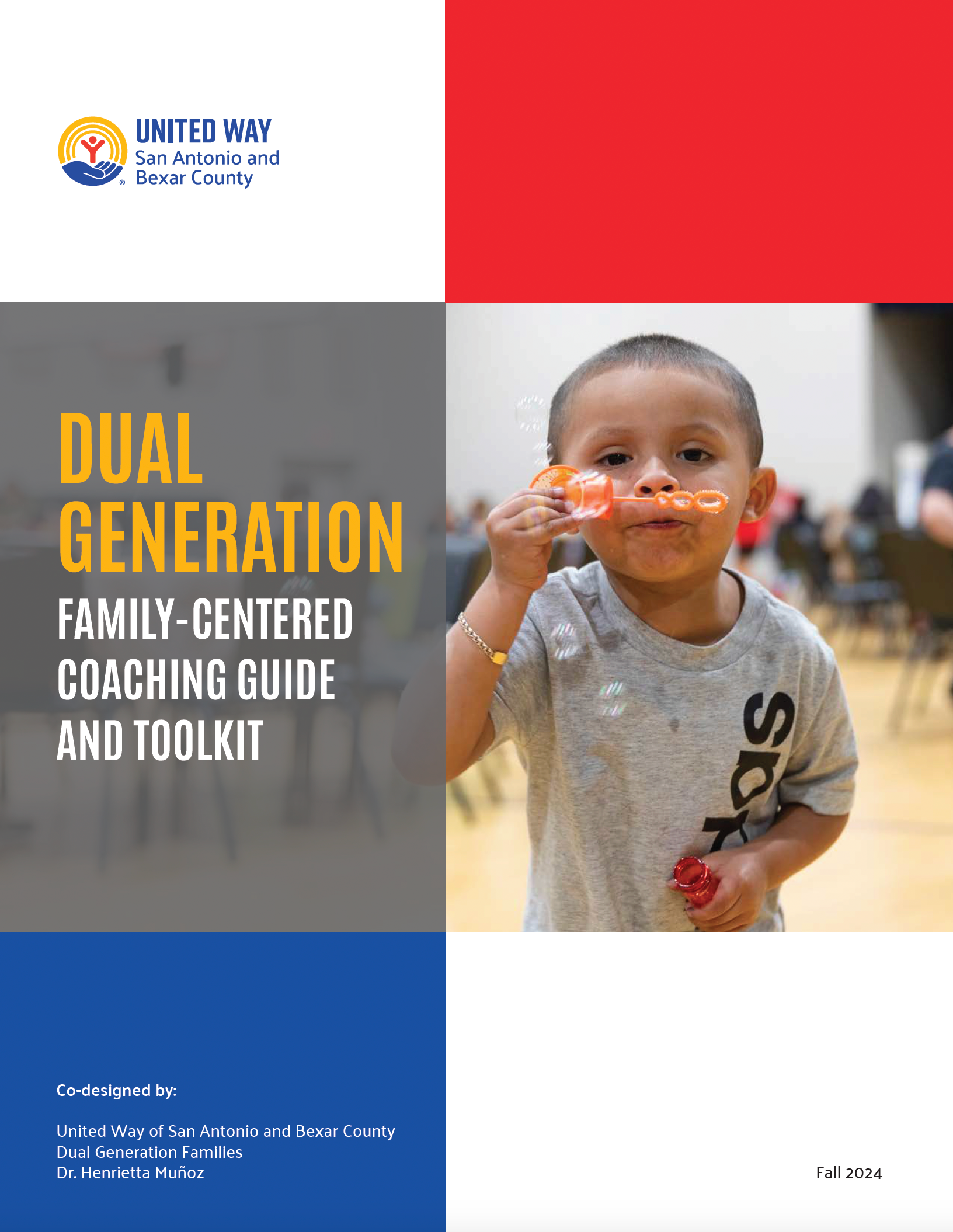
Dual Generation Family-Centered Coaching Guide and Toolkit
Read More

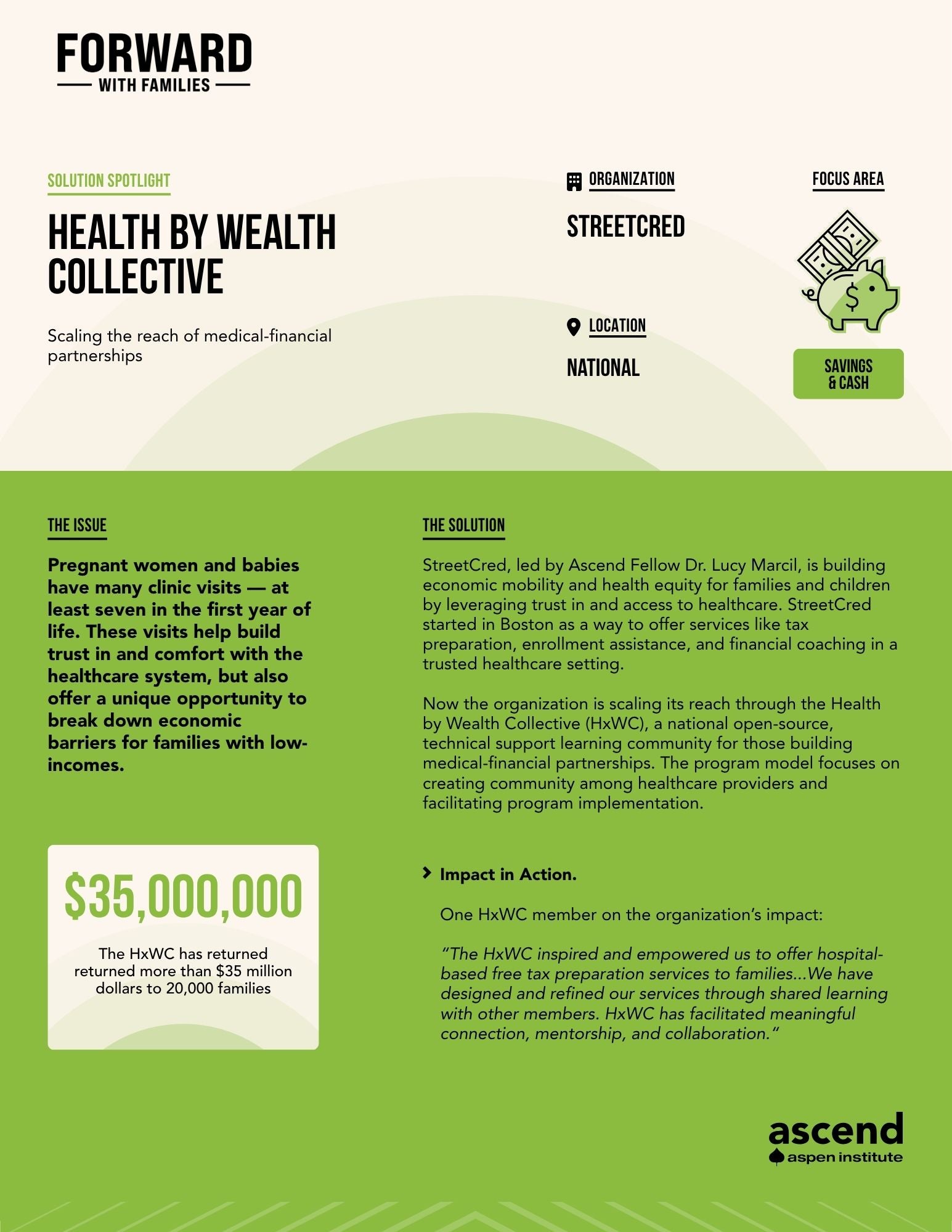
The Magnolia Mother’s Trust Case Study Narrative Report
Read More

The Magnolia Mother’s Trust 2023–2024 Evaluation & Case Study Report
Read More
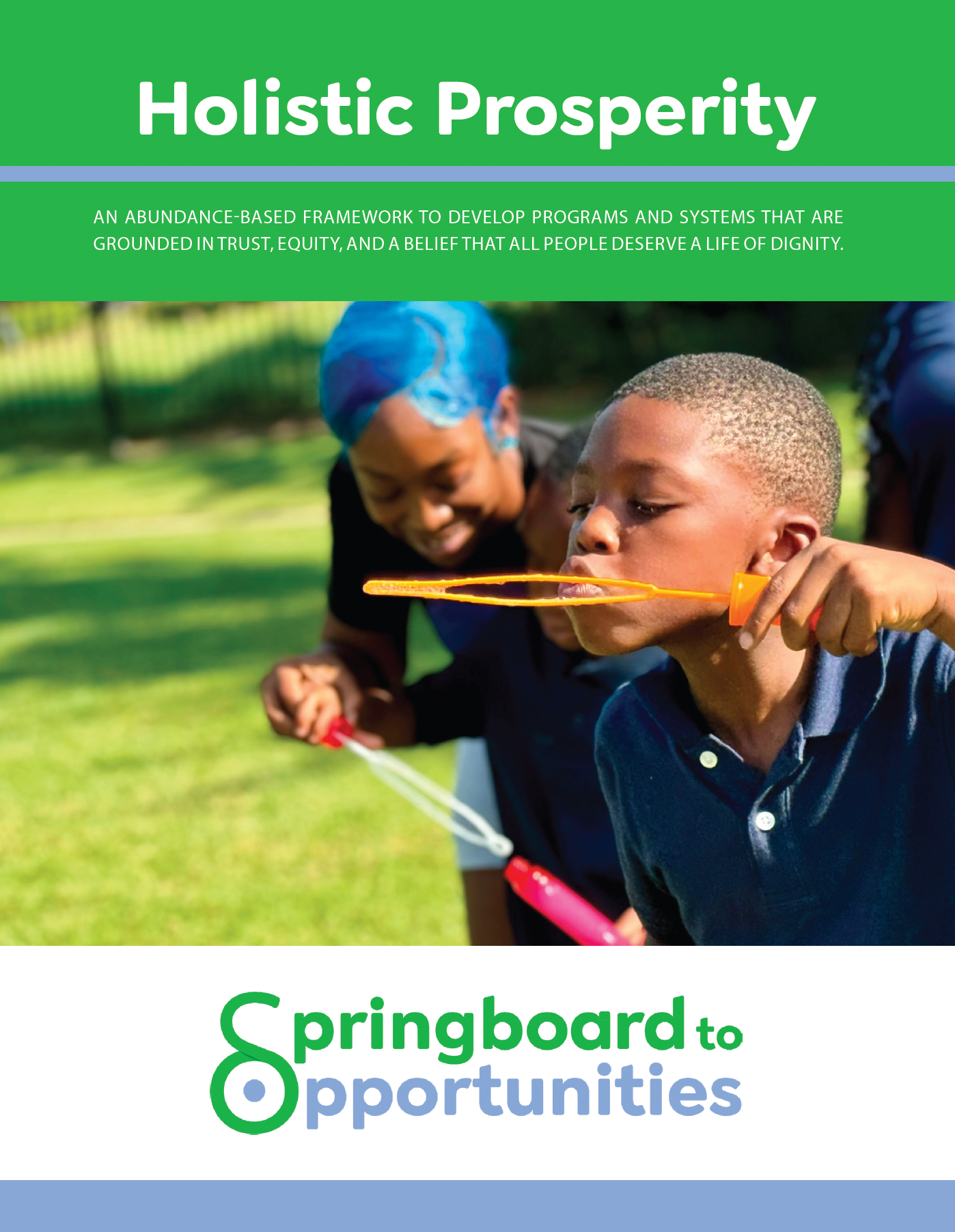
Holistic Prosperity: An Abundance-Based Framework
Read More
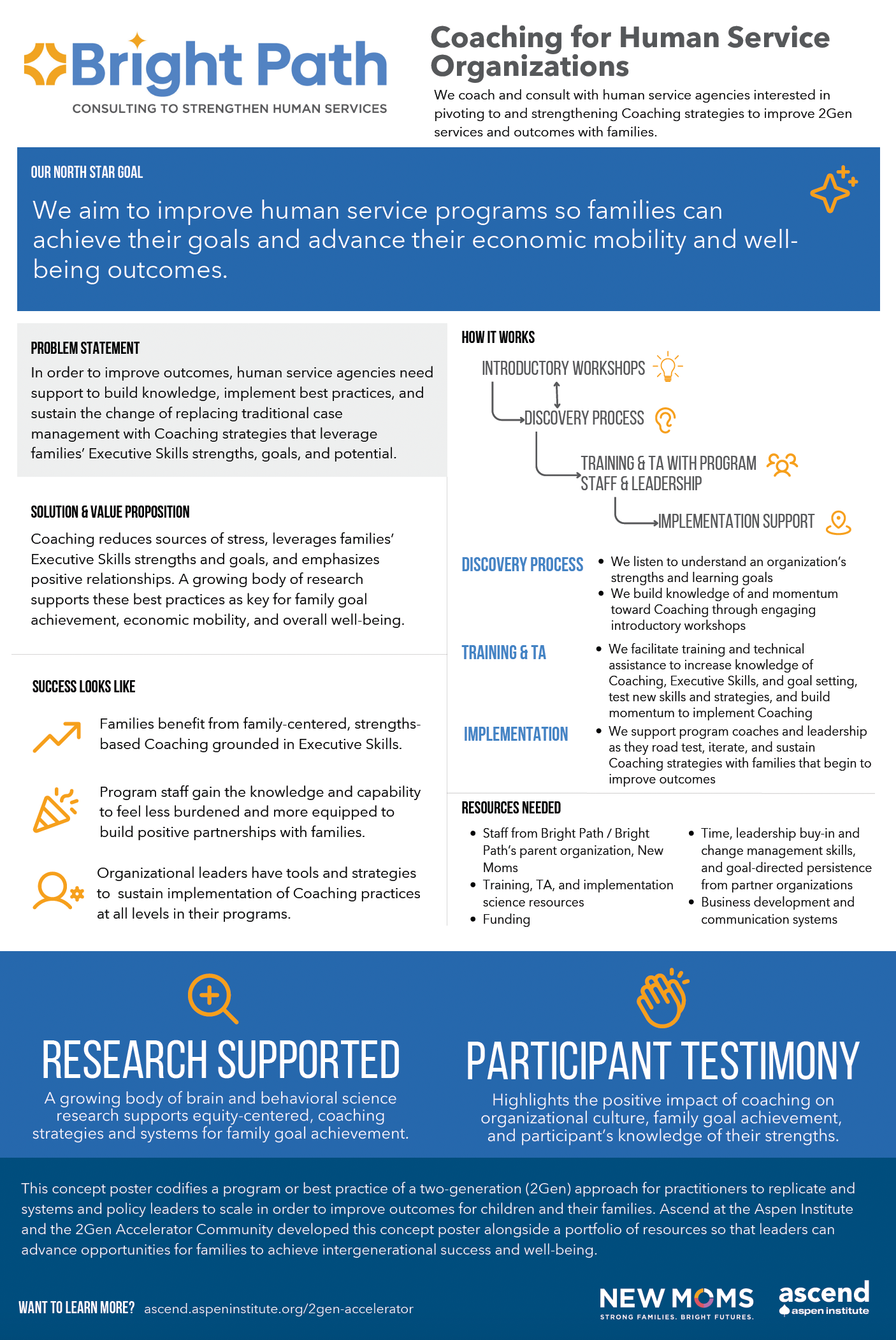
Bright Path: Coaching for Human Services Organizations
Read More
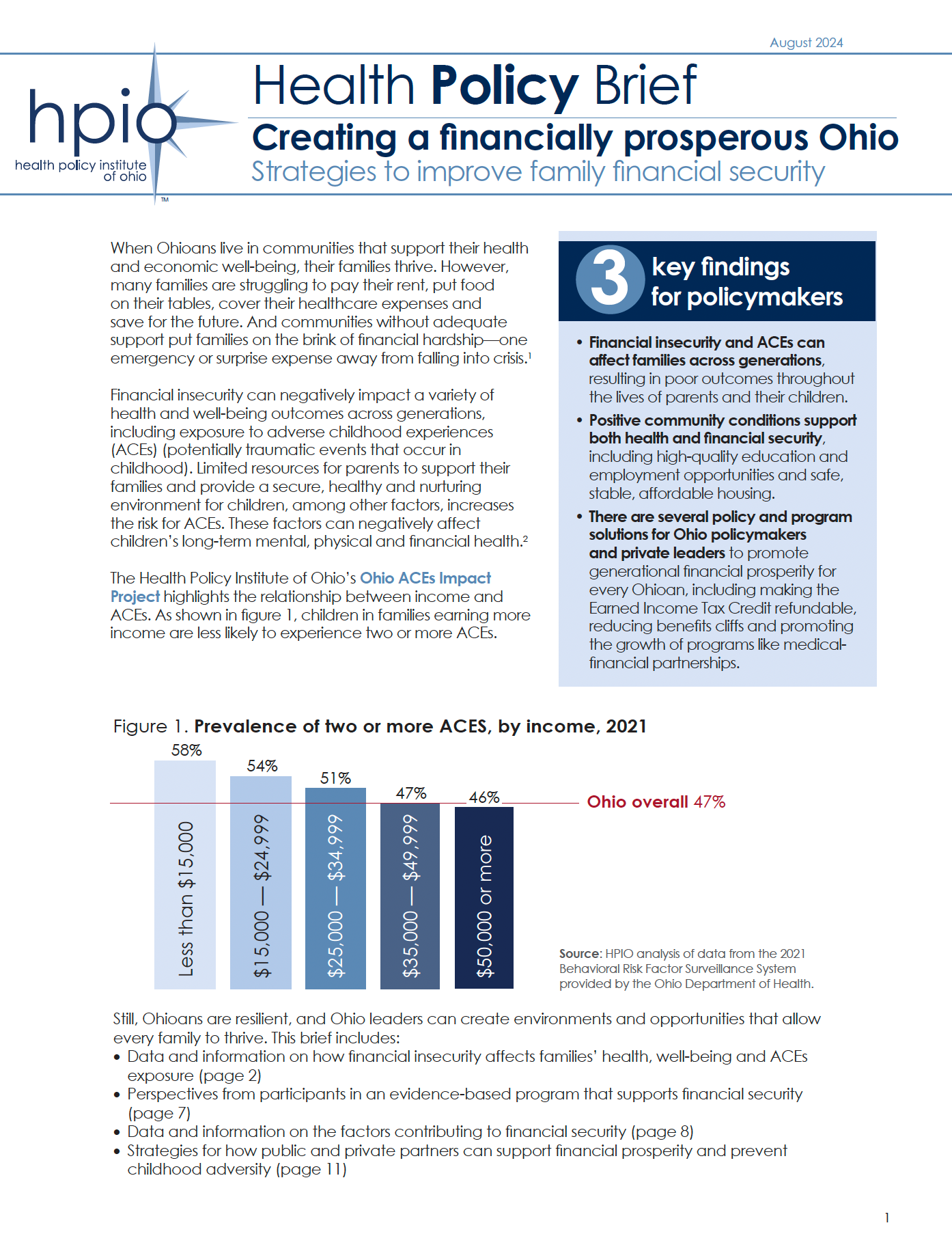
Creating Financial Prosperity for Ohio Families: Health Policy Brief
Read More
Partnering to Address Adverse Childhood Experiences (ACEs): Event Report
Read More
Family Leadership Certificate Program: Practice Brief
Read More
Training Family Leaders as Community Health Workers: National Policy Brief
Read More
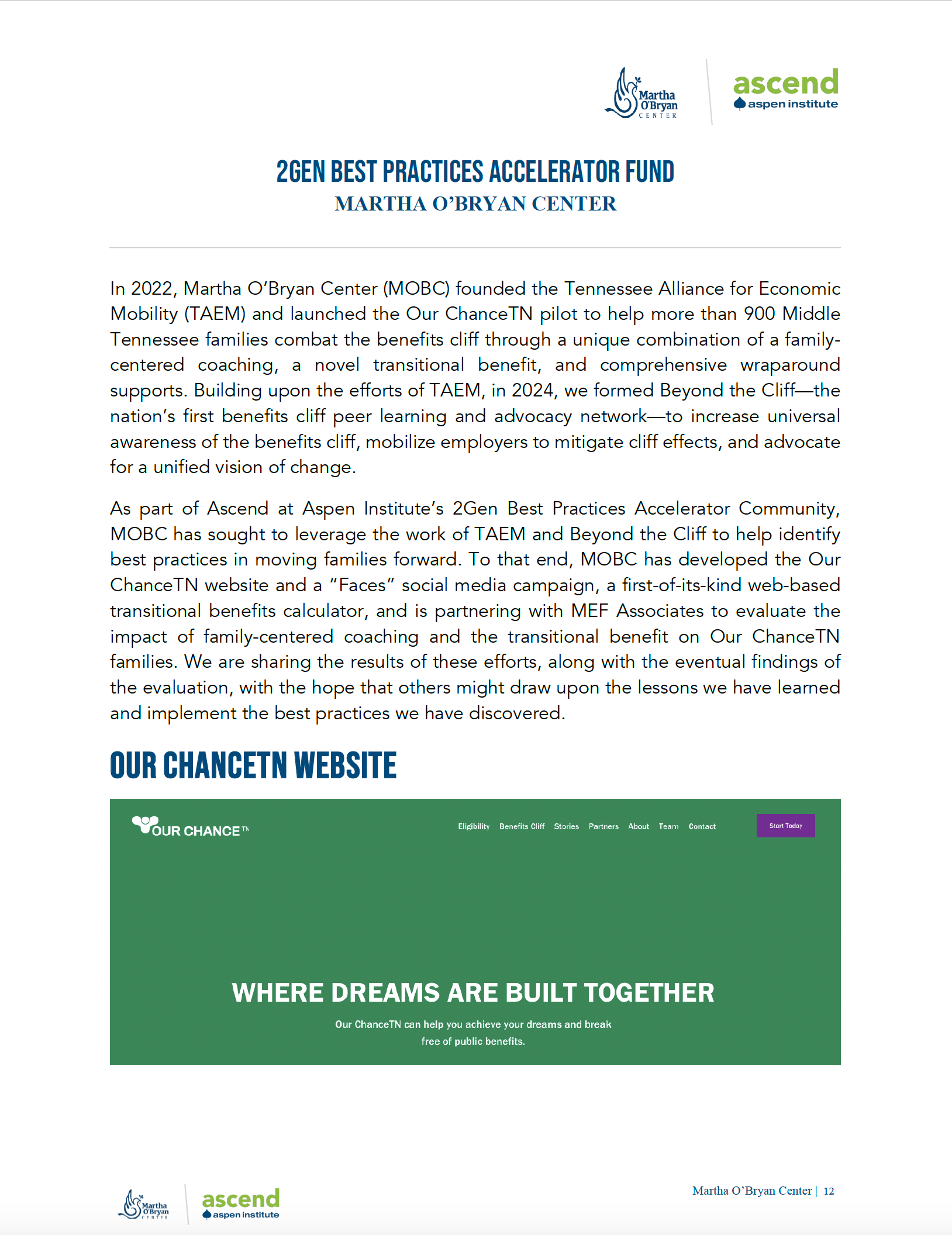
Addressing the Benefits Cliff: Chance TN Pilot
Read More
Shifting the Paradigm in Workforce Development: Coaching-Centered Practice
Read More
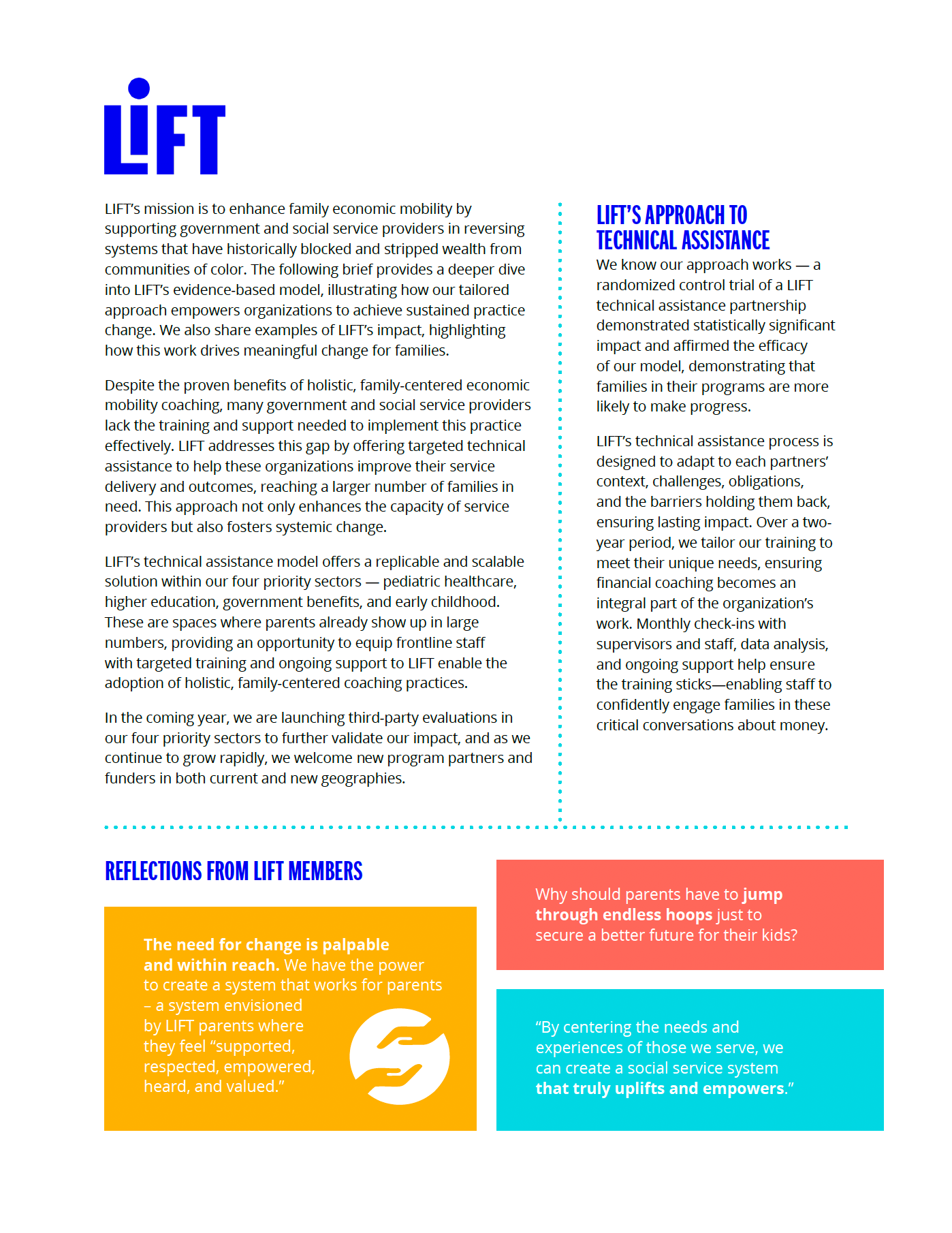
LIFT Technical Assistance Model: Advancing Family Economic Mobility
Read More
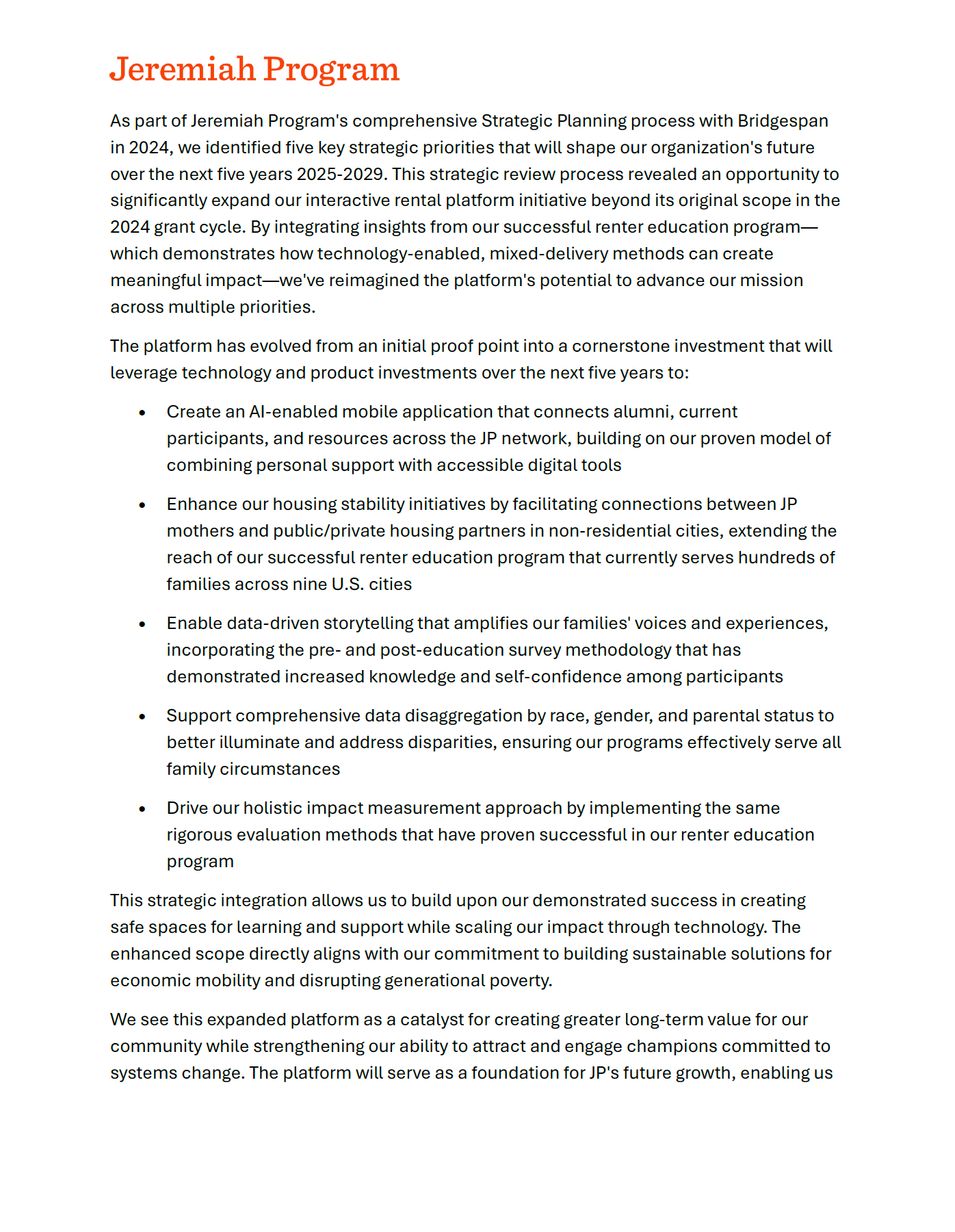
Jeremiah Program Strategic Priorities
Read More
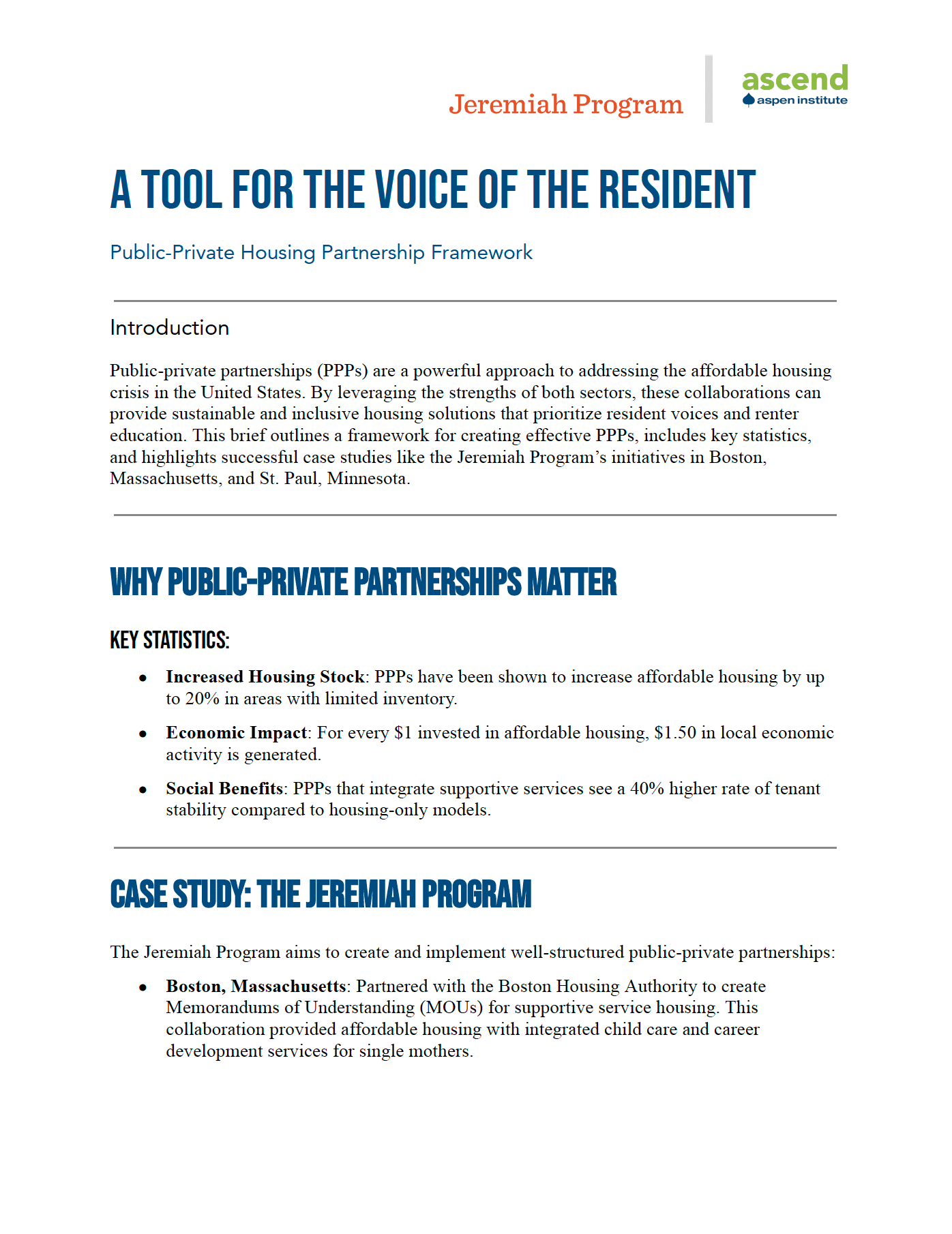
Public-Private Housing Partnership Framework: Centering Resident Voice
Read More
Whole Family Approach (2Gen WFA) Training Curriculum
Read More
Child Homelessness Intercept Mapping & Engagement (CHIME): Improving Systems of Care for Children Experiencing Homelessness
Read More
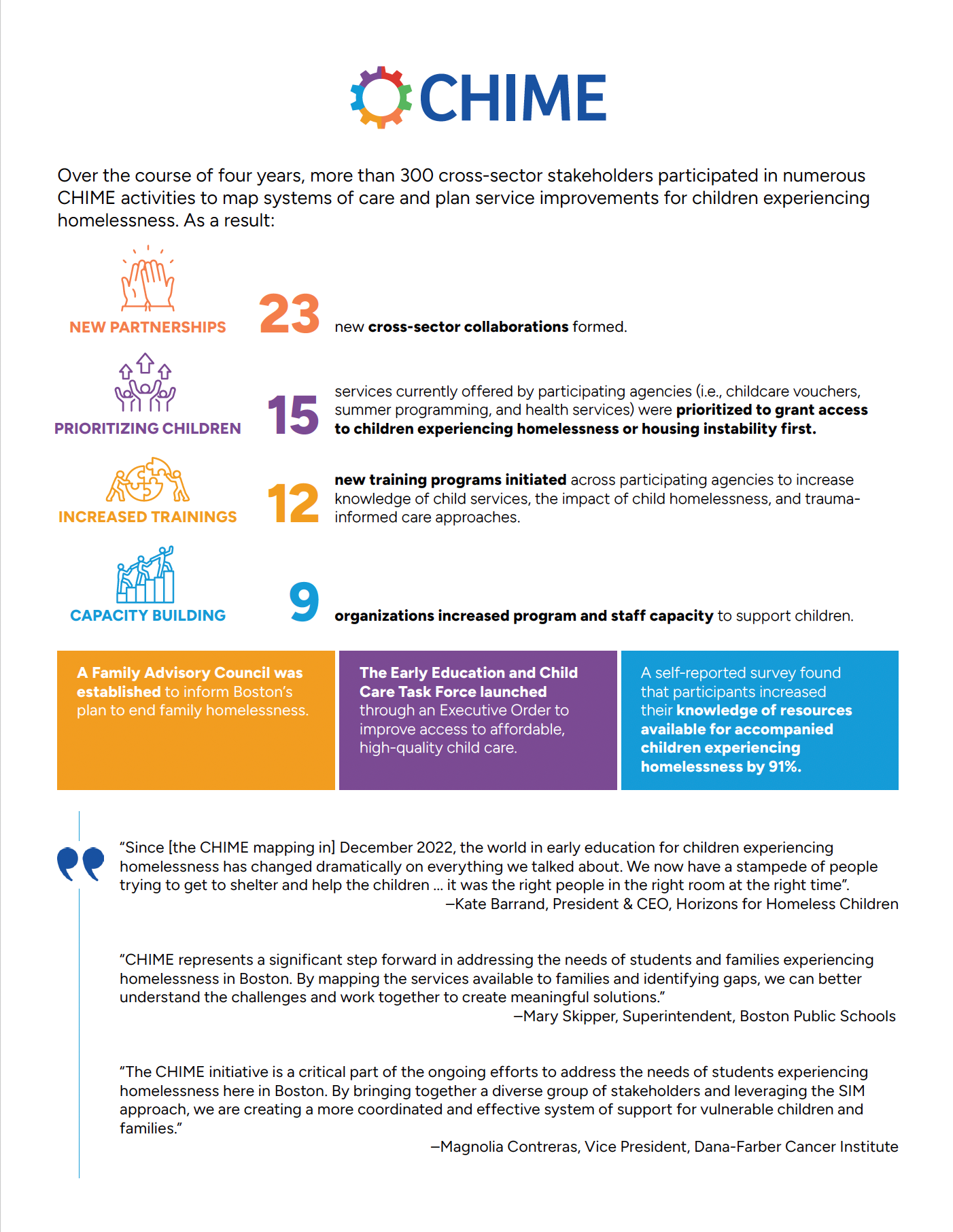
CHIME Outcomes: One-Pager Overview
Read More
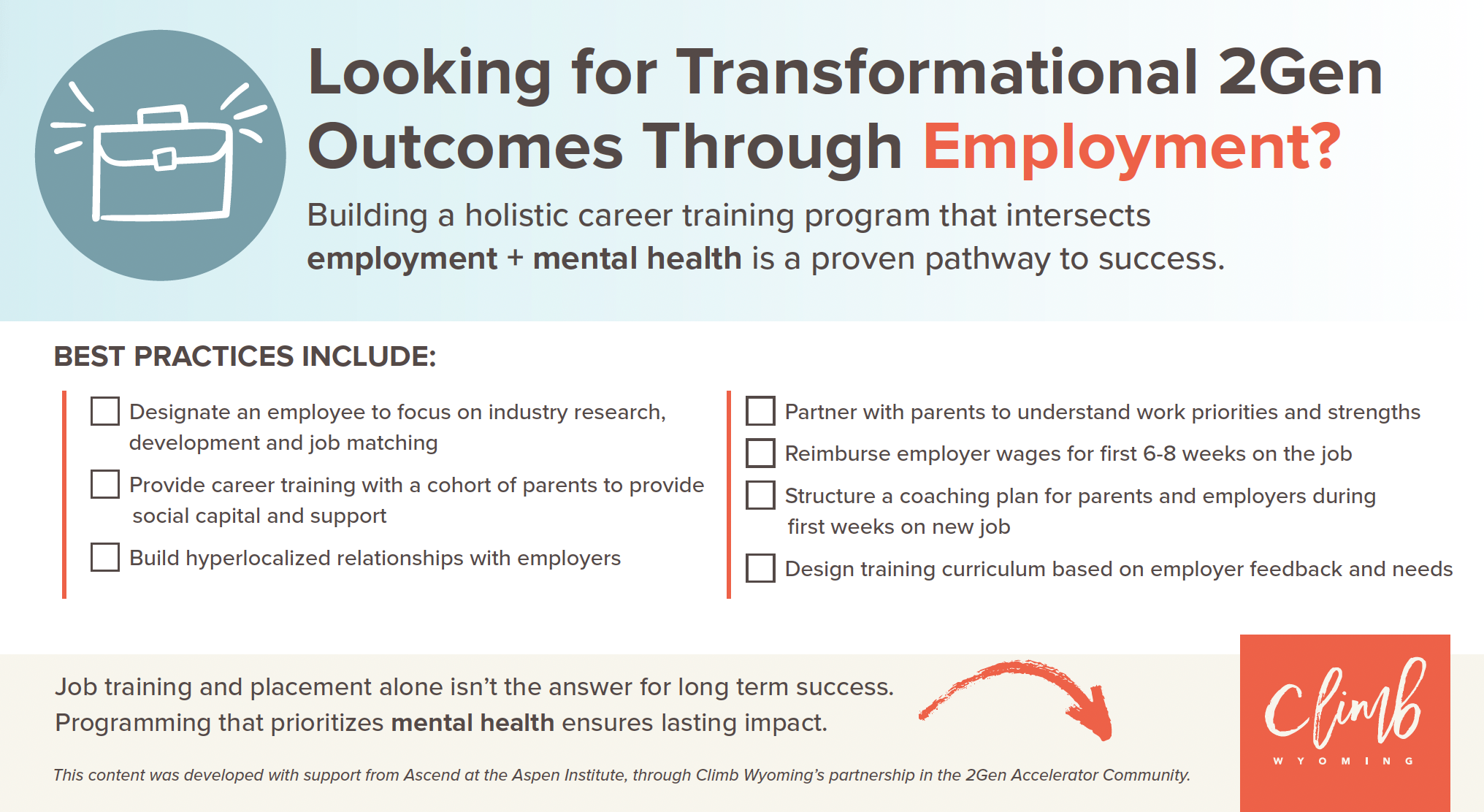
2Gen Employment Best Practices Checklist
Read More
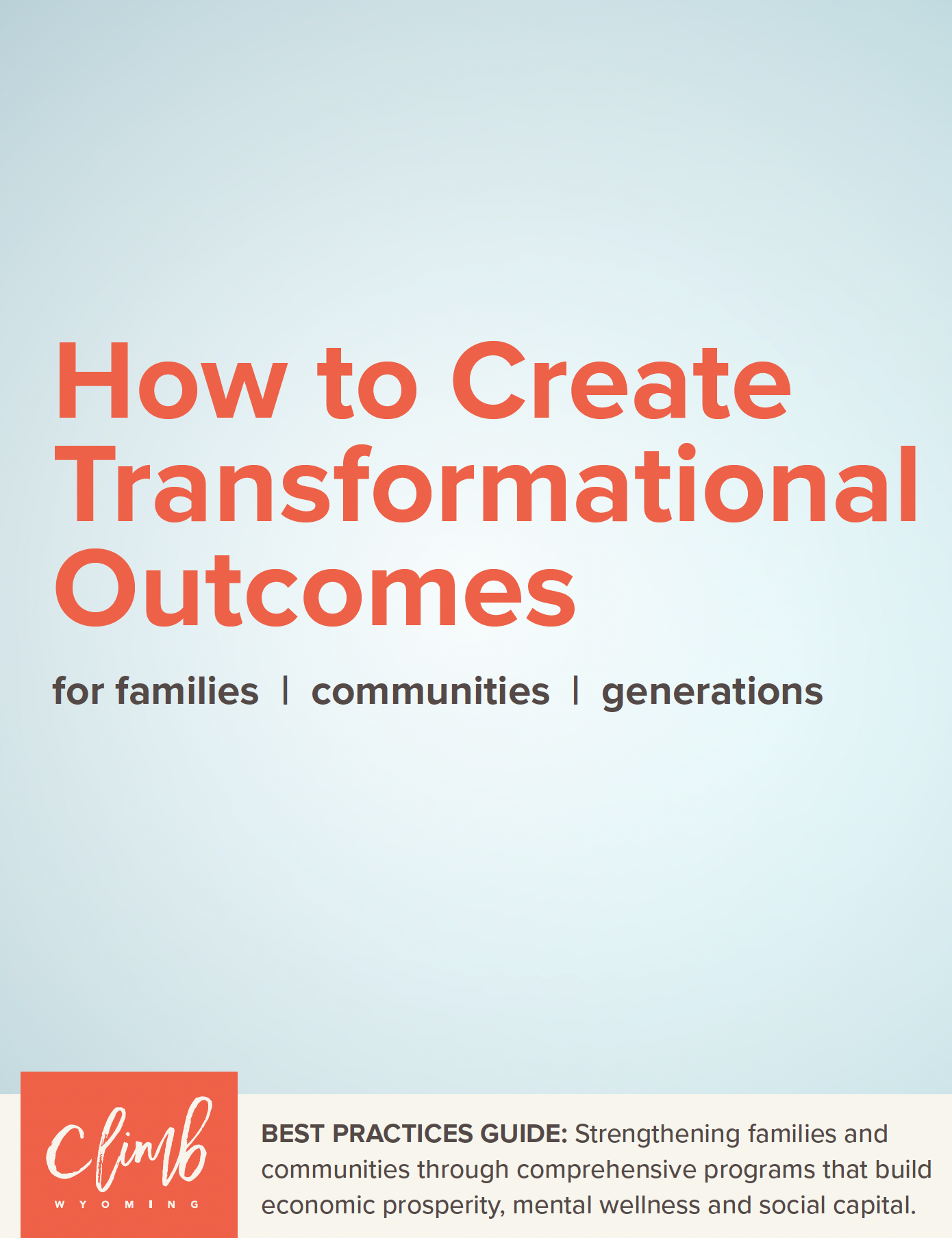
Best Practices Guide: Creating Transformational Outcomes for Families
Read More

Start Young Gap Funding Listening Sessions: Findings Summary
Read More

Gap Funding: Program Toolkit
Read More

Gap Funding: Issue Brief
Read More
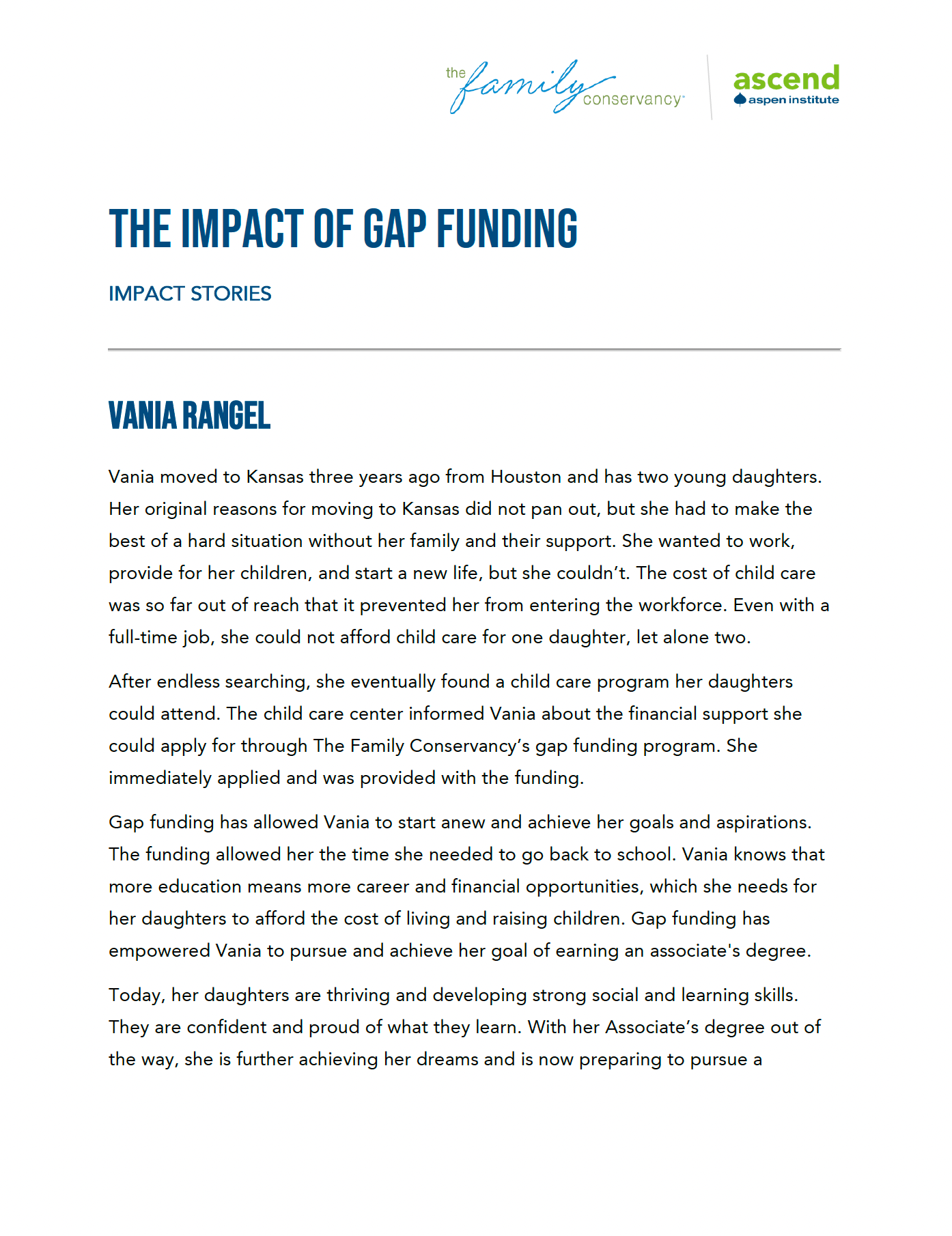
Gap Funding: Impact Stories
Read More
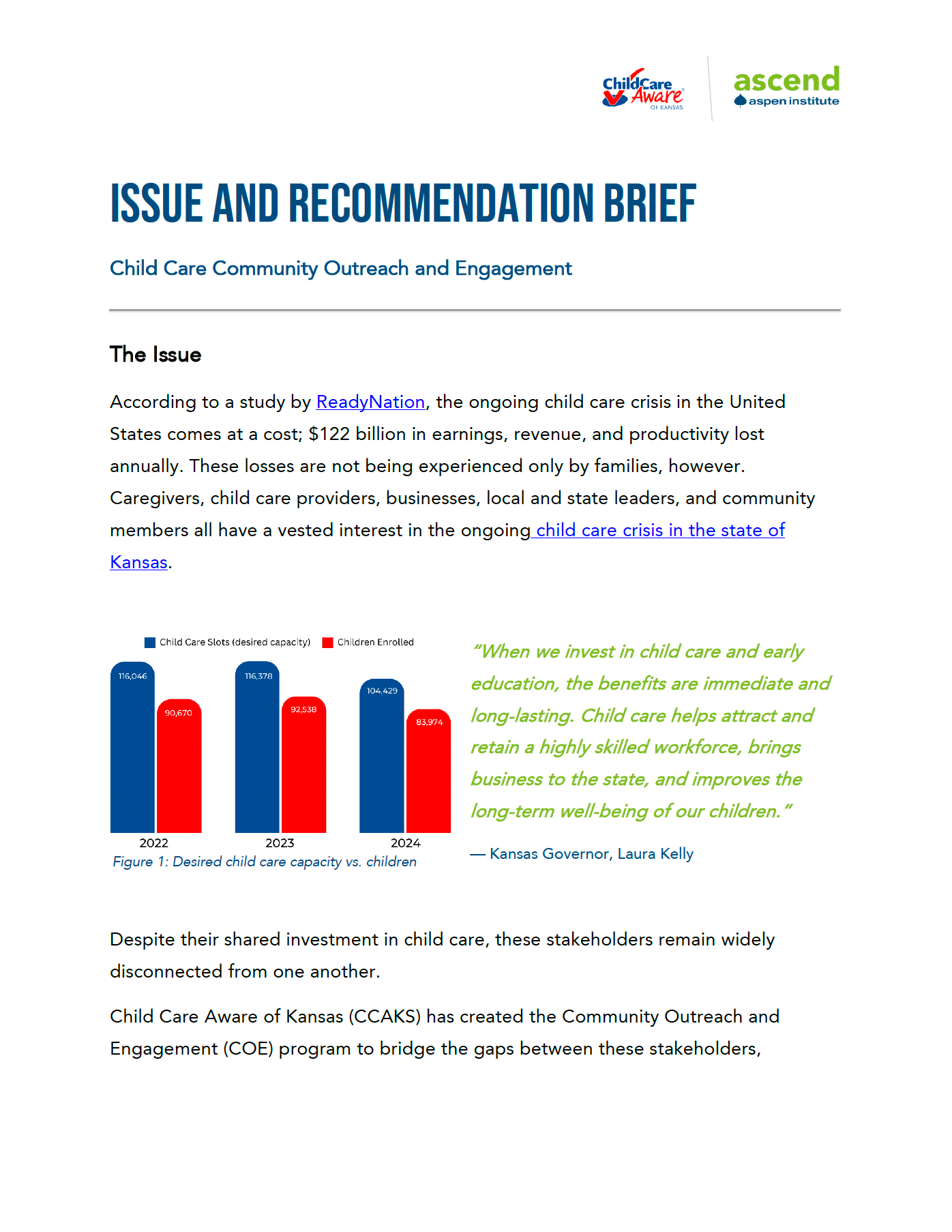
Community Outreach and Engagement: Issue and Recommendation Brief
Read More
Community Outreach and Engagement: Implementation Toolkit
Read More
Baby Steps – Policy Recommendations
Read More
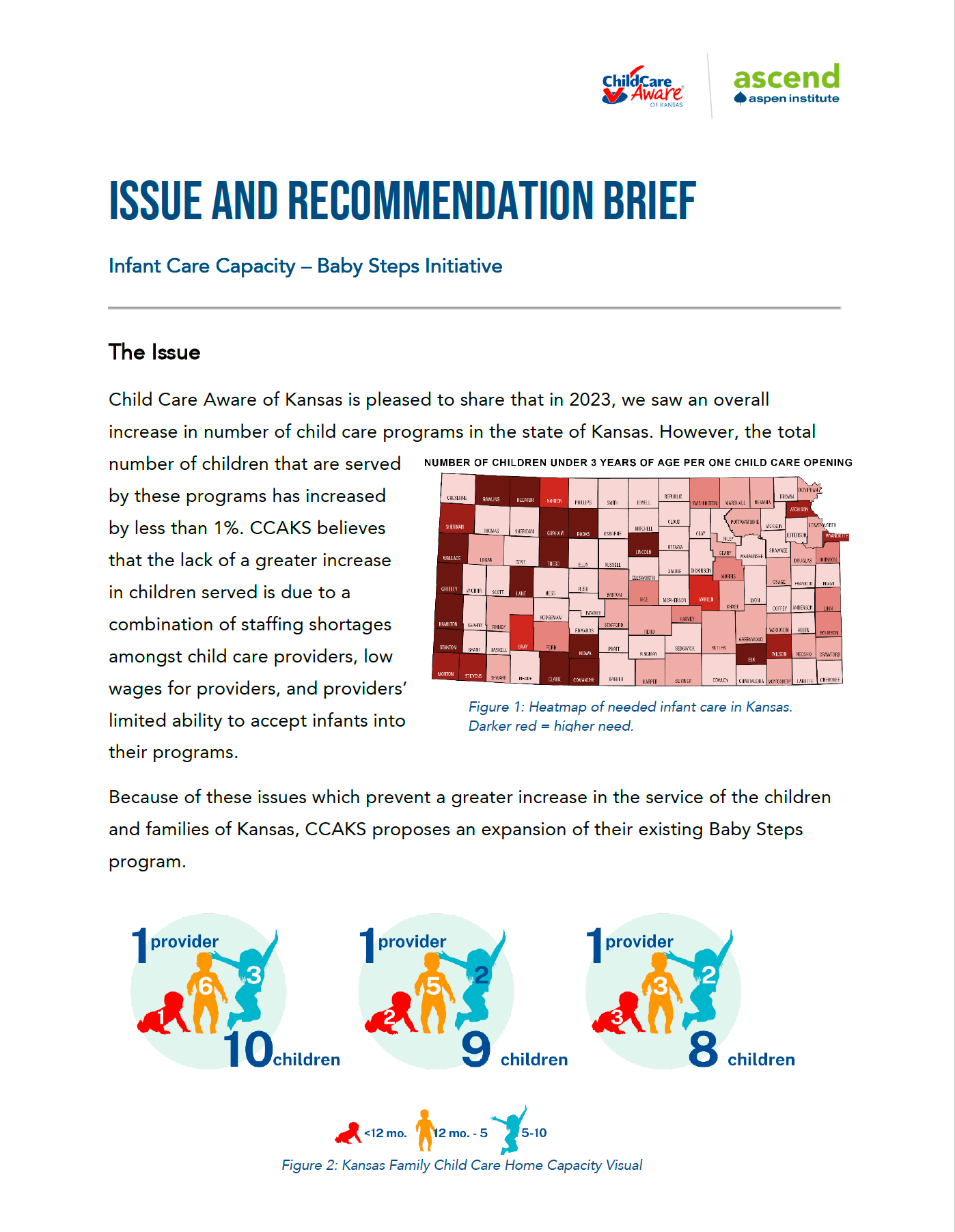
Baby Steps – Issue and Recommendation Brief
Read More

Baby Steps Implementation Toolkit: Supporting Infant Care Growth and Provider Longevity
Read More
We Make the Road by Walking with Families: 35 years of Systems Change at Briya Public Charter School
Read More

Capitalizing Good Ideas to Transform the Lives of Children and Families
Read More
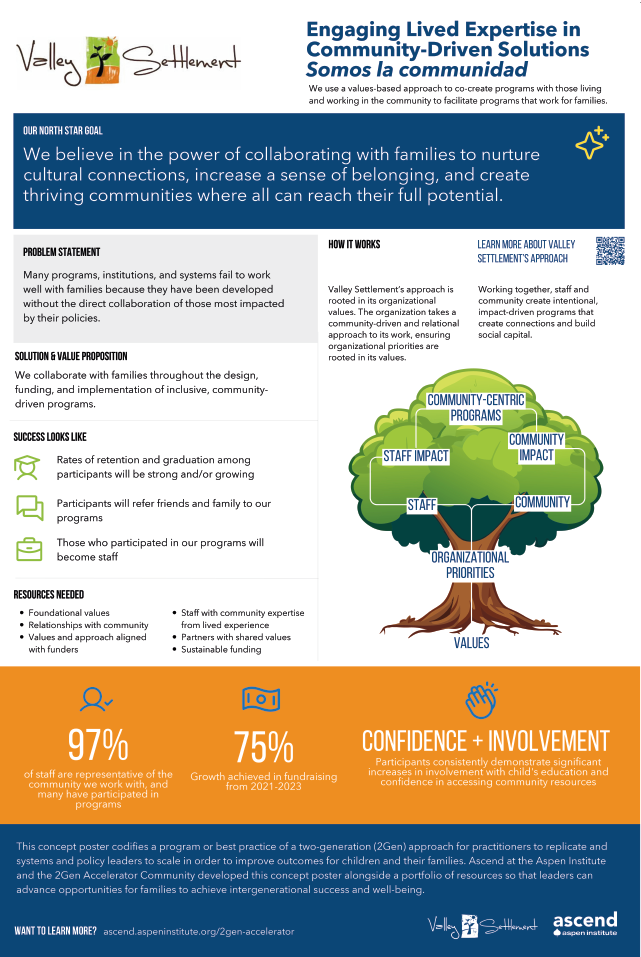
Engaging Lived Expertise in Community-Driven Solutions (Somos la communidad)
Read More
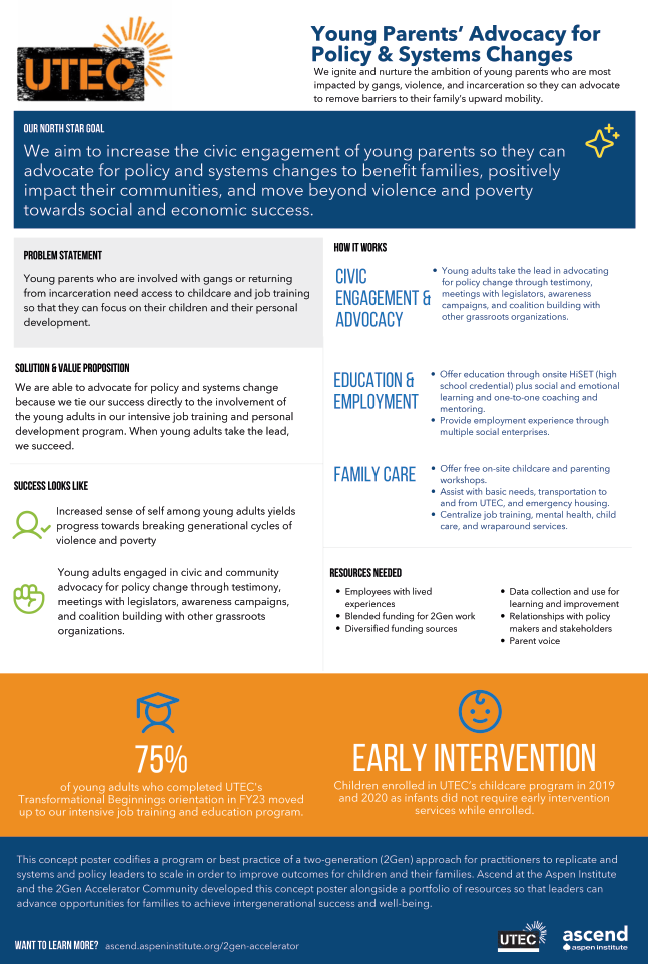
Young Parents’ Advocacy for Policy & Systems Change
Read More
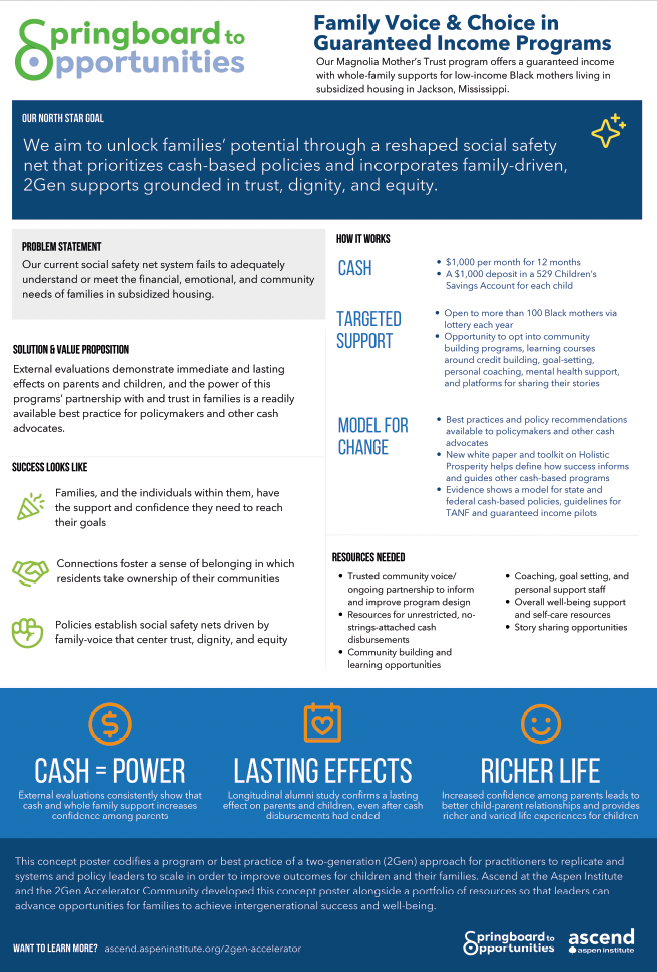
Family Voice & Choice in Guaranteed Income Programs
Read More
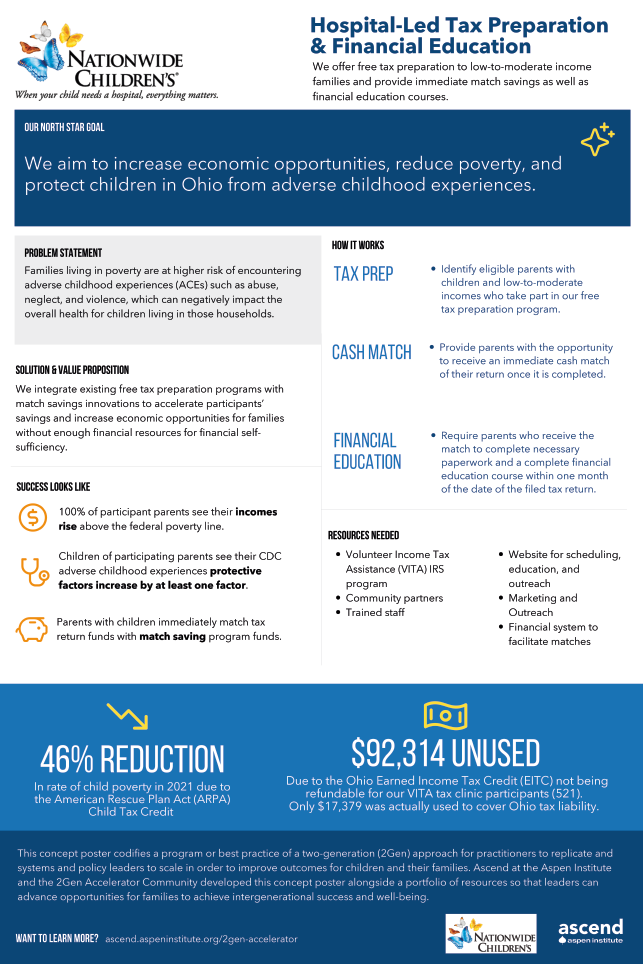
Hospital-Led Tax Preparation & Financial Education
Read More
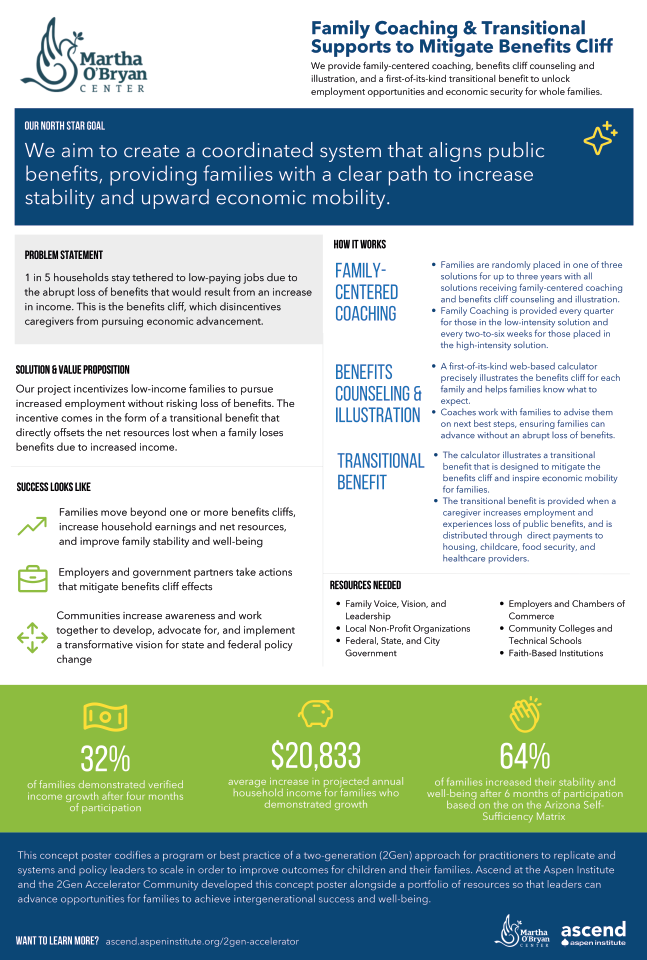
Family Coaching & Transitional Supports to Mitigate Benefits Cliff
Read More
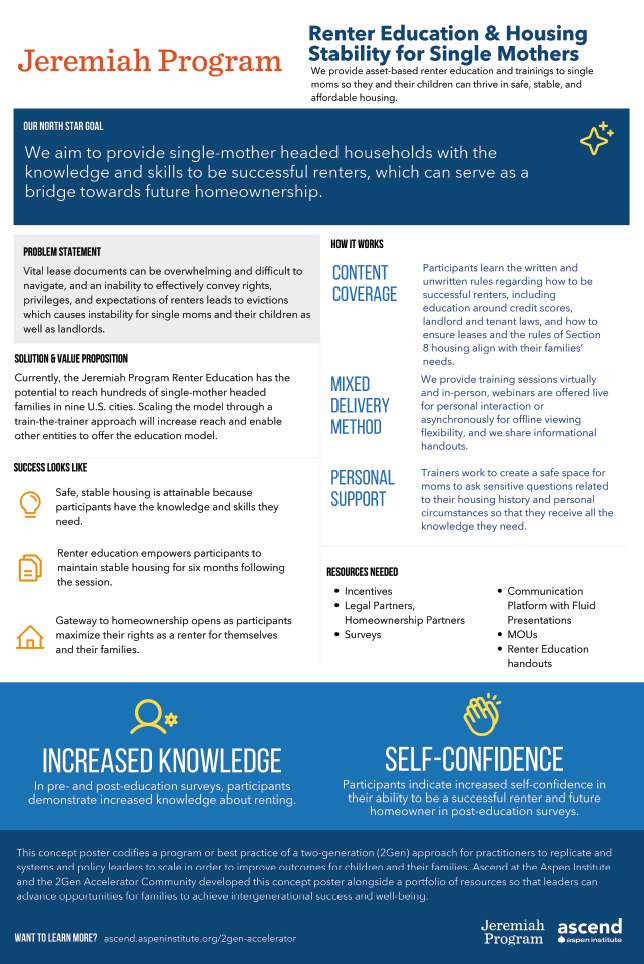
Renter Education & Housing Stability for Single Mothers
Read More
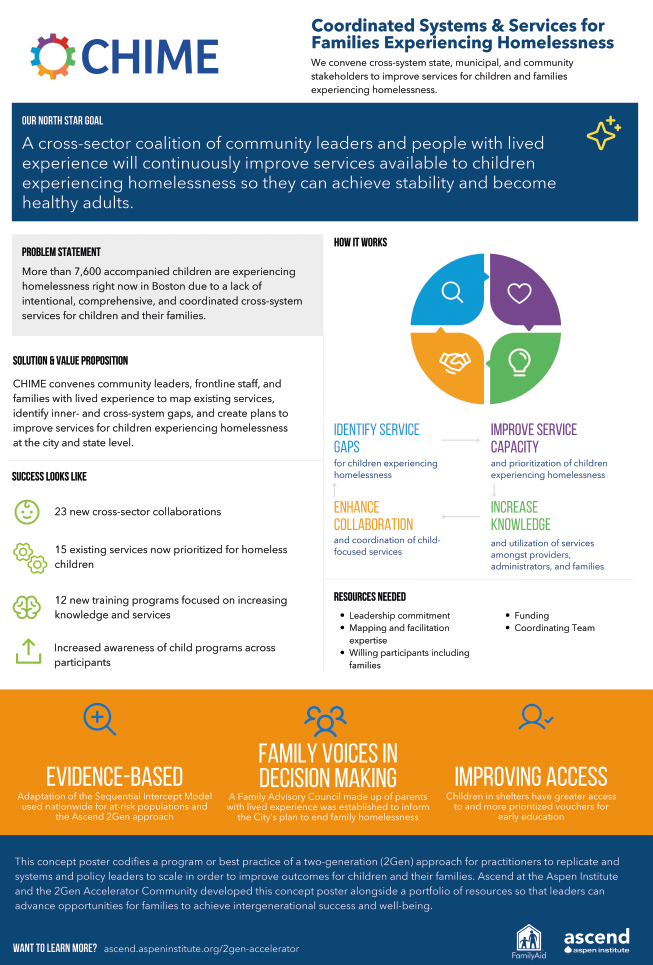
Coordinated Systems & Services for Families Experiencing Homelessness
Read More
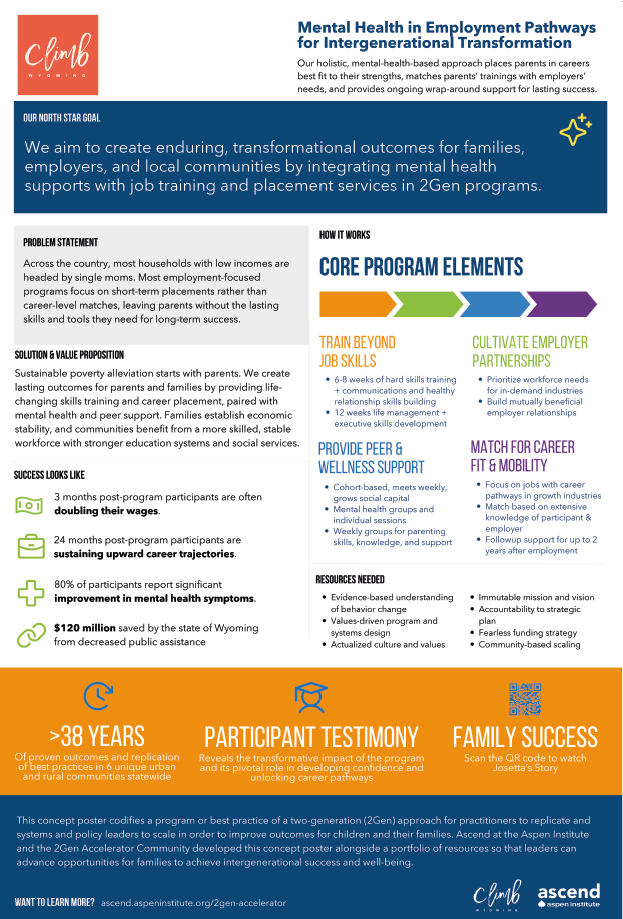
Mental Health in Employment Pathways for Intergenerational Transformation
Read More
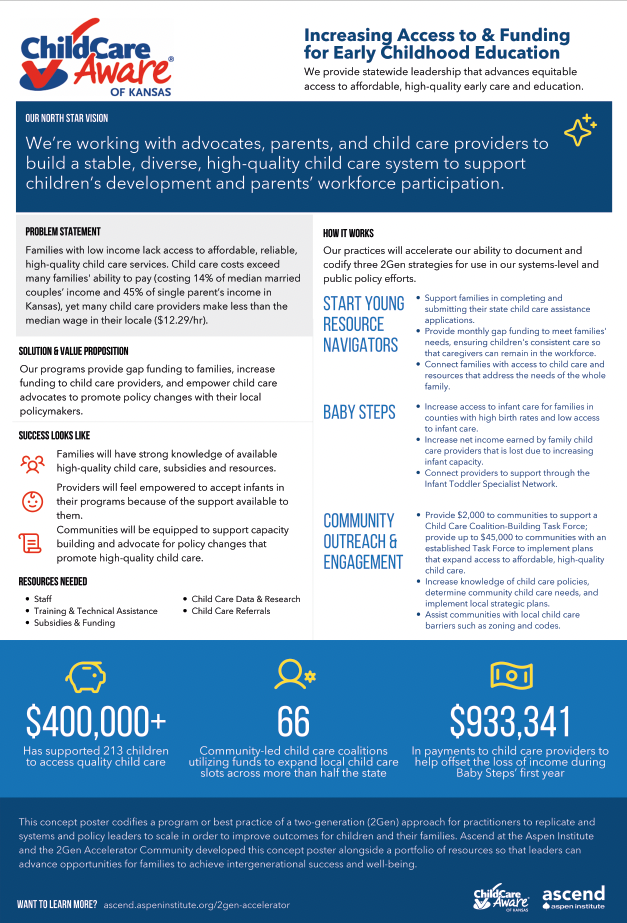
Increasing Access to & Funding for Early Childhood Education
Read More
People-First Language Guide: A Resource for 2Gen Practitioners
Read More
Providing Equal Access to Justice
Read More
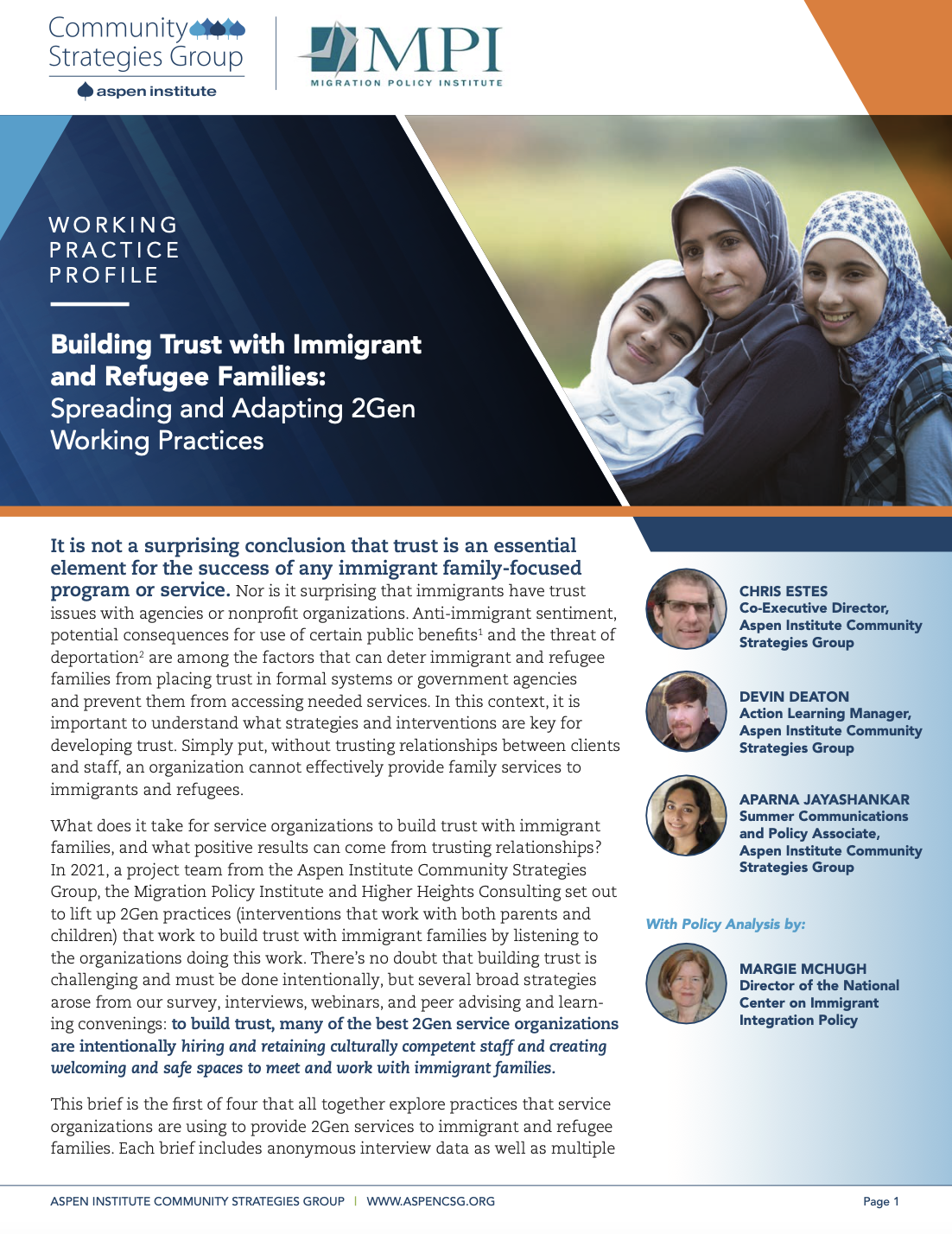
Building Trust with Immigrant and Refugee Families: Spreading and Adapting 2Gen Working Practices
Read More
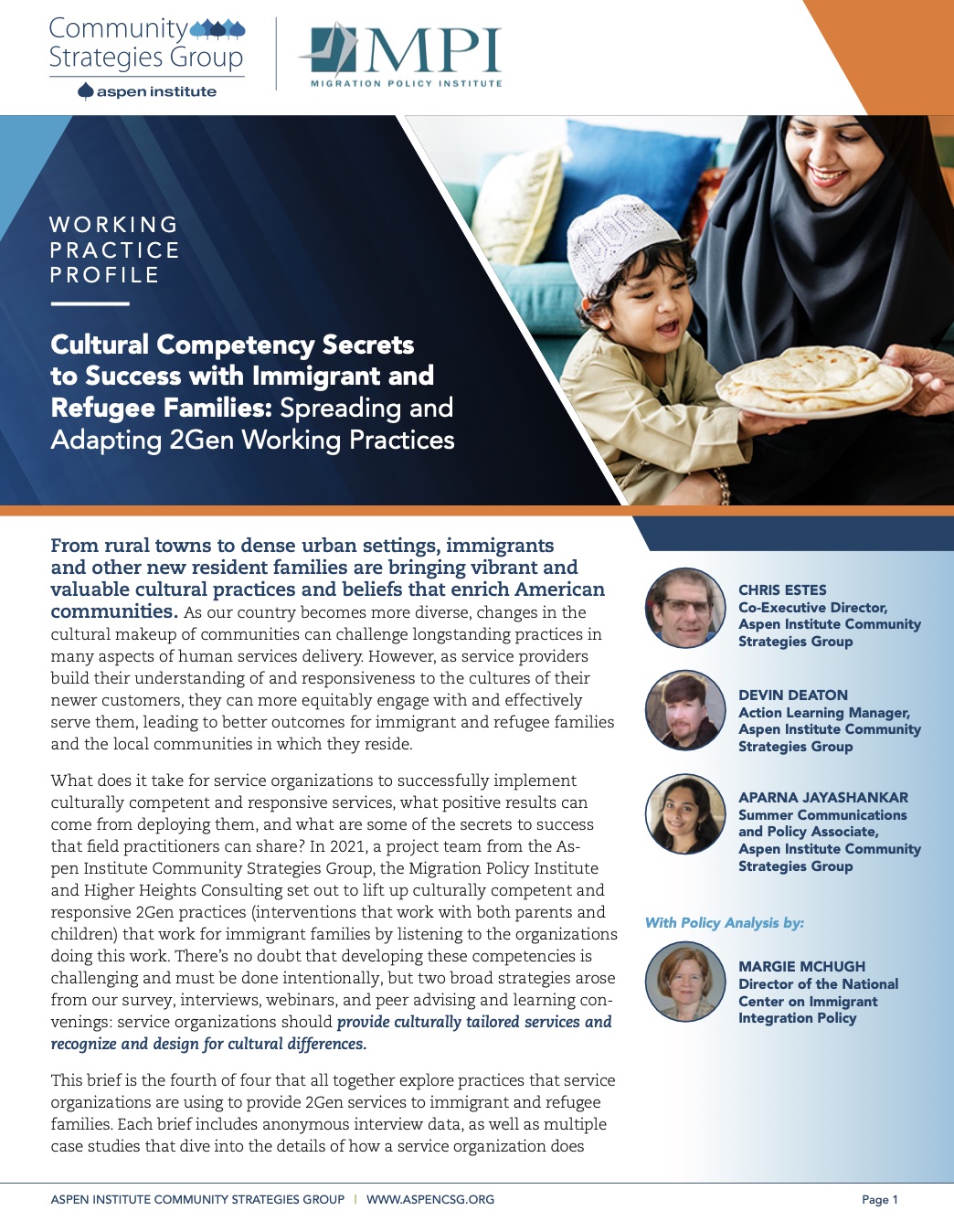
Cultural Competency Secrets to Success with Immigrant and Refugee Families: Spreading and Adapting 2Gen Working Practices
Read More
Providing Employment and Income Supports When Noncustodial Parents Have Barriers to Payment
Read More
Setting Realistic and Accurate Child Support Orders
Read More
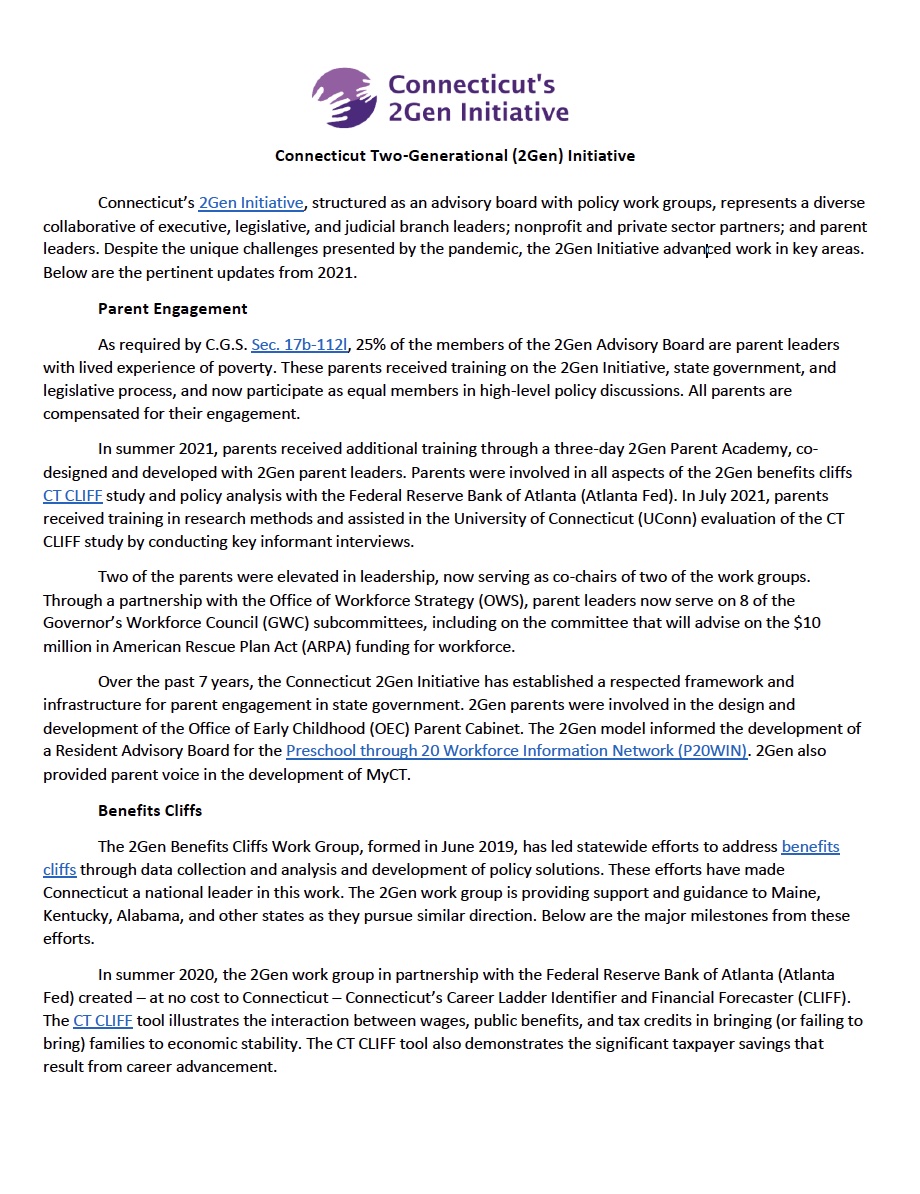
Connecticuts’s Two-Generational (2Gen) Initiative
Read More
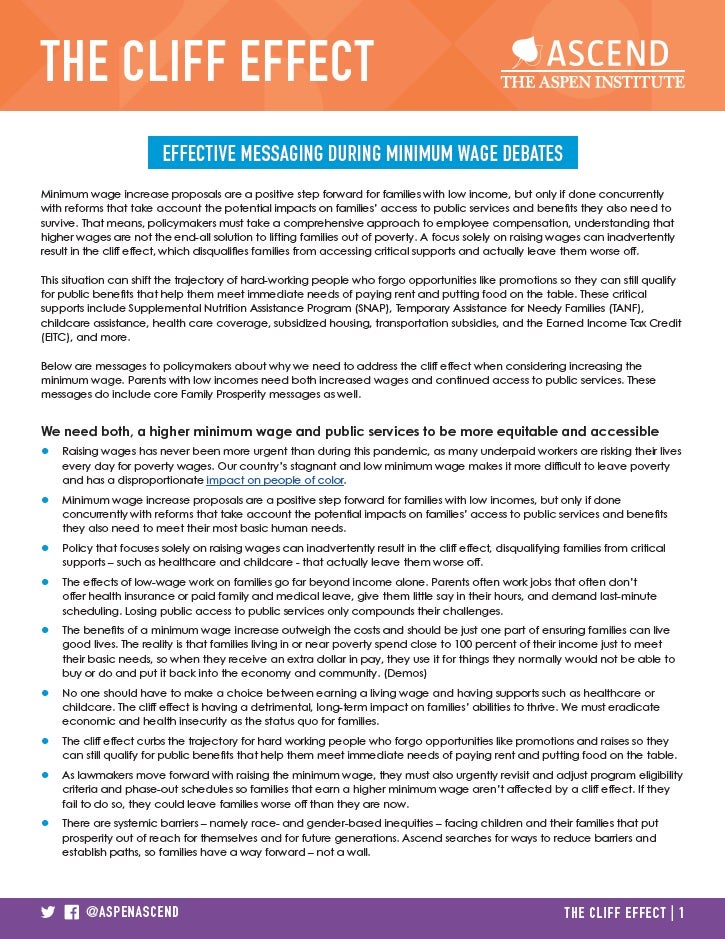
Cliff Effect Messaging Guide
Read More
Making Family-Focused Public Assistance, Systems, Supports, and Services Accessible to Noncustodial Fathers
Read More
Adopting Father-Inclusive and Supportive Principles Across Public and Private Funding Streams
Read More
Transforming Criminal and Civil Legal Systems and Reexamining Public and Private Policies and Practices to Support Justice-Involved Families
Read More
Reframing Narratives to More Accurately and Positively Reflect Fathers’ Roles in Families and Communities
Read More
Bringing Fathers Into Focus for Child and Family Well-Being
Read More
Urban Institute: The Costs of Coordinating Two-Generation Programs
Read More
Aligning Systems: Aspen Early Childhood Development and Health Forums, 2017-2020
Read More
Two-Generation Approach to Leveraging TANF: DC as a Case Study for Policymakers
Read More
Implementing Sensible Debt Reduction Strategies
Read More
Ensuring Families Receive All Child Support Payments
Read More
Centering Child Well-Being in Child Support Policy
Read More
Principles and Innovations to Drive Family Prosperity
Read More
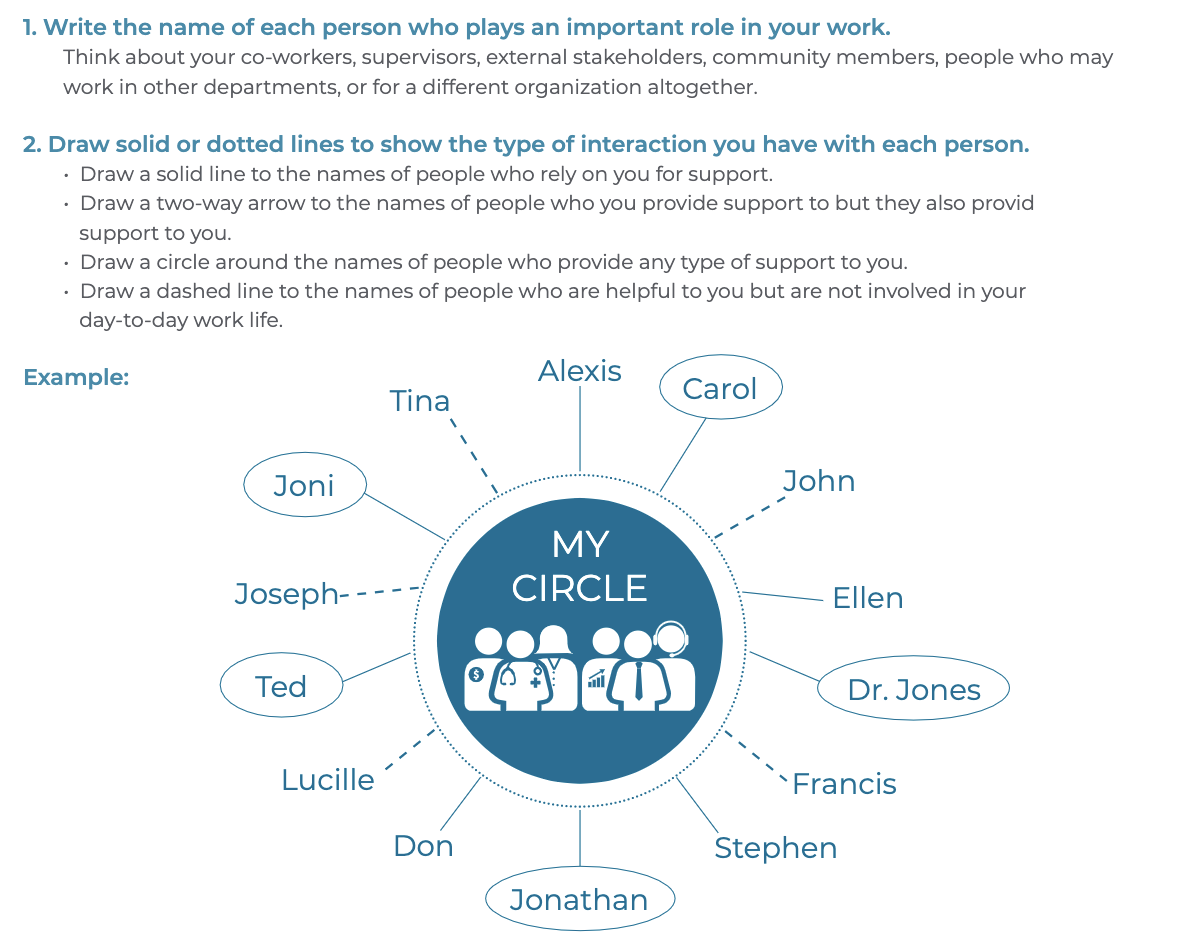
Tool: Who Is In My Circle?
Read More
Family Prosperity Innovation Community Index
Read More
Evaluation of Employment Coaching for TANF and Related Populations: Evaulation Design Report
Read More

Two-Generation Strategy Yields Promising Results: The LIFT-AppleTree Partnership Pilot Project
Read More
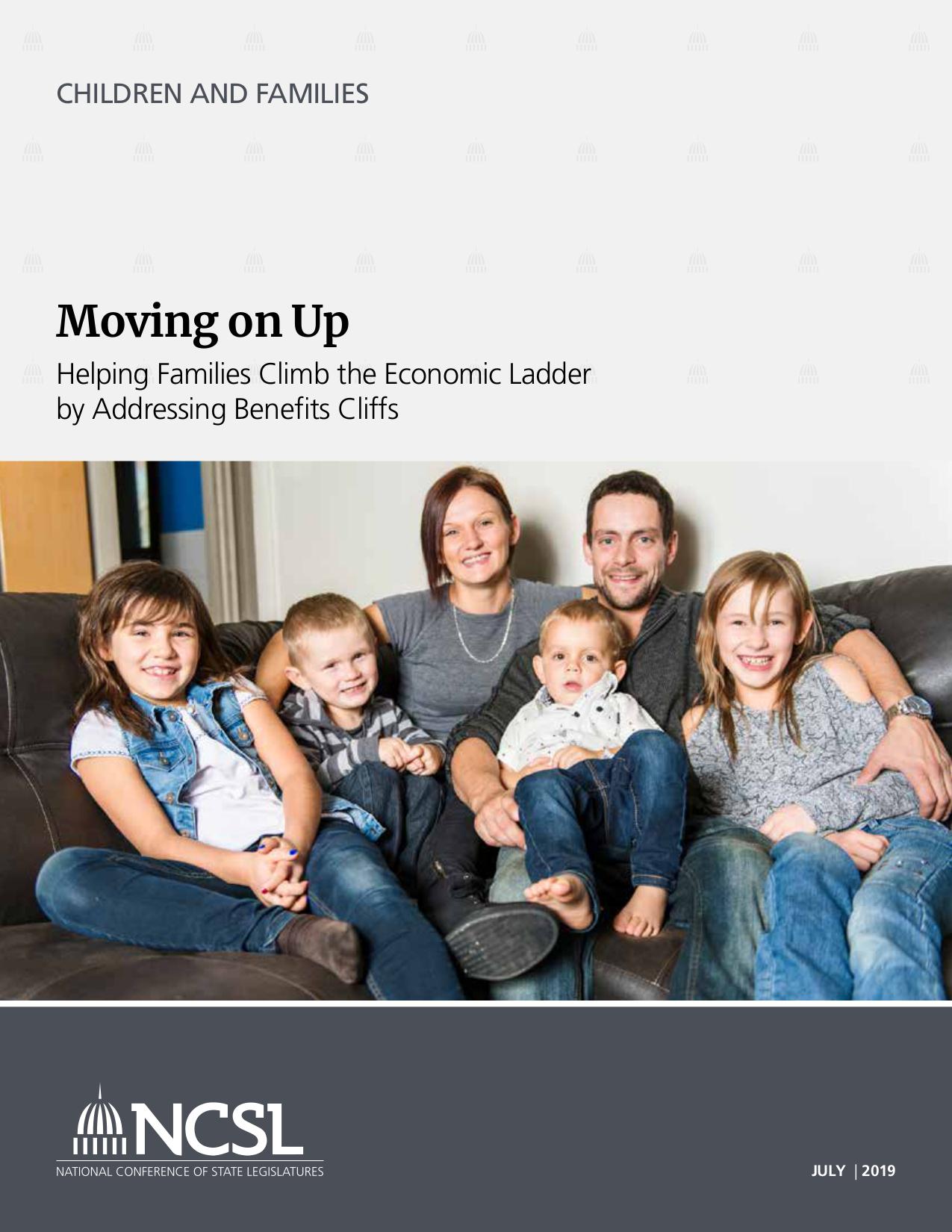
Moving on Up: Helping Families Climb the Economic Ladder by Addressing Benefits Cliffs
Read More
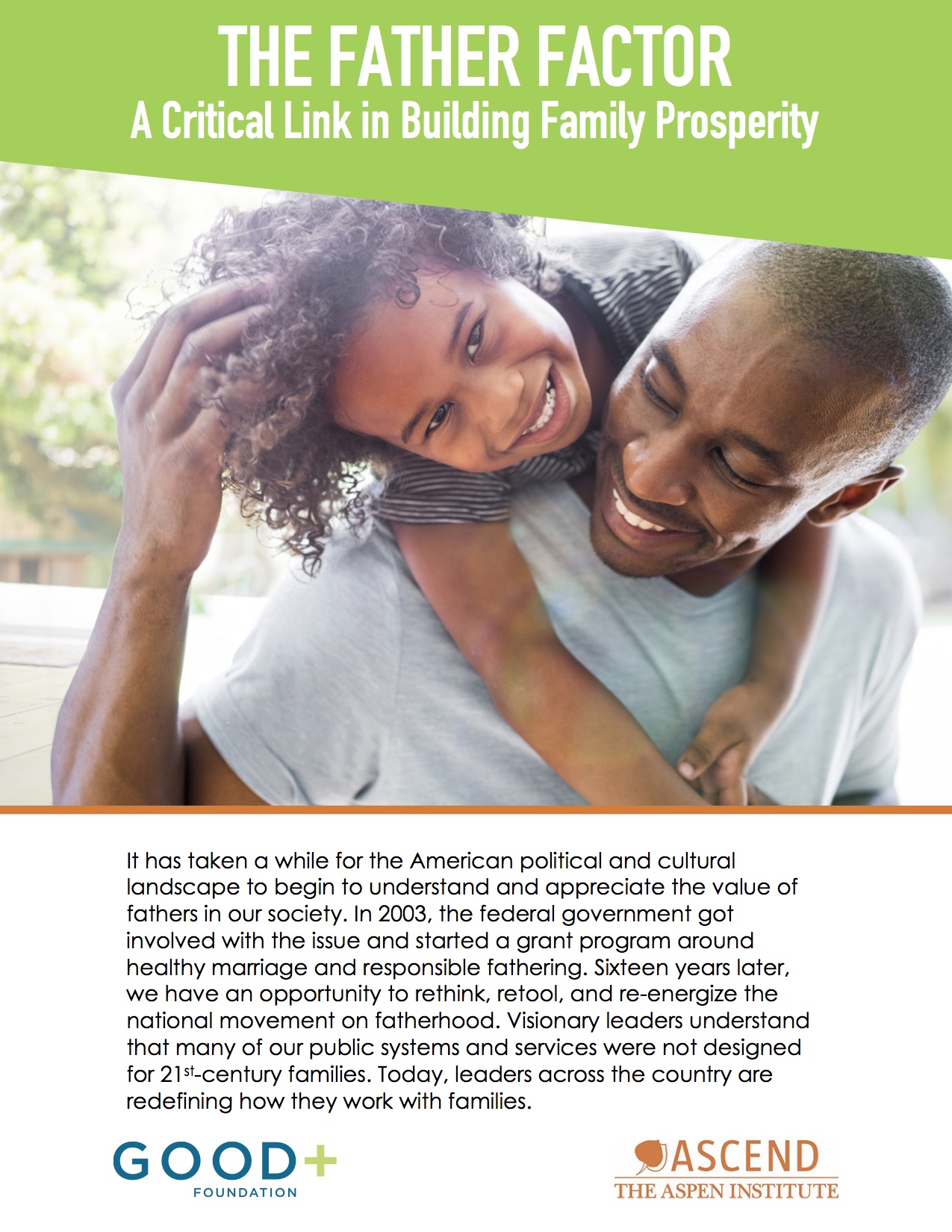
The Father Factor: A Critical Link In Building Family Prosperity
Read More
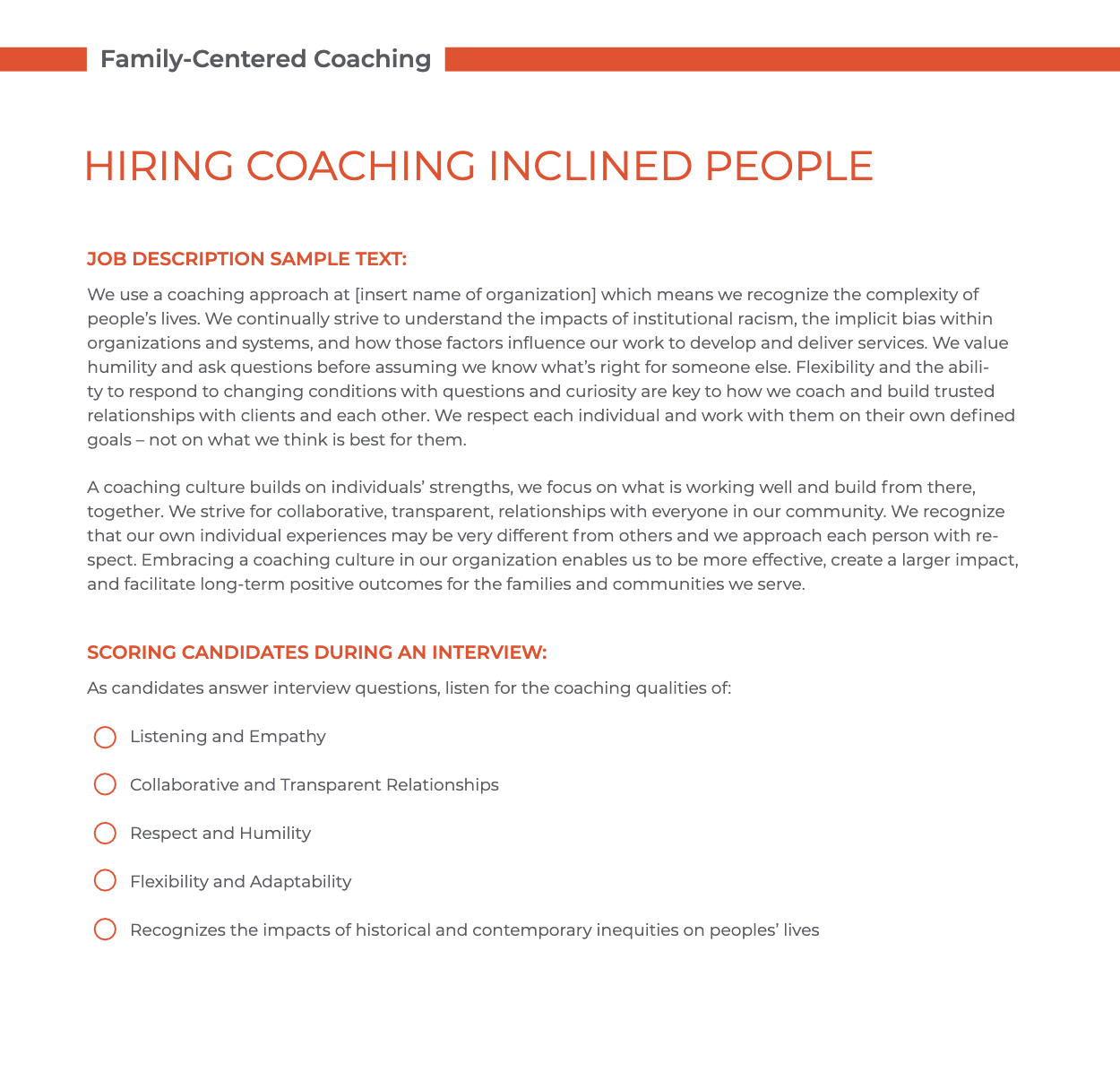
Tool: Hiring Coaching-Inclined People
Read More
Tool: Coaching Performance Self Assessment
Read More
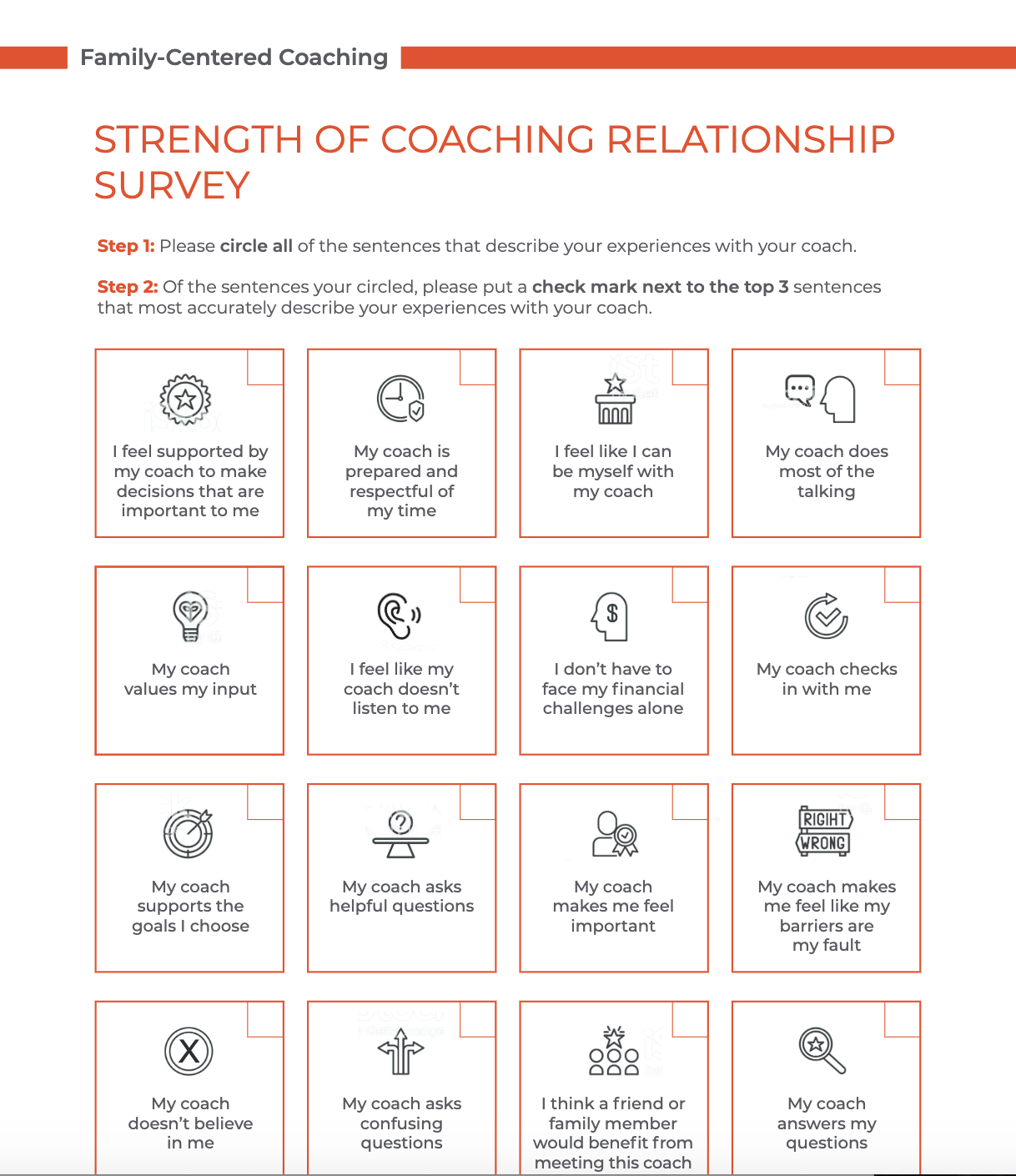
Tool: Strength of Coaching Relationship Survey
Read More
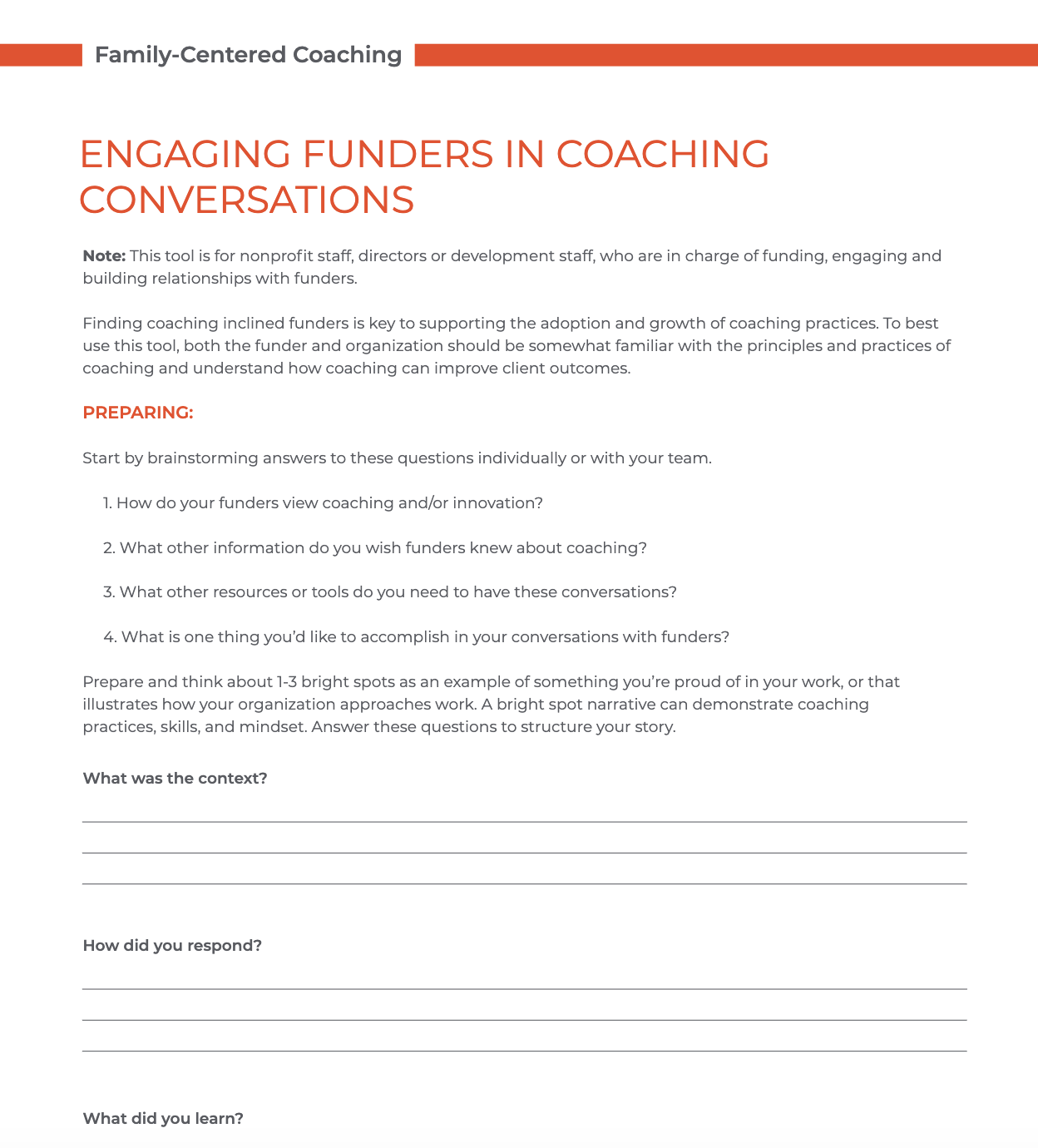
Tool: Finding Coaching-Inclined Funders
Read More
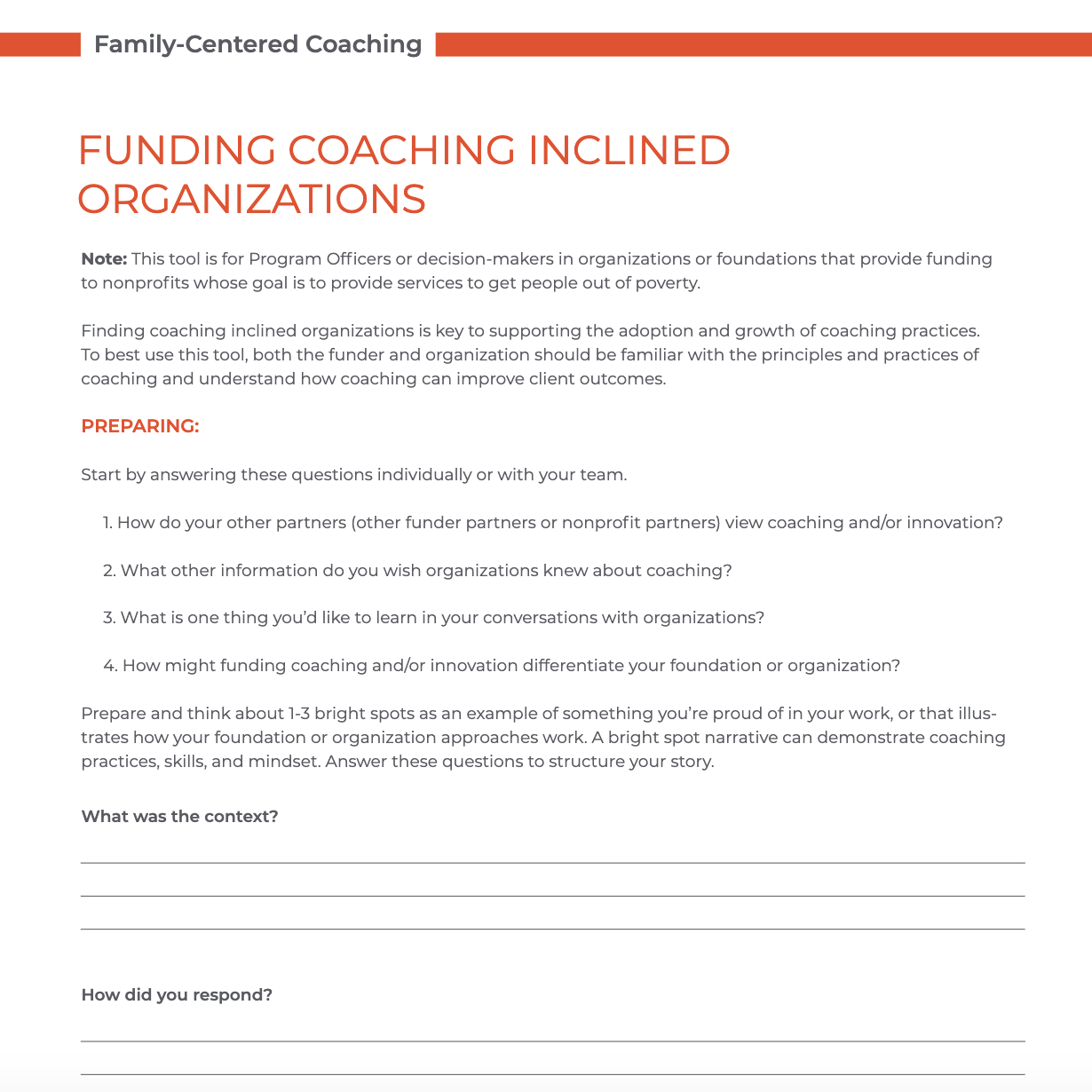
Tool: Funding Coaching-Inclined Organizations
Read More
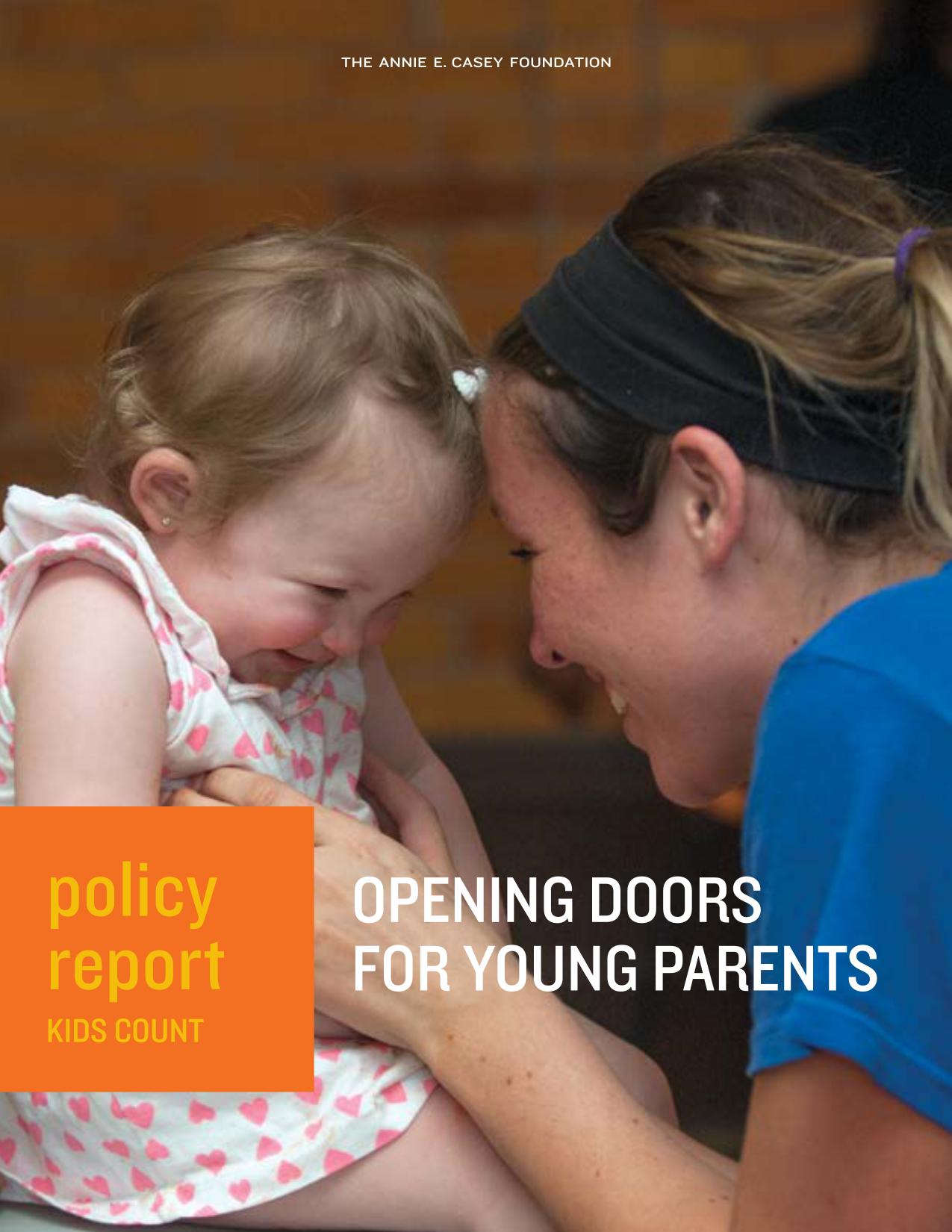
Opening Doors for Young Parents: Kids Count Policy Report
Read More
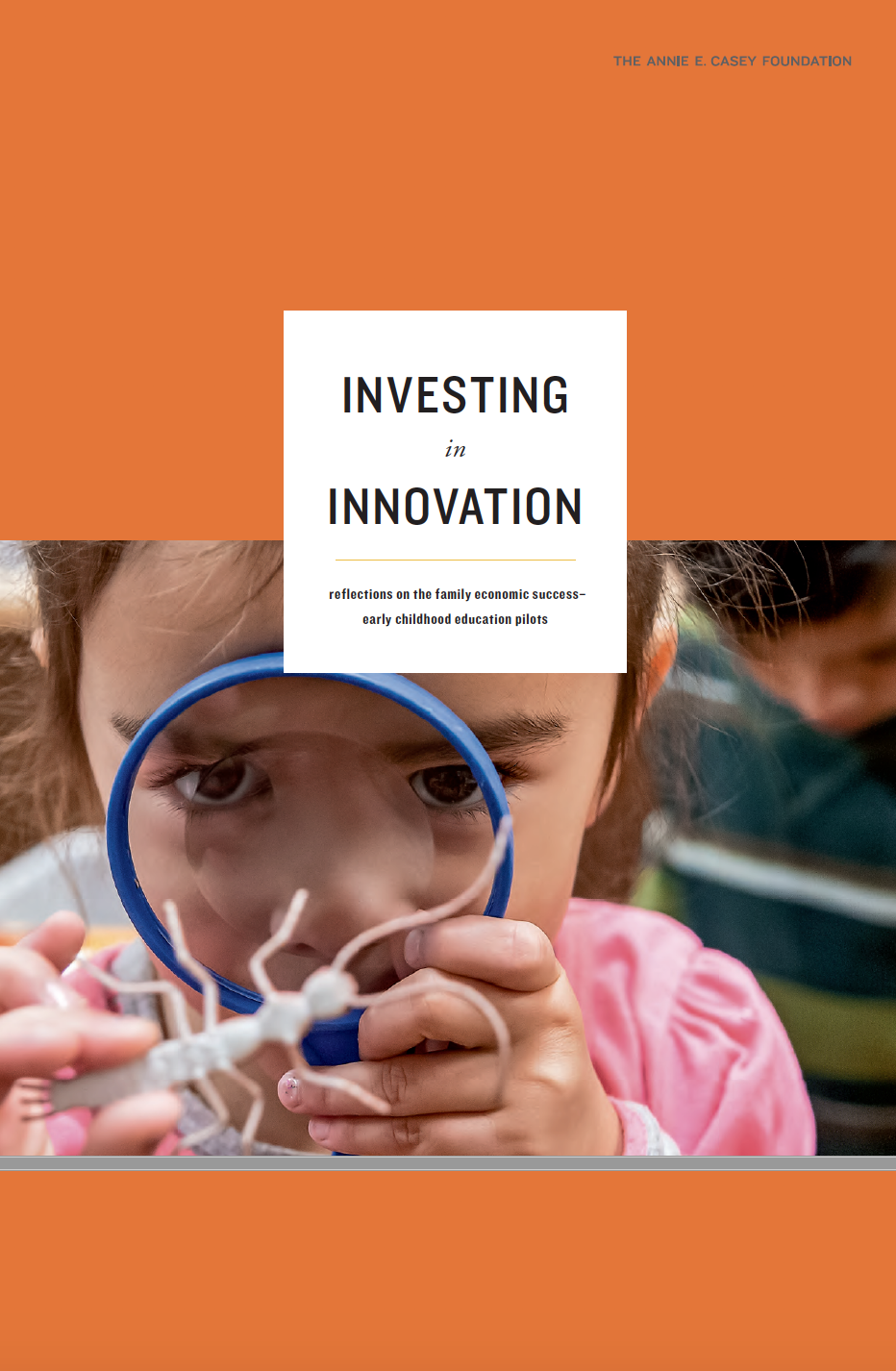
Investing in Innovation: Reflections on the Family Economic Success-Early Childhood Education Pilots
Read More
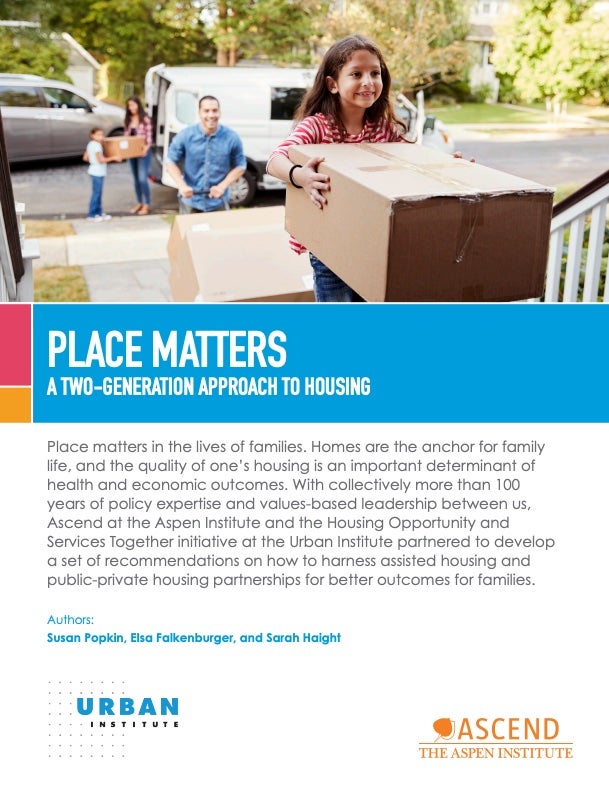
Place Matters: A Two-Generation Approach to Housing
Read More

Healthy Families Checklist: Leveraging Medicaid for Our Youngest Children and Families
Read More
Community Action Economic Mobility Initative Design Plan
Read More
Providing Care and Custody With Dignity and Respect Within Colorado Division of Youth Services
Read More
Bundling Services to Improve Outcomes: Three Cases
Read More
An Evaluation of Family Economic Success – Early Childhood Education: Findings from a Two-Generation Approach
Read More
Promoting Parents’ Social Capital to Increase Children’s Attendance in Head Start: Evidence from an Experimental Intervention
Read More
Reducing the Cliff Effect to Support Working Families
Read More
Engaging Fathers in Child Support: From a Punitive to a Supportive Approach
Read More
Measuring Mobility Toolkit
Read More
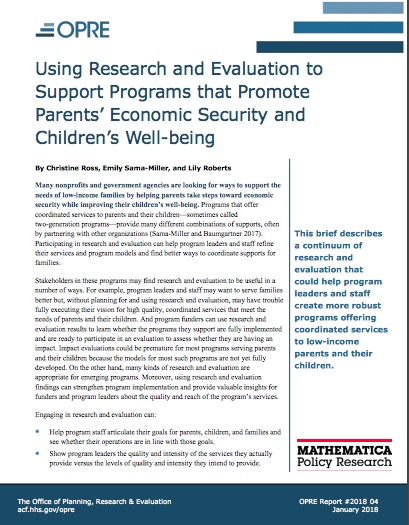
Using Research and Evaluation to Support Programs that Promote Parents’ Economic Security and Children’s Well-being
Read More

Becoming Visible: Race, Economic Security, and Political Voice in Jackson, MS
Read More
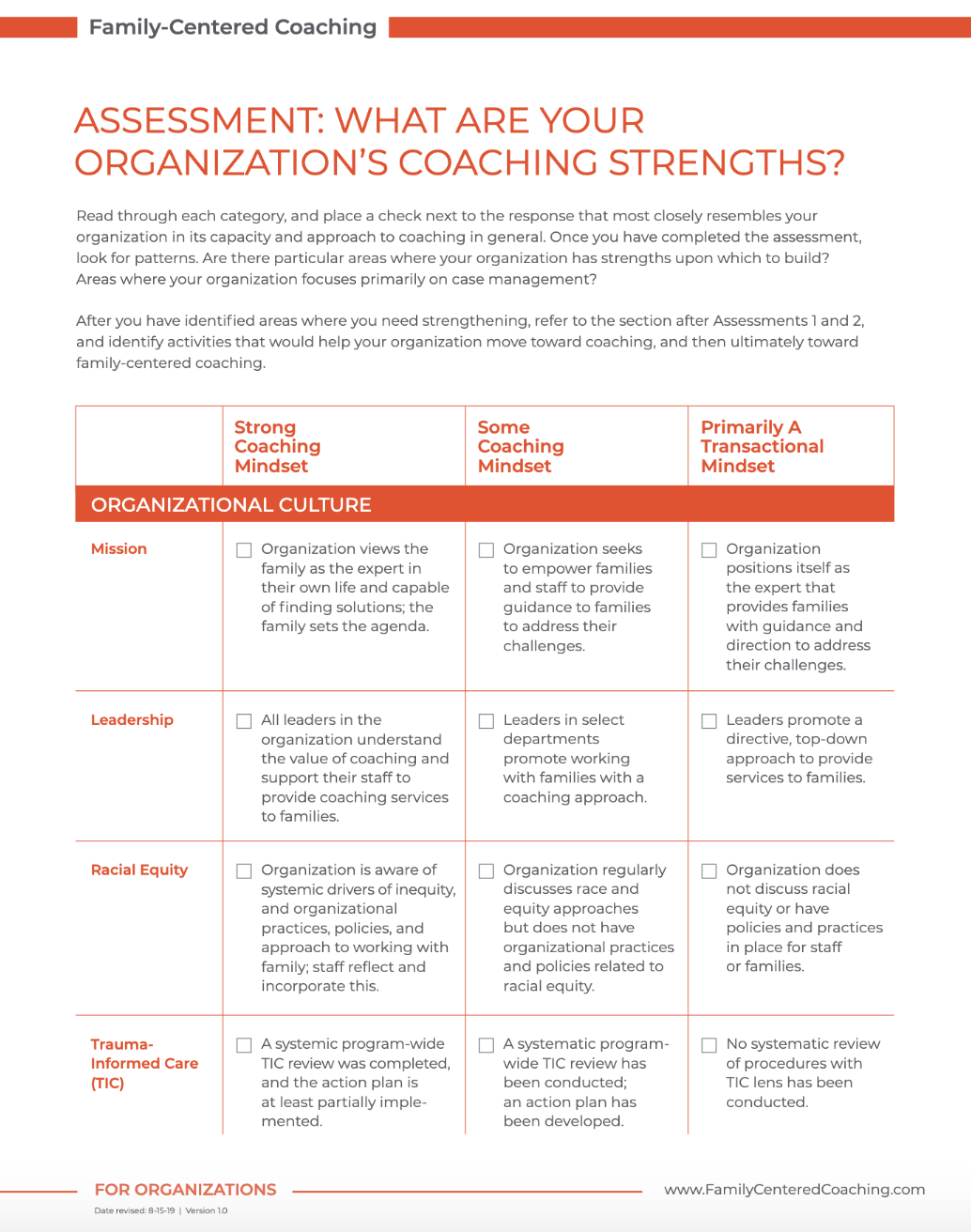
Assessment: What Are Your Organization’s Coaching Strengths?
Read More
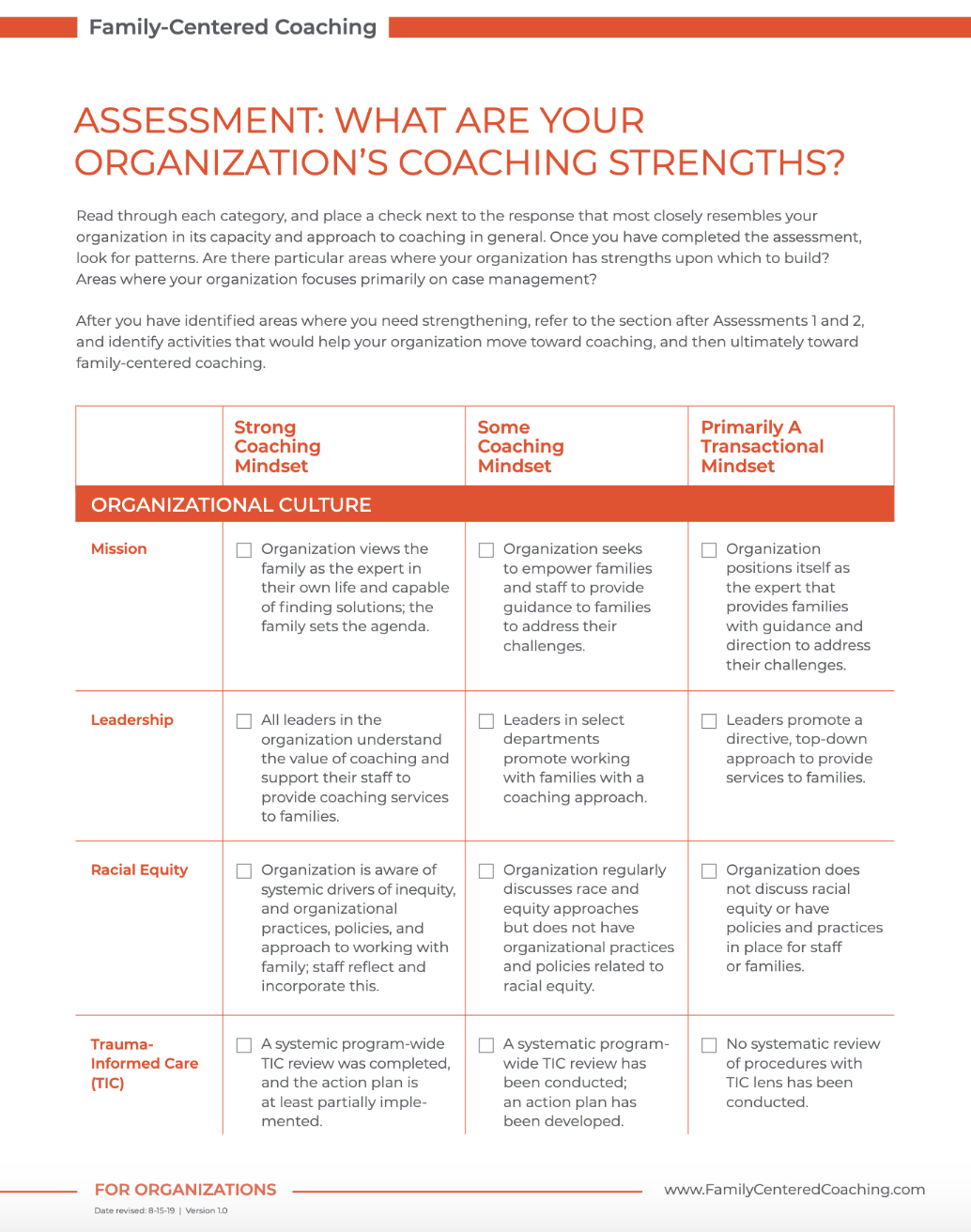
Assessment: What Are Your Organization’s Family-Centered Strengths?
Read More
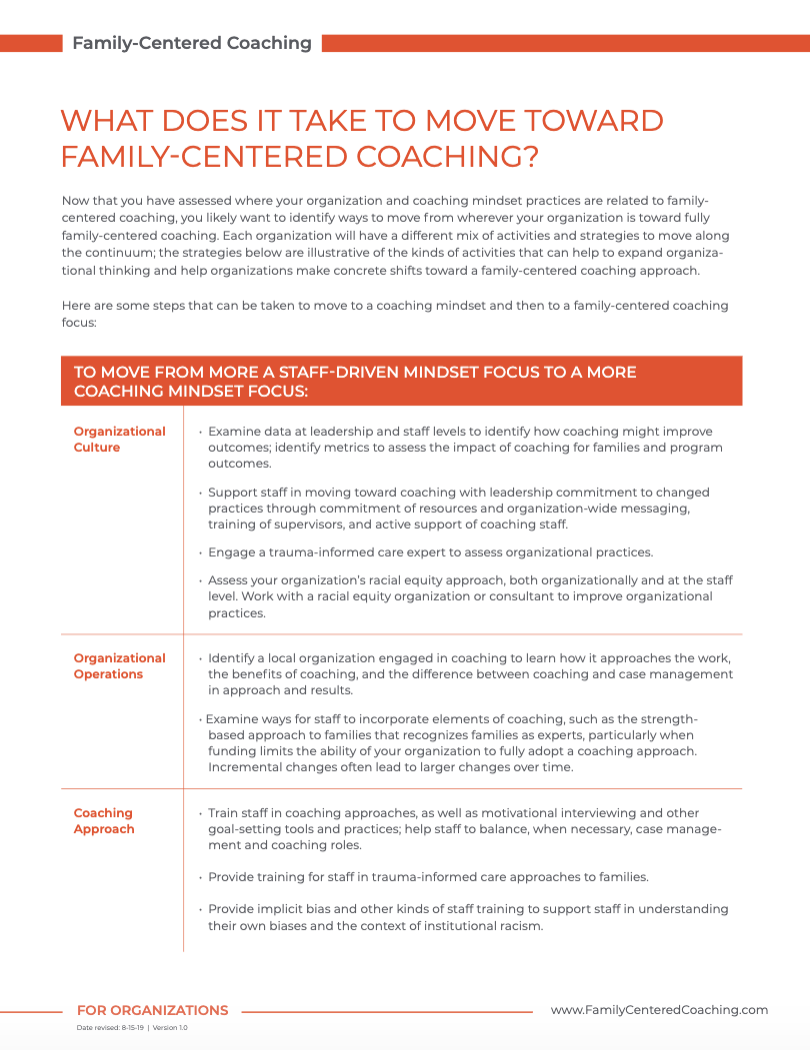
Tool: What Does it Take to Move Toward Family-Centered Coaching?
Read More
Assessing Organizational Readiness & Creating Partnerships
Read More

Assessment: What Are Your Organization’s Need for Family-Centered Partnerships?
Read More
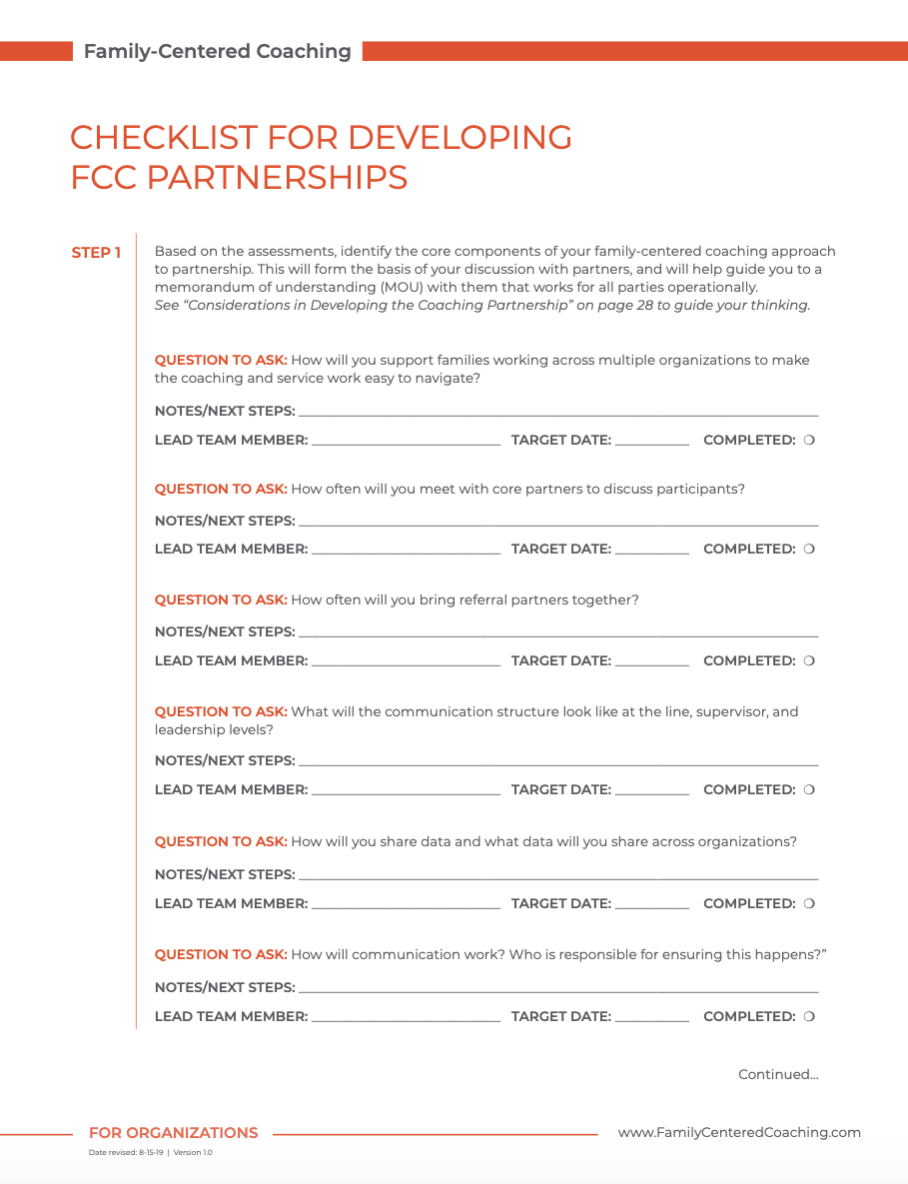
Tool: Checklist for Developing FCC Partnerships
Read More
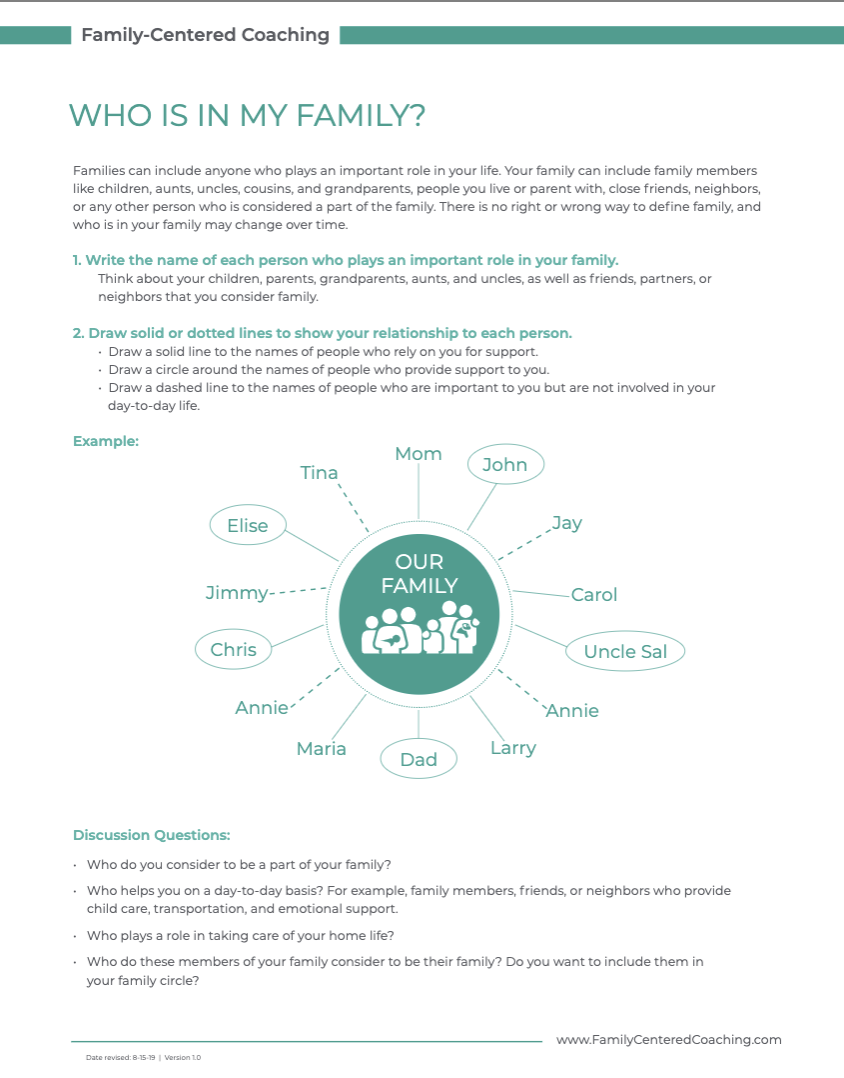
Tool: Who Is In My Family?
Read More
Tool: My Hopes and Dreams
Read More
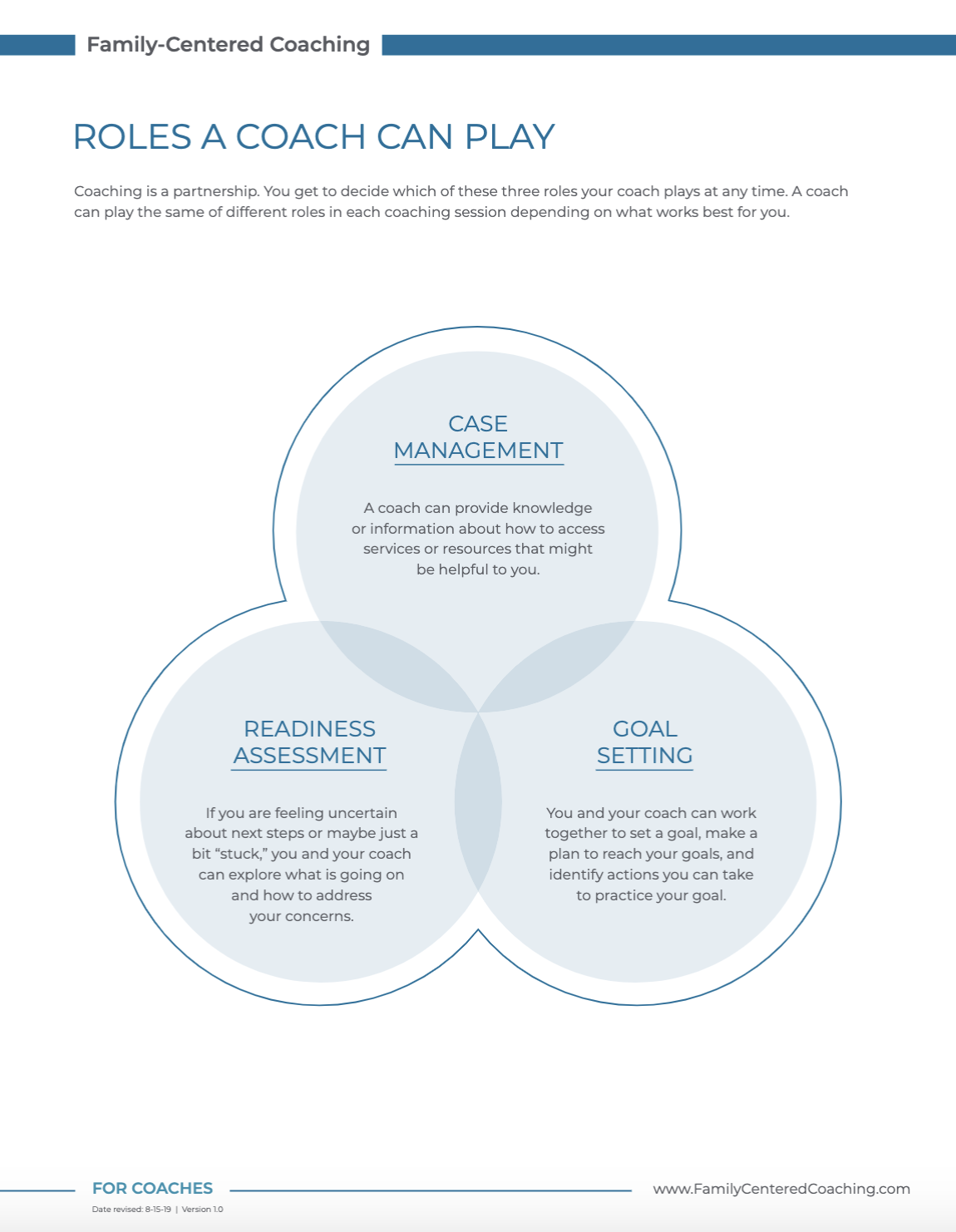
Tool: Roles a Coach Can Play
Read More
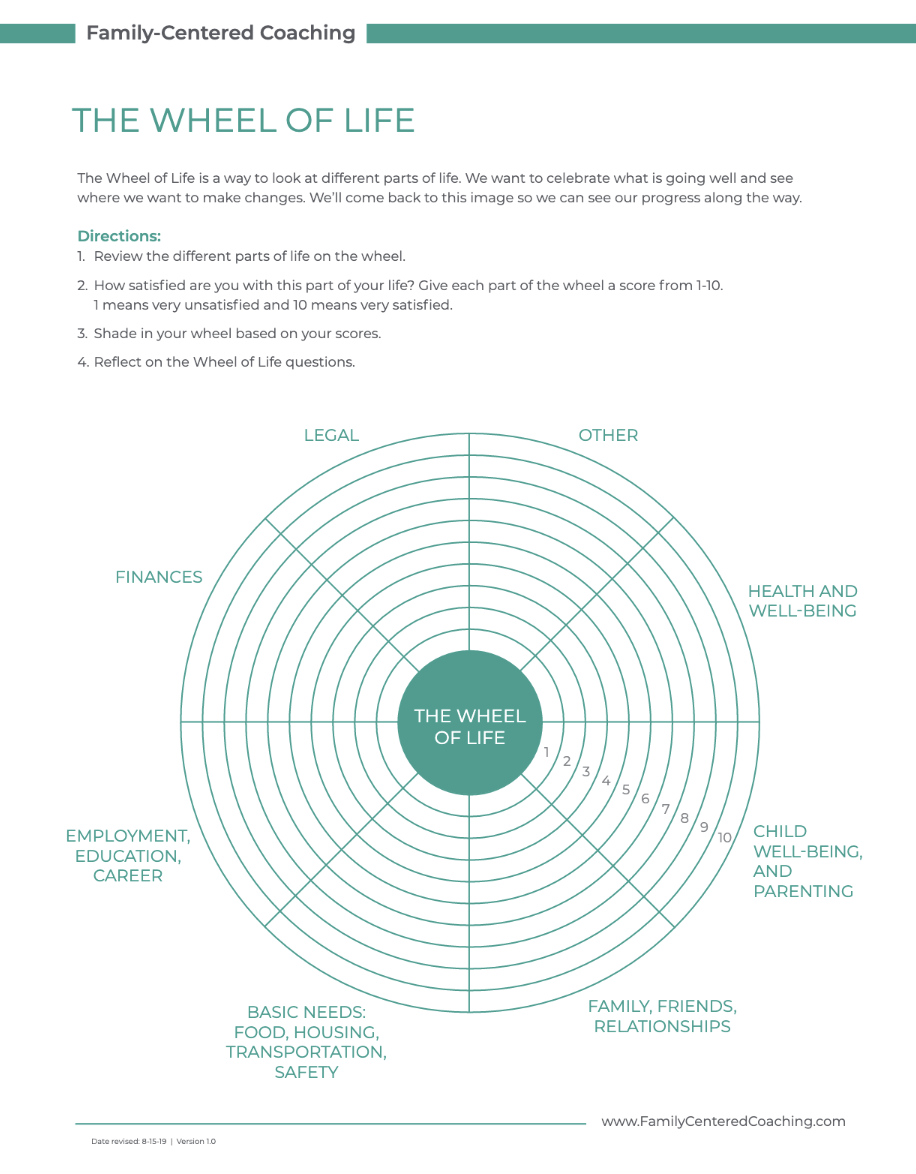
Tool: The Wheel Of Life
Read More
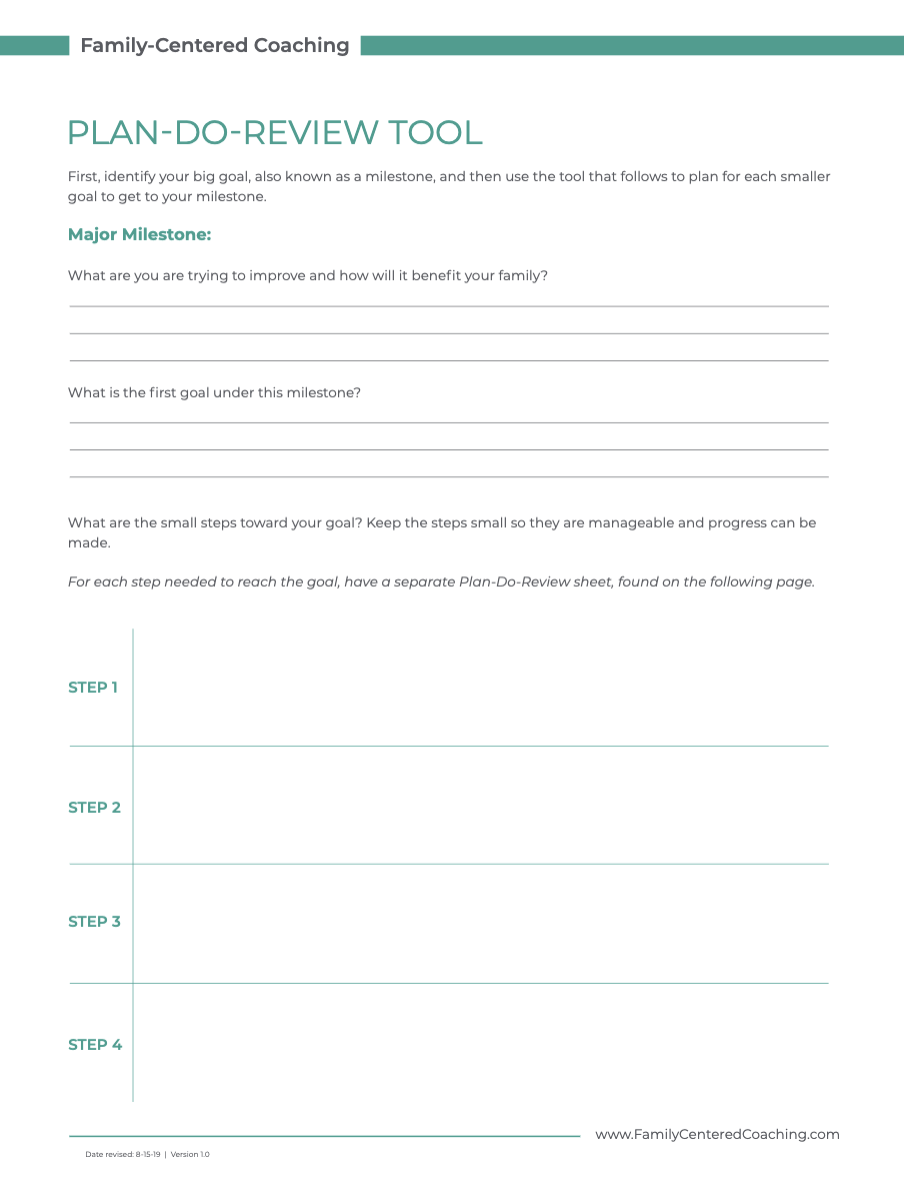
Tool: Plan, Do, Review
Read More
EMPath Bridge to Self Sufficiency
Read More
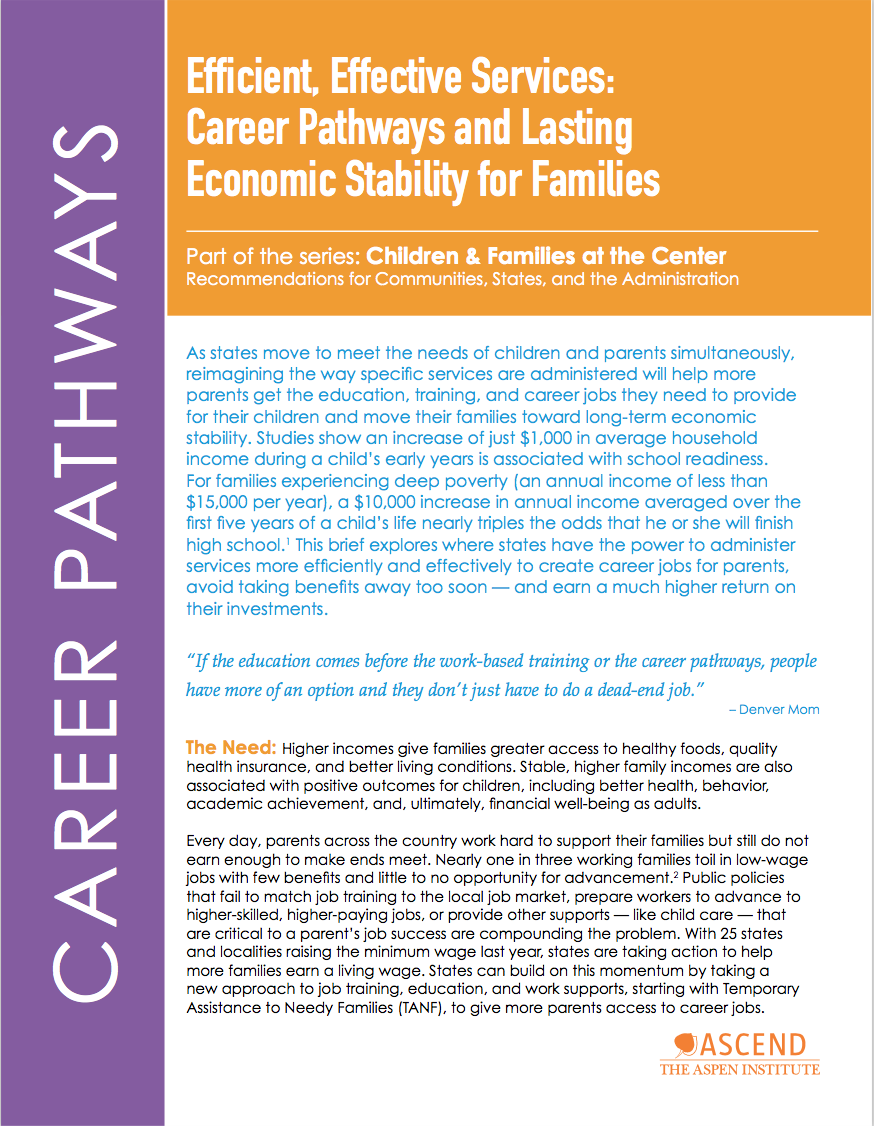
Efficient, Effective Services: Career Pathways and Lasting Economic Stability for Families
Read More
Literature Review: Family Self-Sufficiency
Read More

Parent Engagement Practices Improve Outcomes for Preschool Children
Read More
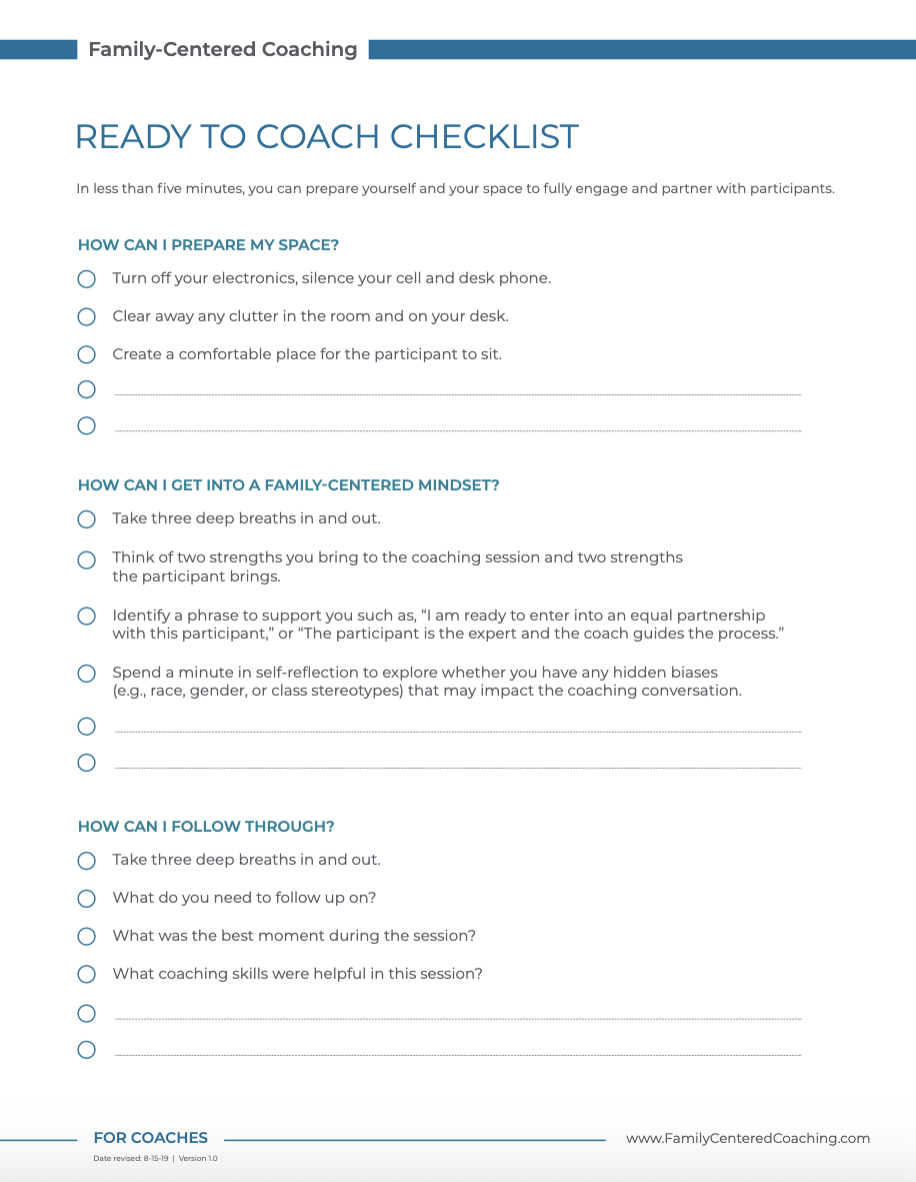
Tool: Ready to Coach Checklist
Read More
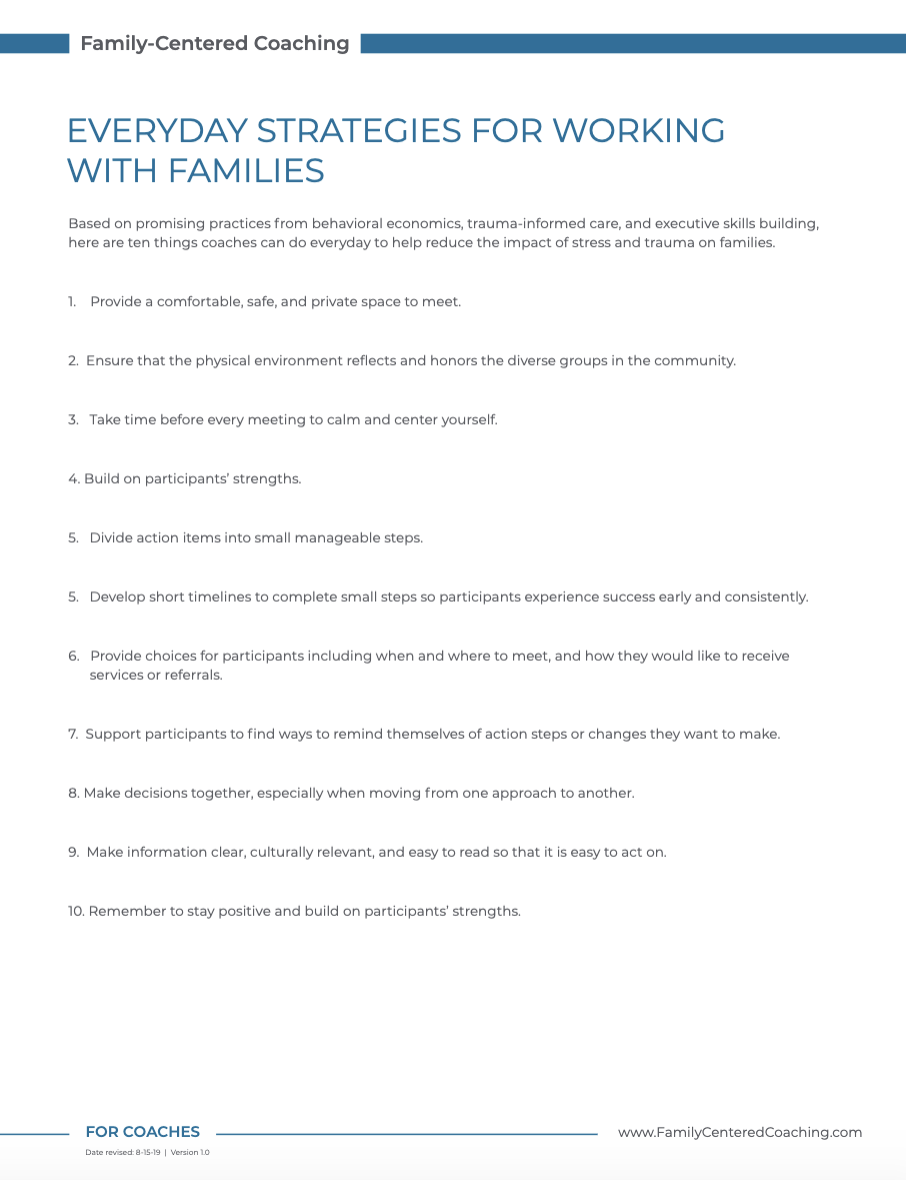
Tool: Everyday Strategies for Working with Families
Read More
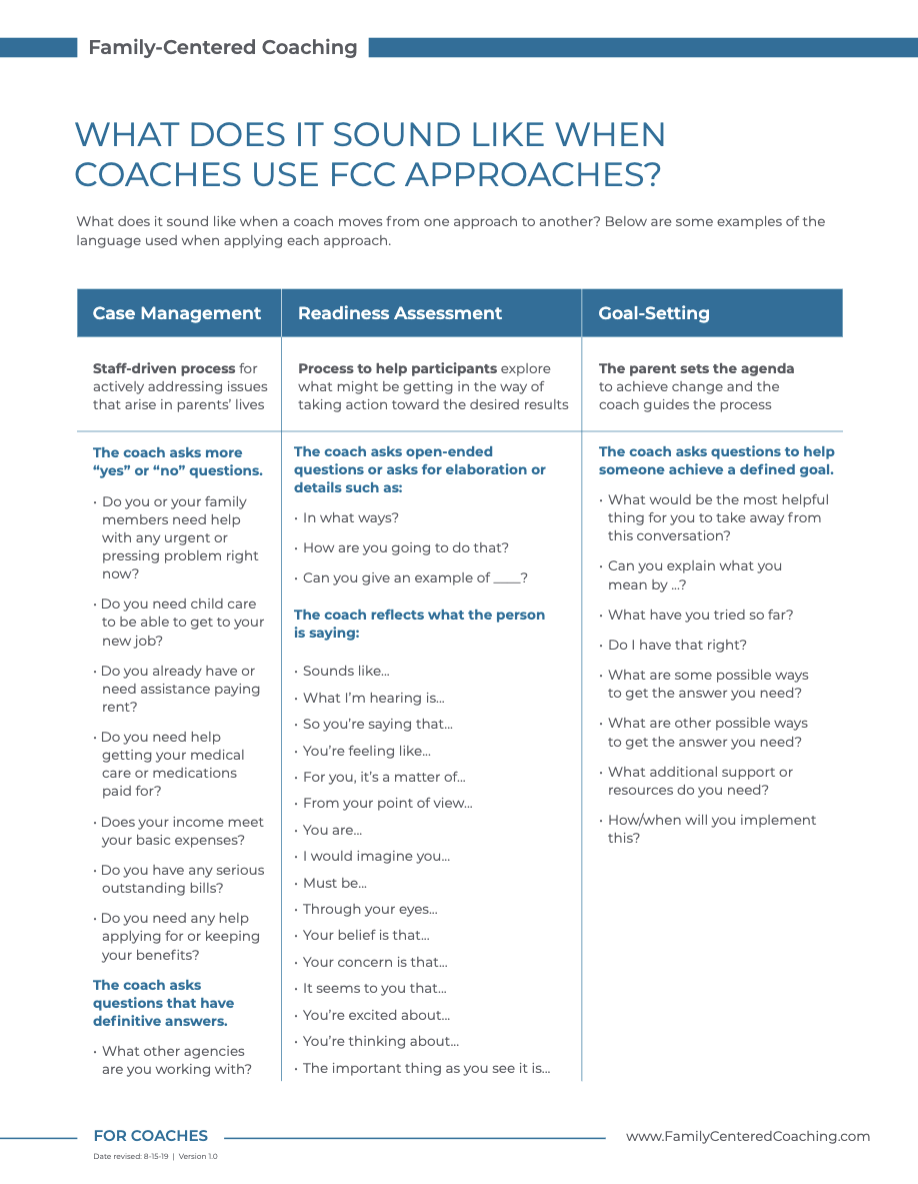
Tool: What Does It Sound Like When Coaches Use FCC Approaches?
Read More
Tool: The Roles of Participants and Coaches in Family-Centered Coaching
Read More
Tool: Listening For Participant’s Readiness to Change
Read More
Template: Developing a Local Resource Guide
Read More
Tool: Coaching on Basic Needs: Food, Housing, Transportation, Safety
Read More
Tool: Coaching on Employment, Education, and Career Areas of Life
Read More
Tool: Coaching on Child Well-Being and Parenting Areas of Life
Read More
Tool: Coaching on Financial Areas of Life
Read More
Tool: Coaching on Health and Well-Being Areas of Life
Read More
Tool: Coaching on Family, Friendship, & Other Relationship Areas of Life
Read More
Tool: Coaching On Legal Areas of Life
Read More
Family-Centered Coaching Toolkit
Read More
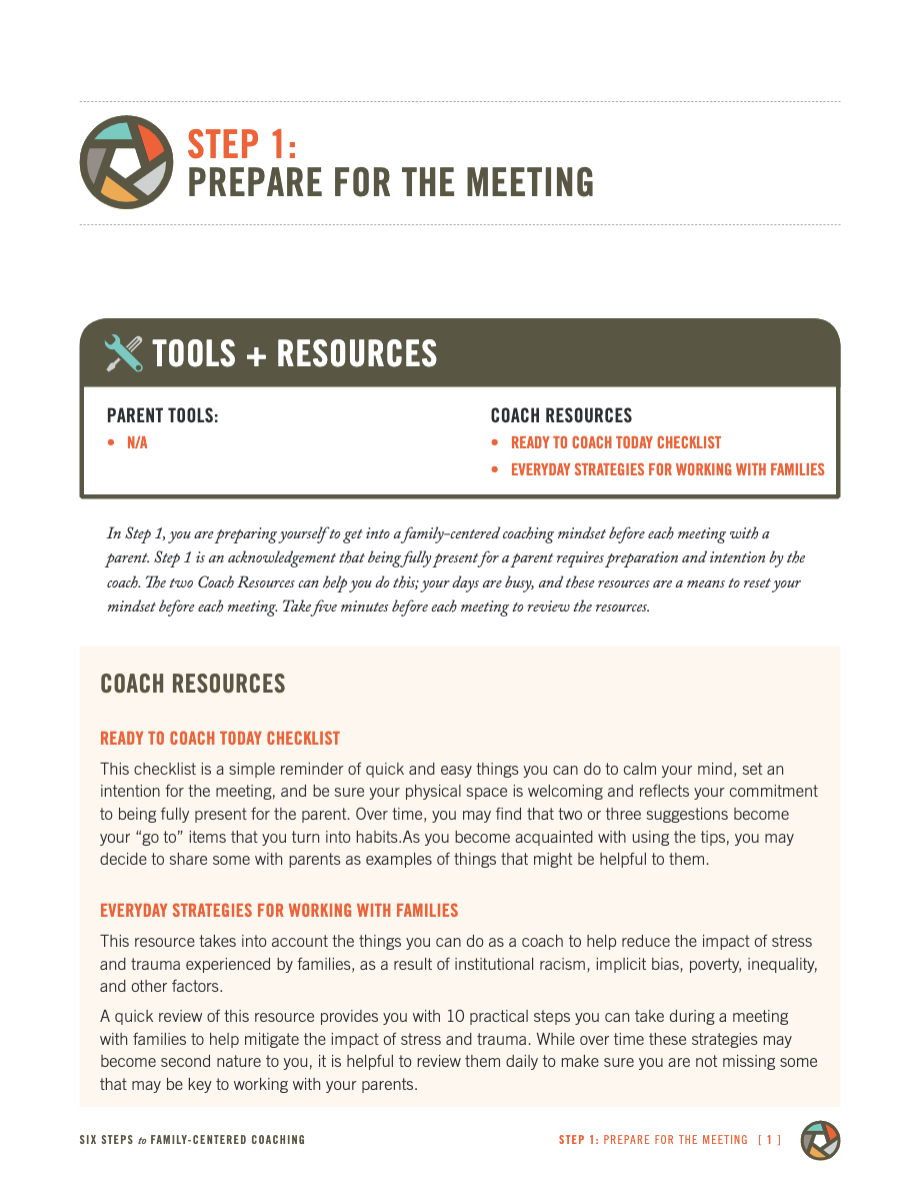
Six Steps to Family-Centered Coaching
Read More
Making a Two-Generation Model Work in the Real World Lessons from the HOST Demonstration
Read More
SparkPoint’s 10 Key Findings: Demonstrating client progress towards financial prosperity
Read More
Coaching for Economic Mobility
Read More
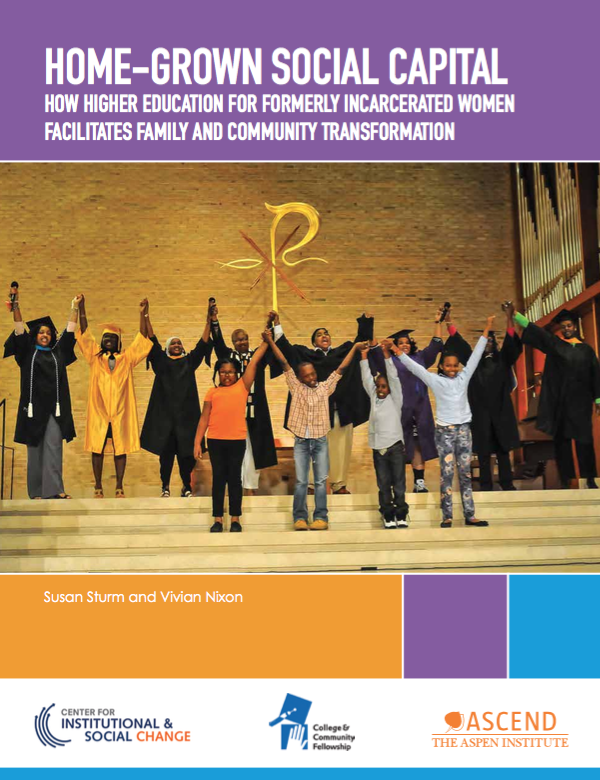
Home-Grown Social Capital: How Higher Education for Formerly Incarcerated Women Facilitates Family and Community Transformation
Read More
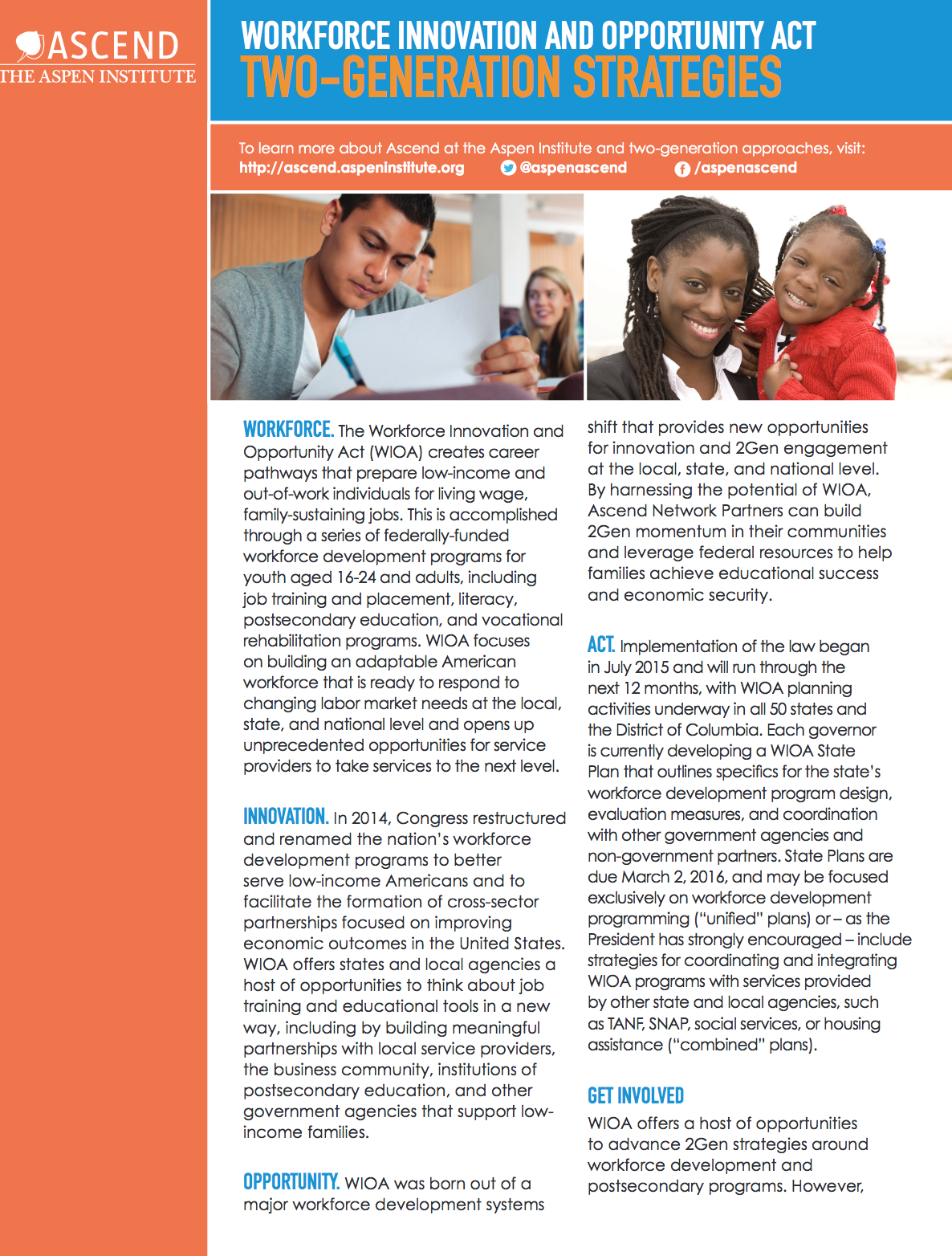
The Workforce Innovation and Opportunity Act and Two-Generation Strategies
Read More
Poverty Interrupted: Applying Behavioral Science to the Context of Chronic Scarcity
Read More
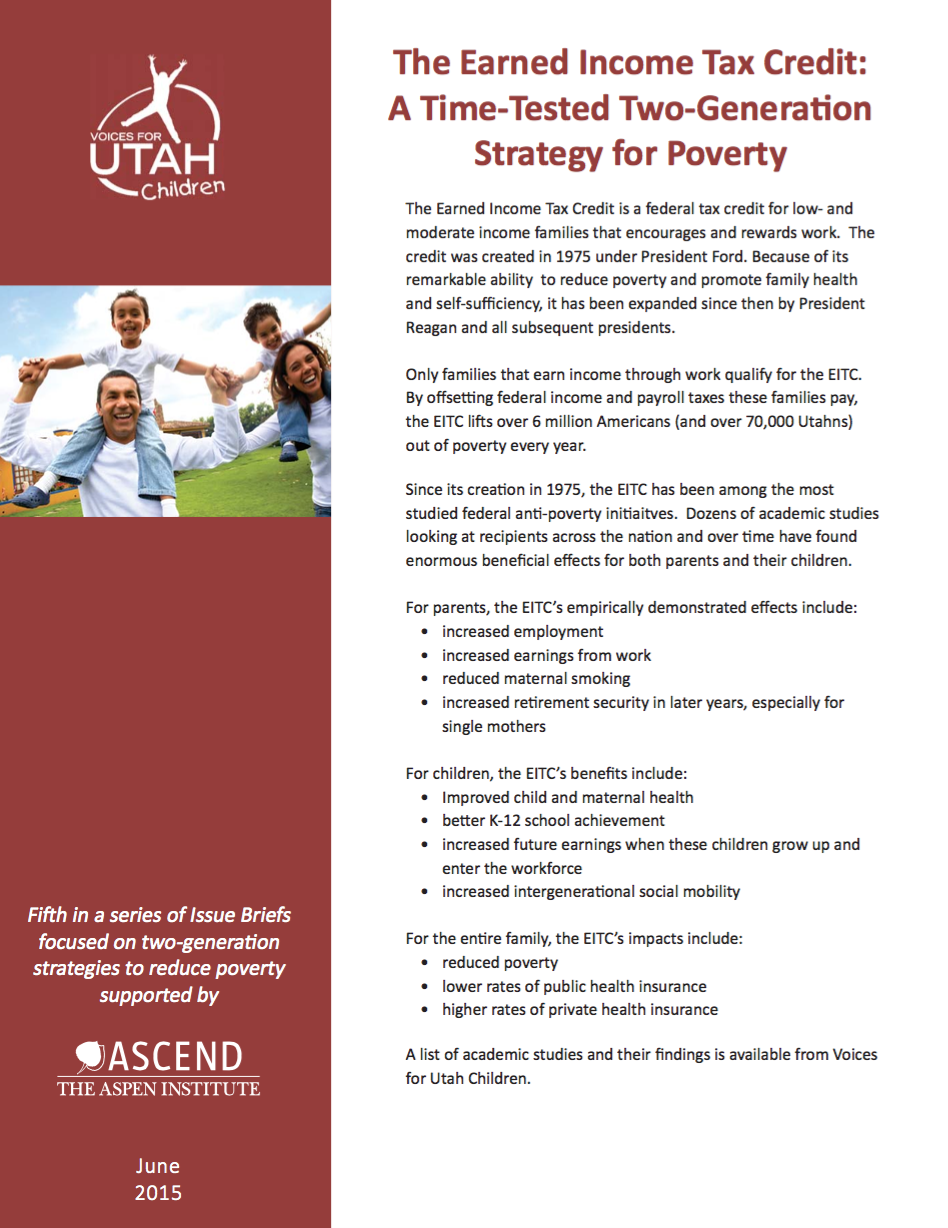
The Earned-Income Tax Credit: A Time-Tested Two-Generation Strategy for Poverty
Read More
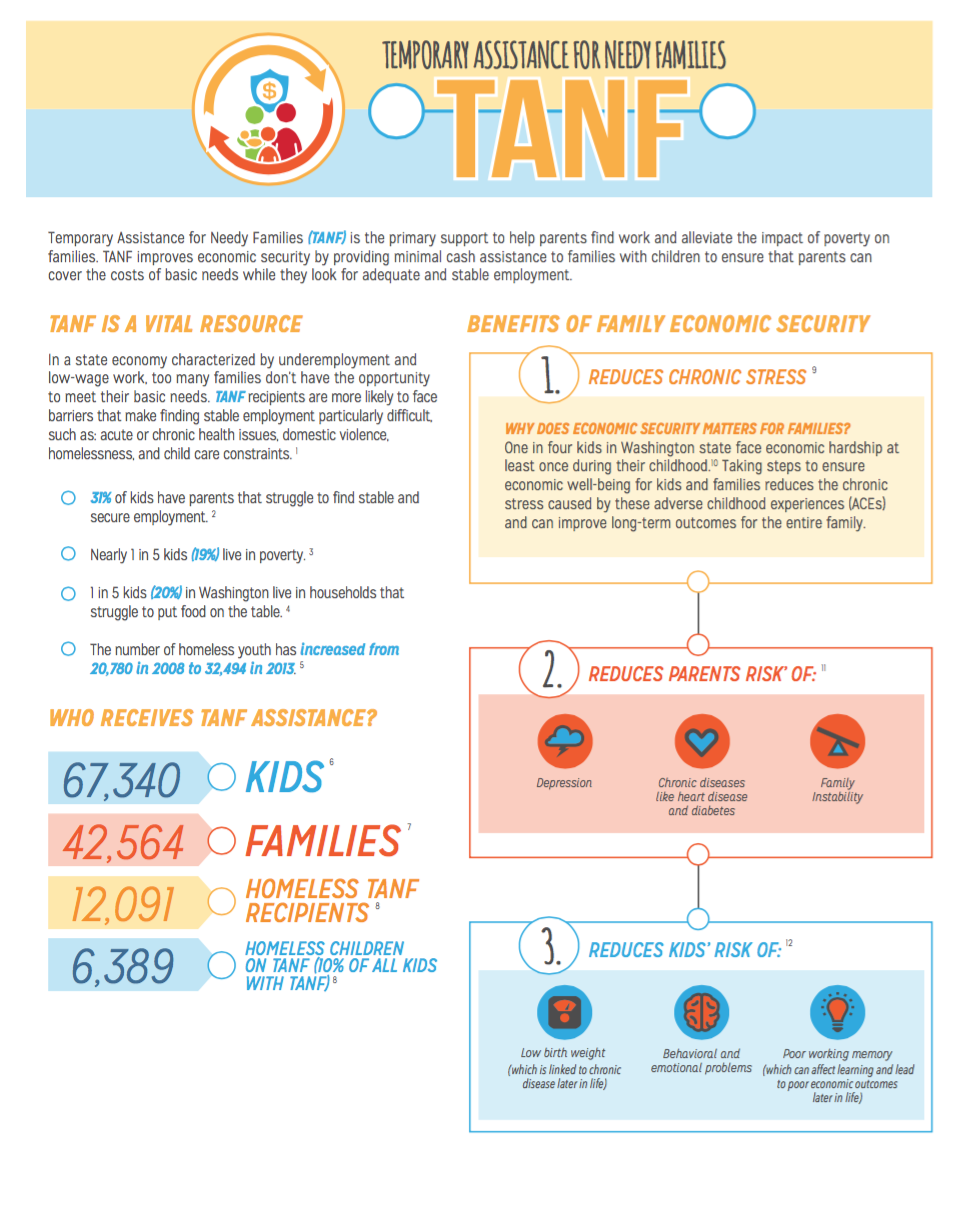
Washington State TANF Fact Sheet
Read More
A Two-Generation Approach for TANF in Washington State
Read More
impactDEALS Forum Sector report: Impact Investing in Education
Read More
impactDEALS Forum Sector report: Impact Investing in Conservation Finance
Read More
The Bottom Line: Impact Investing for Economic Mobility in the U.S.
Read More
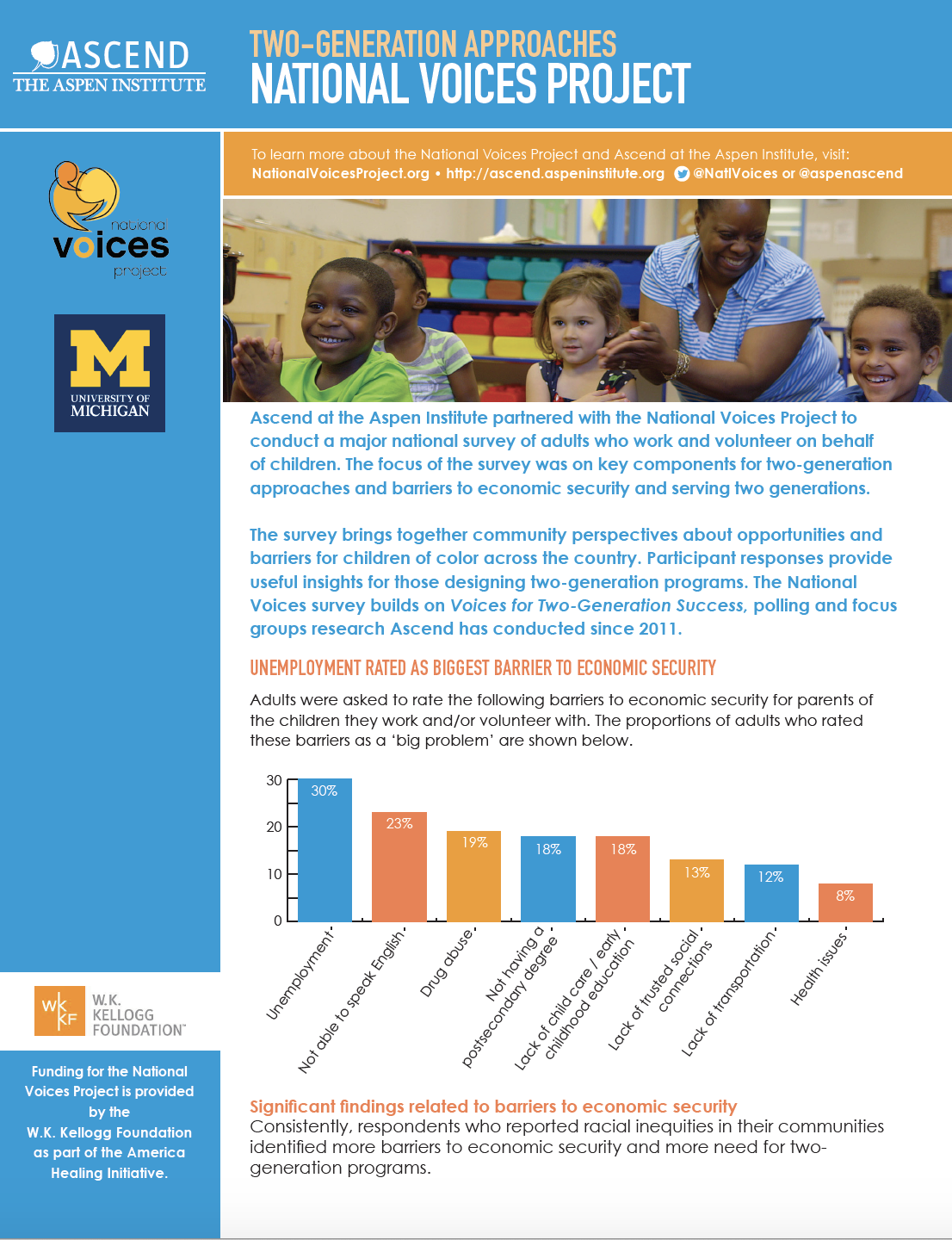
Two-Generation Approaches, National Voices Project
Read More
The Affordable Care Act: Affording Two-Generation Approaches to Health
Read More
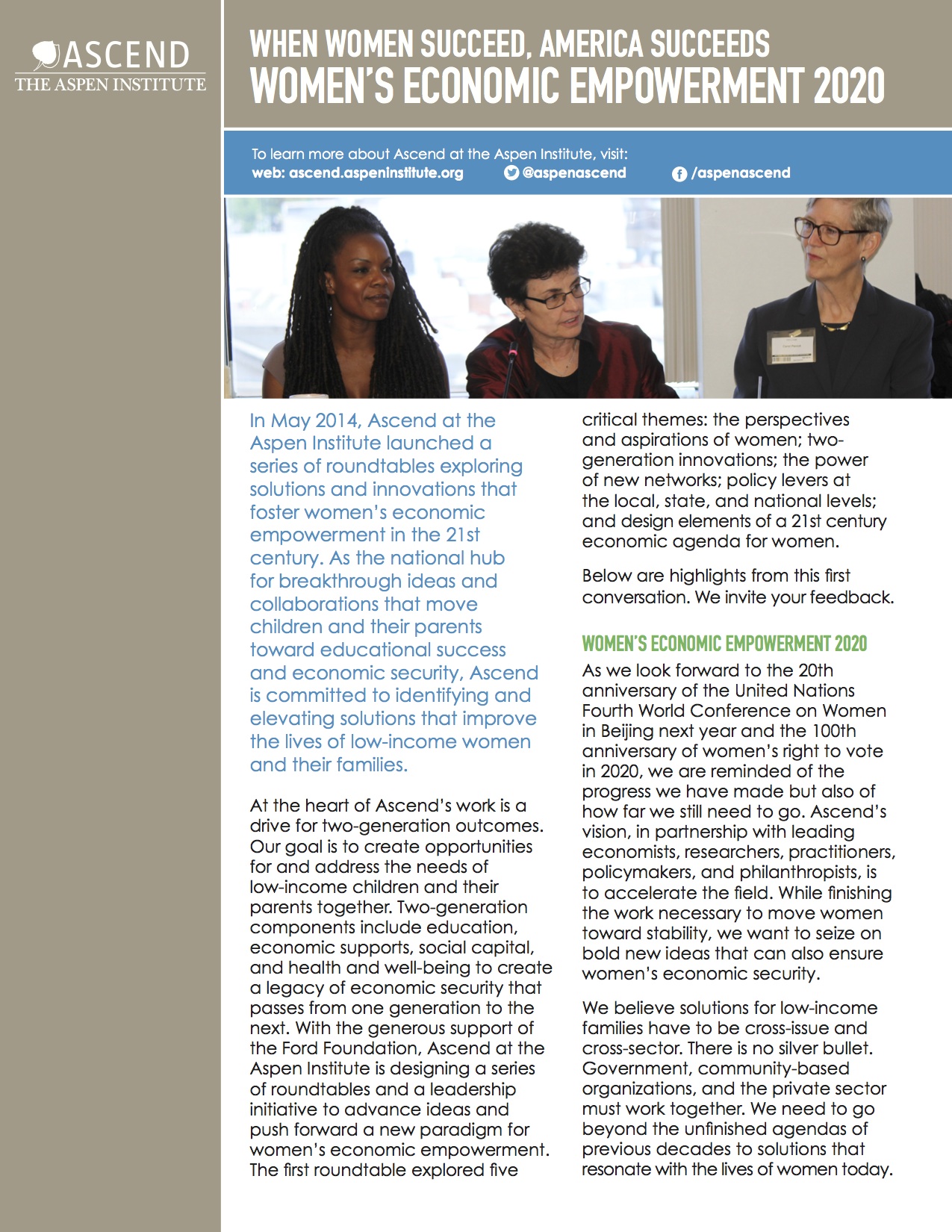
Women’s Economic Empowerment 2020
Read More
Harvard Kennedy School Social Capital Toolkit
Read More
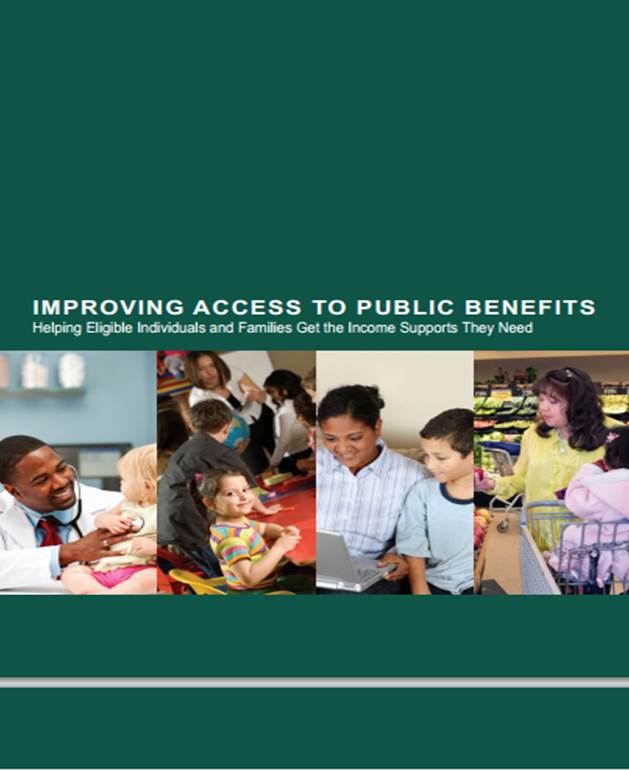
Improving Access to Public Benefits: Helping Eligible Individuals and Families Get the Income Supports They Need
Read More
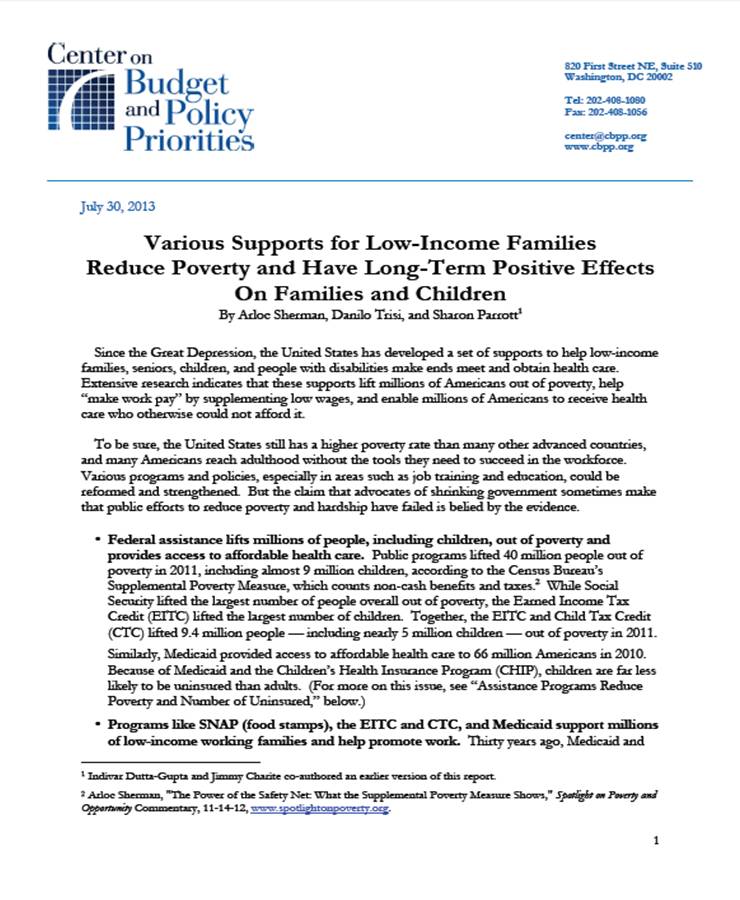
Center on Budget and Policy Priorities: July 2013 Economics Brief
Read More
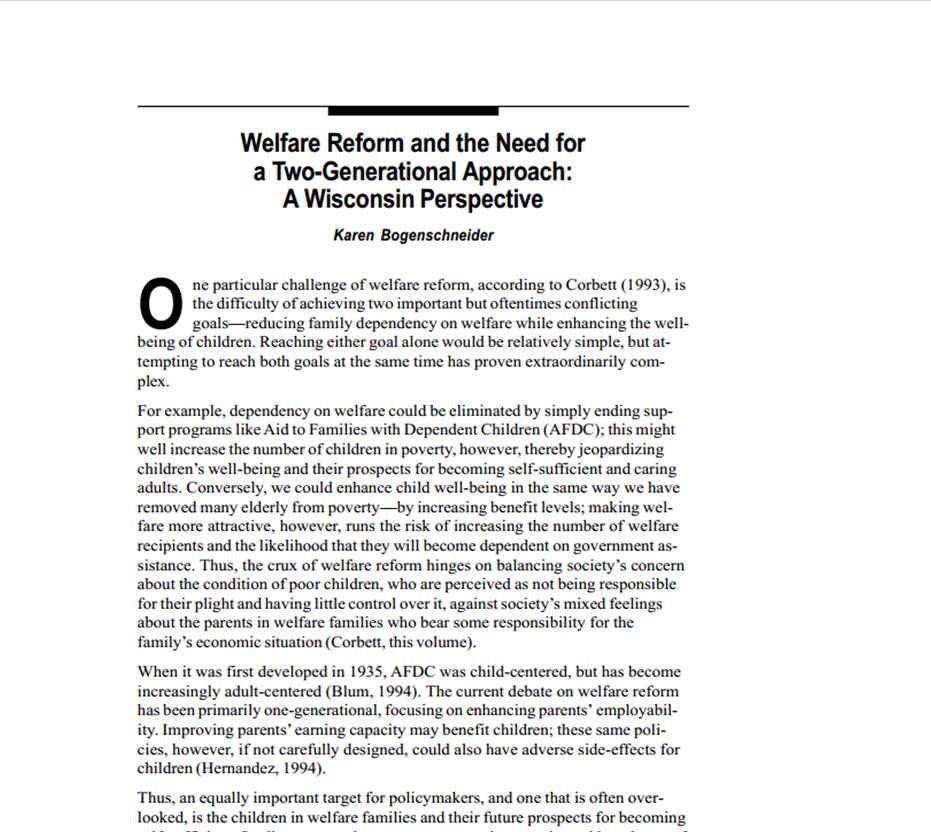
Welfare Reform and the Need for a Two-Generational Approach: A Wisconsin Perspective
Read More
Contributors